Early morning risers heading to work or school before sunrise are likely to notice a very bright, star-like object appearing low in the east-southeast sky just before sunrise. What is somewhat amazing is that just a couple of weeks ago this object wasn't there at all, but now it literally stands out with such brilliance as to almost command the attention of commuters who might be traveling in an easterly direction to "Look at me!"The object in question is, of course, the planet Venus, which is currently amid one of its most spectacular forays into the morning sky, literally "vaulting up" into prominence. On Oct. 24, Venus came to inferior conjunction, passing between the Earth and sun and shifting from the evening into the morning sky. And the view is only going to get better in the days and weeks to come!Ascending in the morningIn terms of morning visibility, Venus is now in a literal and figurative sense "rising to the occasion." It's now rising before the break of dawn, more than 90 minutes before sunrise. From here on, it will rise three minutes earlier each day, so that by Dec. 17 it will rise 3 hours and 50 minutes before sunrise and blaze in a completely dark sky for more than two hours before the first vestige of morning twilight. It will reach peak brilliance on Nov. 29, when it will shine at an eye-popping magnitude of -4.9. That's 12 times brighter than its nearest planetary competitor, Jupiter and a full 25 times more dazzling than Sirius, the brightest of all stars. If you live in a rural location with no light pollution to interfere, you might be able to make out that it is casting a visible shadow and if you follow it right on through sunrise, it will be evident to your naked eye in full daylight: a tiny white speck plainly evident against the blue daytime sky.In a way, we could even regard Venus as this year's version of a "Christmas Star," glowing with stunning radiance ". . . in the east" like the biblical quote mentioned in St. Matthew. What goes up, must come downAfter reaching its high point in terms of morning visibility in mid-December, Venus will start a long, slow slide back toward the sun, rising about 1½ minutes later each morning from New Year's Day through late March. By then, Venus will be coming up as dawn is breaking, roughly 100 minutes before sunrise. Venus will continue to get gradually lower and rise progressively later during the spring and by late June it will be coming up less than an hour before sunrise, ultimately vanishing into the bright dawn twilight by July. Venus will then go on a "summer sabbatical" of sorts and will not reappear again until about this time next year when it will begin a very fine evening apparition. So, if any of your friends or relatives remark to you that they saw a "strange UFO" on the way to work or school recently, you now can set them straight. It's not E.T. It's only Venus.Joe Rao serves as an instructor and guest lecturer at New York's Hayden Planetarium. He writes about astronomy for Natural History magazine, Sky and Telescope, The Old Farmer's Almanac and other publications.
What's that bright 'star' in the early morning sky? It's not a star at all!
SP
Space.comBy Joe Rao 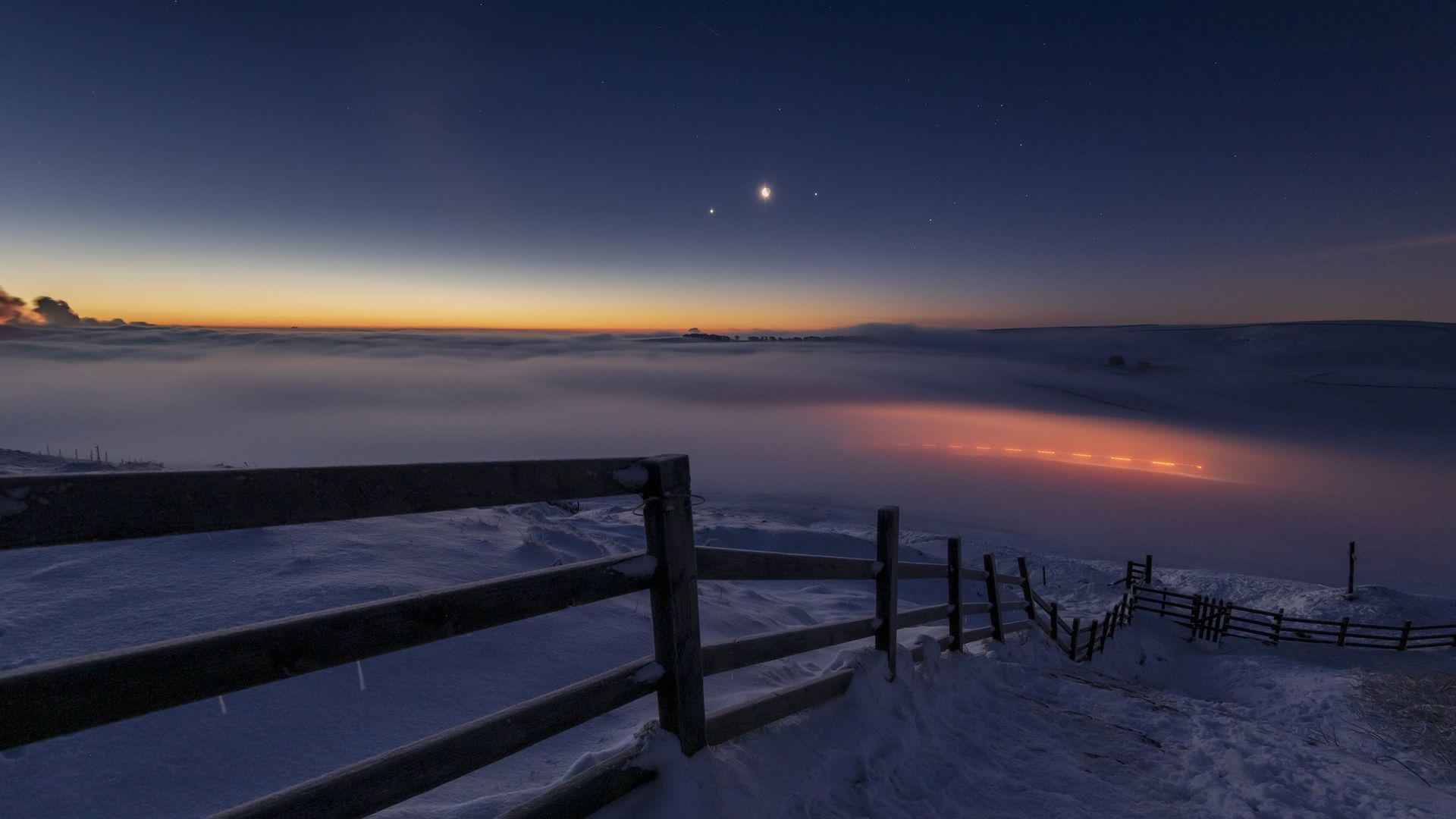
EXECUTIVE SUMMARY
Spotted a dazzling light in the eastern sky before sunrise? It's Venus, and the planet is only going to get brighter as it heads toward its spectacular peak later this month.
Key Takeaways
- What's that bright 'star' in the early morning sky?
- It's not a star at all!.
- Spotted a dazzling light in the eastern sky before sunrise?
Read Complete Original Article
Published originally on Space.com