In September 2022, NASA’s Double Asteroid Redirection Test (DART) spacecraft smacked into a cosmic rock named Dimorphos at a speed of around 14,000 miles per hour. But mission engineers weren’t crestfallen by the news—they were thrilled. That’s because DART was specifically designed for this head-on asteroid collision. Since then, researchers around the world have poured over data from the multimillion dollar, car-sized craft’s smashing success to find ways of improving planetary defenses in the event that Earth ever finds itself in the crosshairs of a rock like Dimorphos. In the meantime, the European Space Agency (ESA) sent its own observer, Hera, to examine the collision scene. On November 5, the ESA released the first image taken by the spacecraft. It was about 37 miles from Dimorphos’ much larger binary asteroid, Didymos. Although DART’s crash site is hidden in the shadow of the roughly 2,559-foot-wide rock, the perspective is allowing astronomers to begin examining how debris from a direct strike affects not only the primary asteroid, but any nearby objects in its vicinity. “The first thing we said was, ‘Wow!’” Hera principal investigator Patrick Michel said in a statement. “This is the other side of Didymos from the one that DART’s camera showed us shortly before impact, so this feels like looking at a whole new world.” Although Didymos exhibits the same central equatorial ridge visible from DART’s earlier views, the surface initially appears to be extremely different from its moonlet asteroid, Dimorphos. Because barely half a mile separates the two objects, astronomers are curious to see how much of Didymos’ features come from debris impacts. “We have exciting work ahead of us to sort it out,” added mission scientist Michael Kueppers. “We look forward to seeing much more of both bodies and systemically mapping all the changes we identify.” The ESA plans to release even more detailed photos of both asteroids on November 25. The post Hera spacecraft photographs asteroid from 37 miles away appeared first on Popular Science.
Hera spacecraft photographs asteroid from 37 miles away
PO
Popular ScienceBy Andrew Paul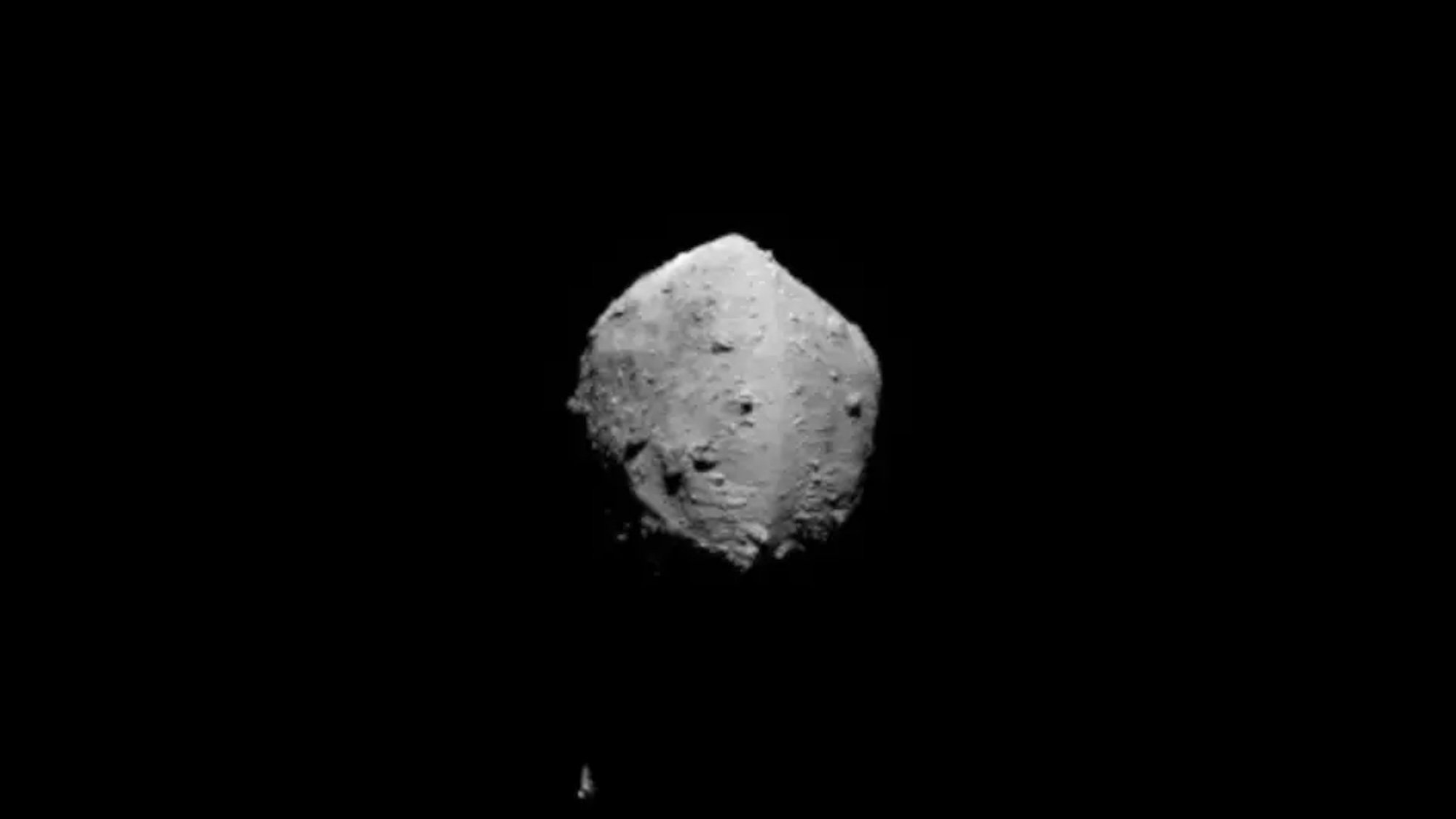
EXECUTIVE SUMMARY
The ESA’s spacecraft is en route to study the aftermath of DART's collision with Diphamos in 2022. The post Hera spacecraft photographs asteroid from 37 miles away appeared first on Popular Science.
Key Takeaways
- Hera spacecraft photographs asteroid from 37 miles away.
- The ESA’s spacecraft is en route to study the aftermath of DART's collision with Diphamos in 2022.
- The post Hera spacecraft photographs asteroid from 37 miles away appeared first on Popular Science.
Read Complete Original Article
Published originally on Popular Science