

Namibian salt flats look like an alien planet | Space photo of the day for Oct. 12, 2026
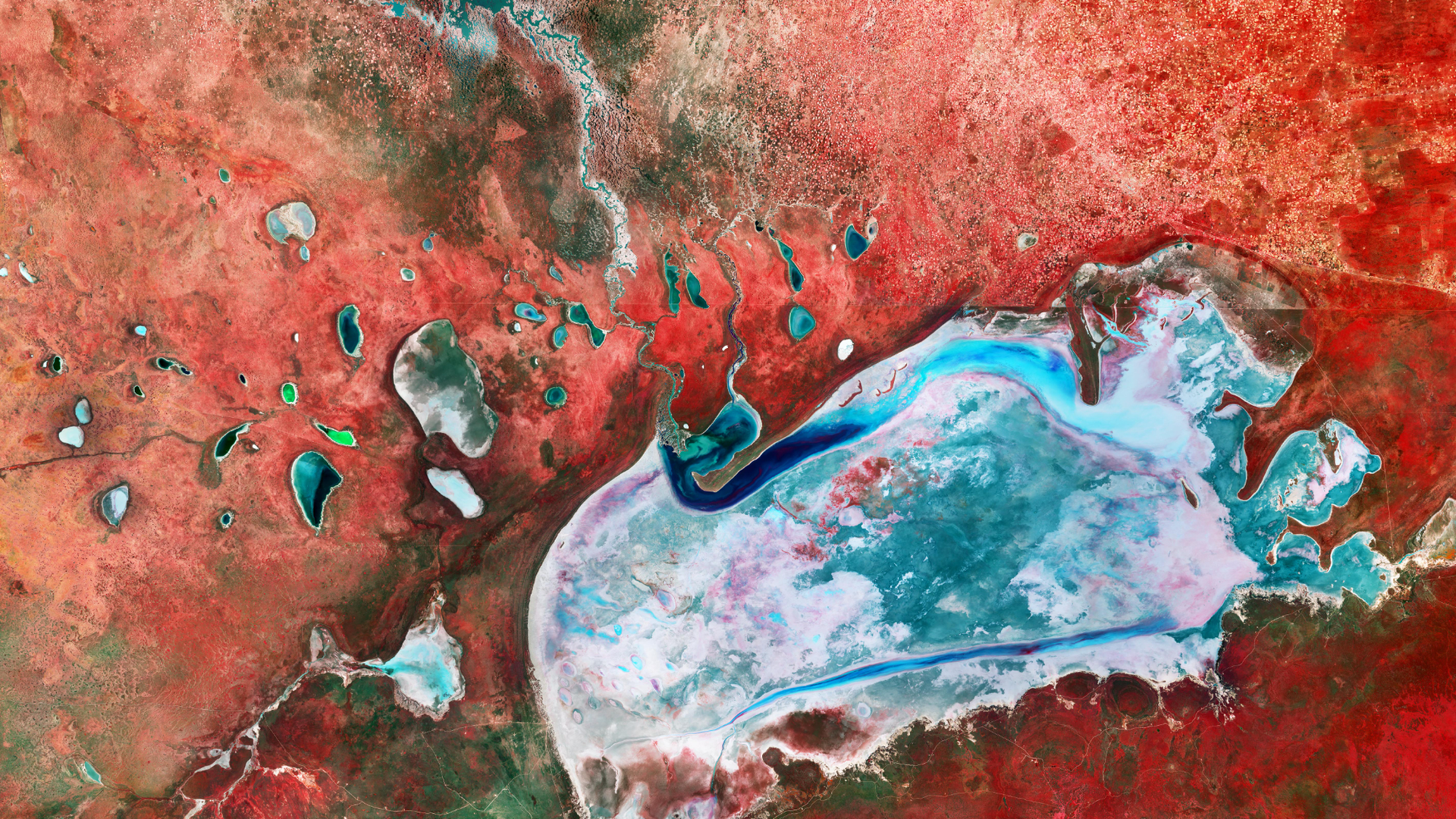
The Etosha Pan in northern Namibia, the largest salt flat in the country, looks otherworldly in this satellite photo.
Key Takeaways
- Namibian salt flats look like an alien planet | Space photo of the day for Oct.
- The Etosha Pan in northern Namibia, the largest salt flat in the country, looks otherworldly in this satellite photo.
- The Etosha Pan, Namibia's largest salt pan, seen from space.
The Etosha Pan, Namibia's largest salt pan, seen from space. (Image credit: Contains modified Copernicus Sentinel data (2026), processed by ESA)A neon blue pool swirls amongst what look like clouds, all surrounded by a bright red stretch of land. This might look like the surface of an alien planet, but it's actually a salt flat right here on Earth, seen from space. What is it?Etosha National Park in northern Namibia hosts the largest salt pan, or piece of land covered with salt and other minerals, in the country. This image of the Etosha Pan was captured on April 5 of this year by Europe's Copernicus Sentinel-2 mission, which consists of two identical satellites in the same orbit.The Sentinel-2 pair observe and capture imagery of our planet in different wavelengths using a high-resolution multispectral imager that can see 13 different spectral bands, or ranges of wavelengths. By looking at our planet from space, and observing it through different wavelengths and colors, we can better understand Earth's topography and how it changes over time. With this image, researchers can better understand this landmark in Namibia, a nation in southwestern Africa.Why is it incredible?While this image is strikingly beautiful, the Etosha Pan doesn't exactly look like this in real life. If you were standing close to the pan in the national park, it would look bright white. While this is a real image, false color has been added, which allows scientists to separate different types of vegetation and topography. With the false color, the vegetation surrounding the salt pan appears in shades of red, while the salt pan itself looks like a mix of bright, light and dark blues with cloudy sediment floating around. The varied vegetation captured in this false-color image includes grassland, savannas and mopane trees, which appear bright red. These trees are not only a dominant type of vegetation in areas of this park, they also provide essential shelter and habitats for local wildlife, including elephants, giraffe and leopards.
Read Complete Original Article
Published originally on Space.com
Related News
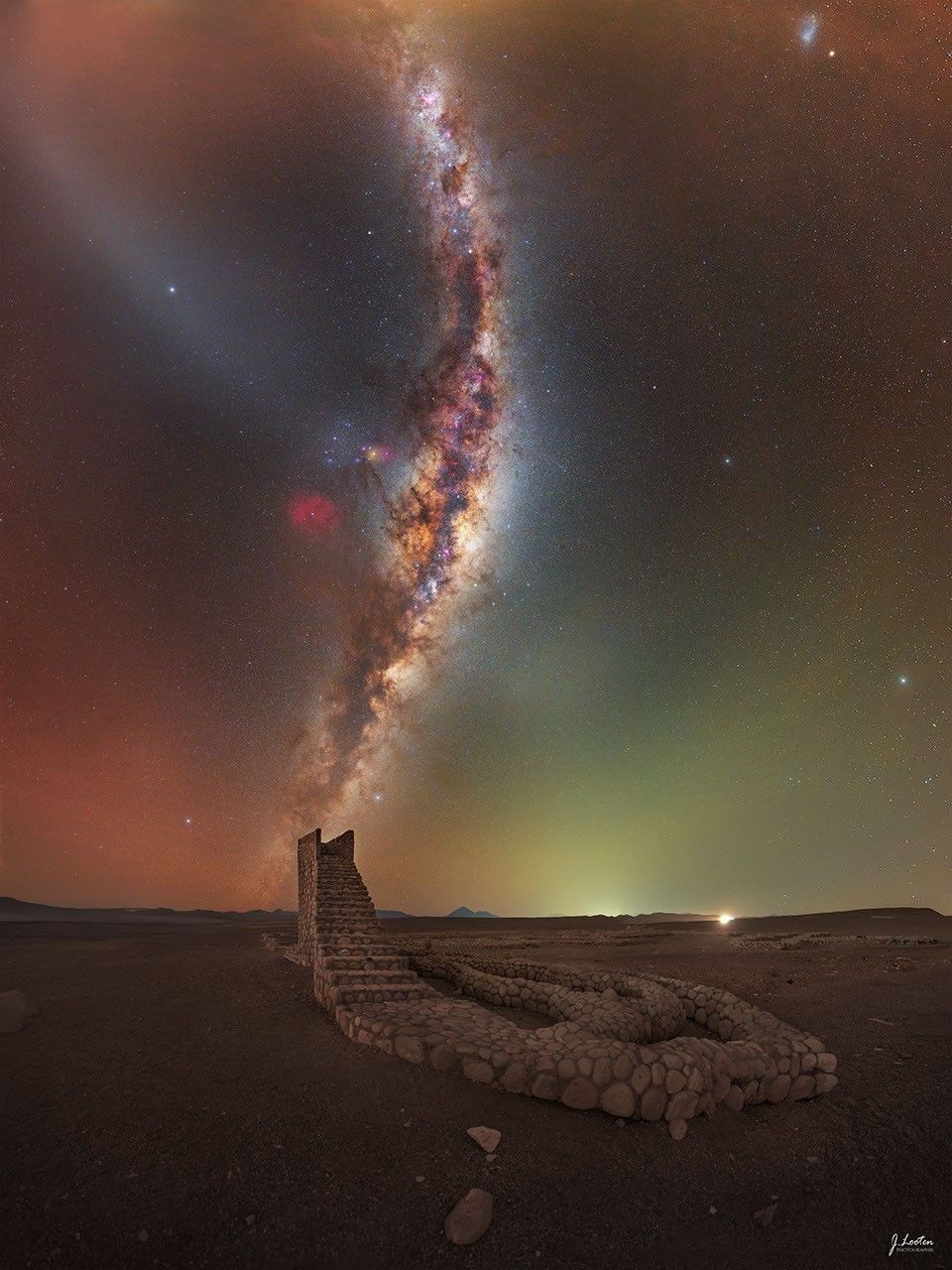
APOD: 2026 October 13 – Desert Stairway to Heaven
APOD Science APOD APOD: 2026 October 13 –… Today’s APOD Archive Submissions Index Search Calendar RSS Education About Discuss APOD Astronomy Picture of the Day Discover the cosmos! Each day a different image or photograph of our fascinating universe is featured, along with a brief explanation written by a professional astronomer. OriginalAnnotated Desert Stairway […]
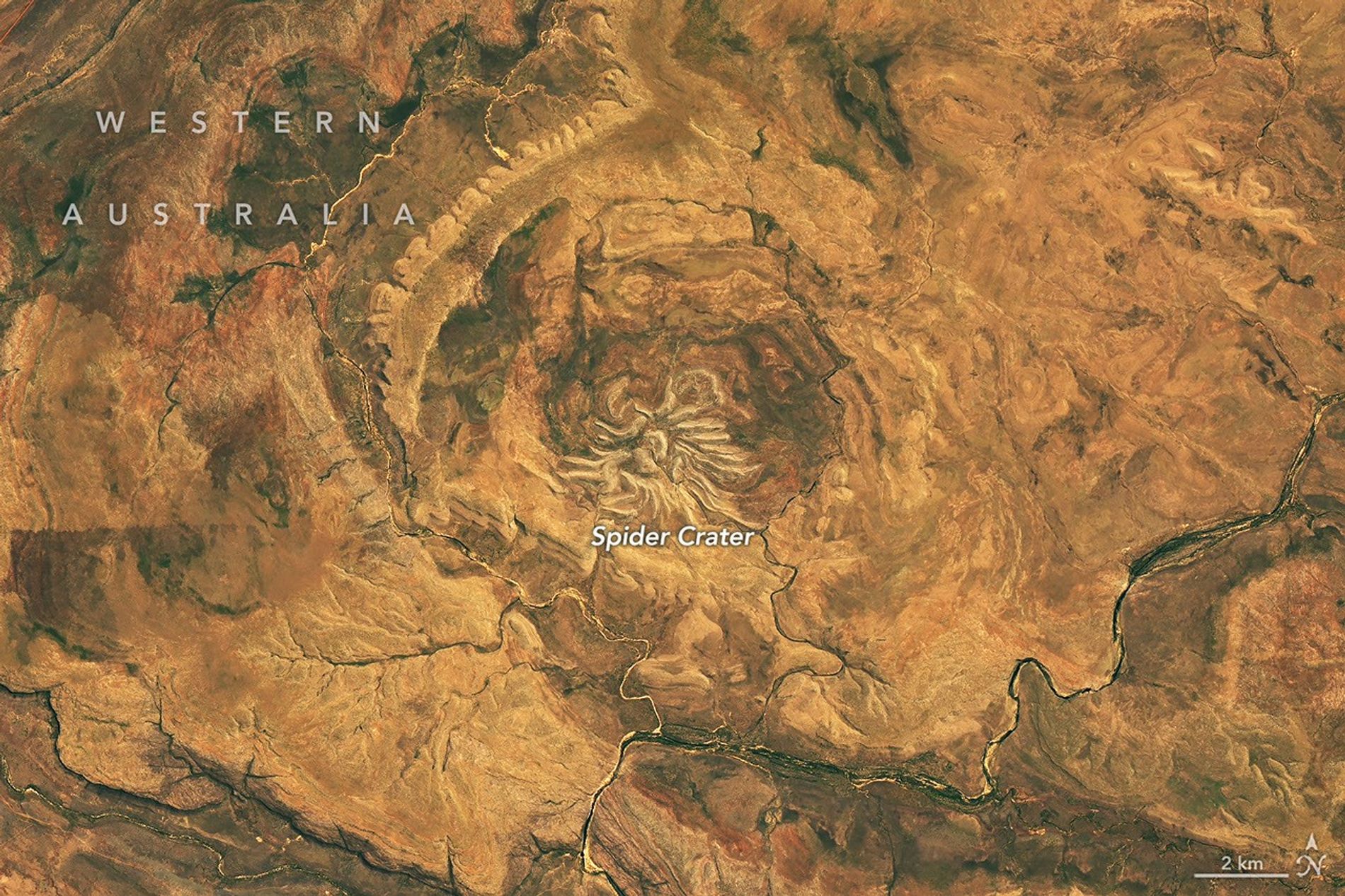
An Impact Structure With Legs
If the thought of extraterrestrial objects crashing into Earth weren’t creepy enough, behold Australia’s Spider Crater.
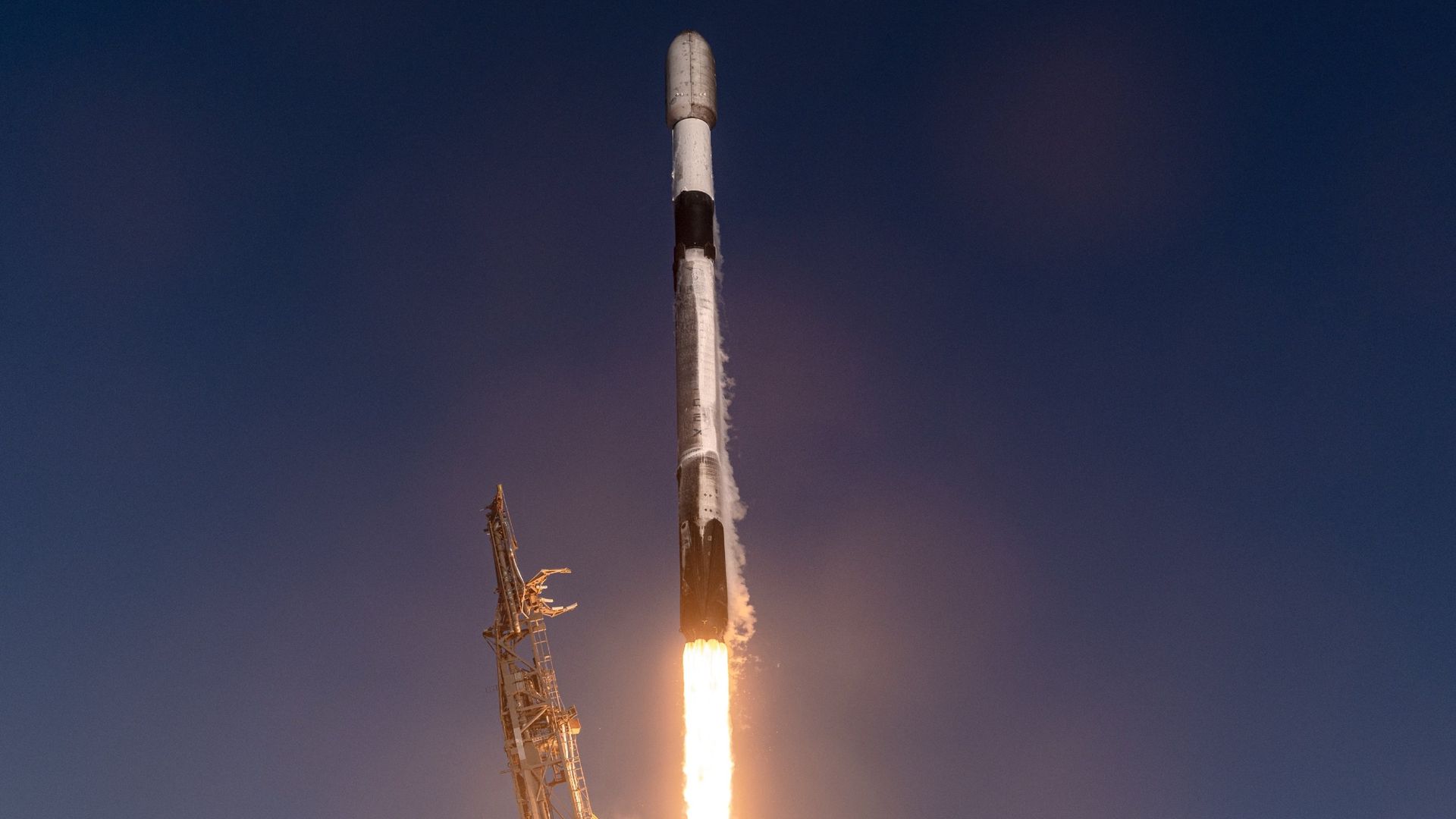
SpaceX launches Falcon 9 Starlink mission for 1st time in more than 3 weeks (photo)
SpaceX launched 27 of its Starlink broadband satellites to orbit today (Oct. 12), the first such mission for a Falcon 9 rocket since Sept. 19.

SpaceX launching 6,300 pounds of cargo to the ISS on Oct. 13: Watch it live
SpaceX will launch more than 3 tons of cargo toward the International Space Station on Tuesday morning (Oct. 13), and you can watch the action live.
All Information In One Place
Real-time headlines from trusted sources. Get the app now — stay updated, inspired, and ahead with breaking news!
