
Contractor to Civil Servant: NASA Welcomes Jared Spiers

Jared Spiers had an interest in contributing to NASA’s mission long before becoming a civil servant for the agency. Growing up close to NASA’s Stennis Space Center near Bay St. Louis, Mississippi, and hearing about his father’s work there, he gained a firsthand connection to the nation’s space program. Before graduating high school, he knew […]
Key Takeaways
- Contractor to Civil Servant: NASA Welcomes Jared Spiers.
- Jared Spiers had an interest in contributing to NASA’s mission long before becoming a civil servant for the agency.
- Growing up close to NASA’s Stennis Space Center near Bay St.
4 min readPreparations for Next Moonwalk Simulations Underway (and Underwater) Jared Spiers, electrical engineering technician at NASA’s Stennis Space Center near Bay St. Louis, Mississippi, poses for a photograph with the Thad Cochran Test Stand in the background on Oct. 28, 2026. Spiers is now a NASA civil servant at Stennis as part of the administrator’s directive to strengthen technical core competencies within the civil service workforce. NASA/Danny Nowlin Jared Spiers had an interest in contributing to NASA’s mission long before becoming a civil servant for the agency. Growing up close to NASA’s Stennis Space Center near Bay St. Louis, Mississippi, and hearing about his father’s work there, he gained a firsthand connection to the nation’s space program. Before graduating high school, he knew exactly where he wanted to work. Spiers graduated from Pearl River Community College in 2017, where he earned three associate degrees in instrumentation, electronics, and electrical technology. He started working at NASA Stennis as a contractor on the Monday following graduation. Spiers contributed to the mission of returning to the Moon through his work at the Thad Cochran Test Stand (B-1/B-2), a facility originally constructed to test Saturn V rocket stages during the Apollo Program. He helped prepare the stand for the Green Run test series of the first core stage for NASA’s SLS (Space Launch System) rocket before the successful Artemis I test flight. “Being hands-on with the rocket was a whole different experience,” said Spiers. “Childhood me would have been crazily excited to see it.” This work helped lay the foundation for the Artemis II test flight around the Moon last April. During that mission, the first astronauts to fly aboard NASA’s Orion spacecraft traveled farther in space than humans ever have before. This past summer, in June 2026, Spiers transitioned to a civil servant role under NASA’s workforce directive to restore core competencies. “When I joined NASA, it meant a lot more. It felt like a goal achieved,” said Spiers. “As a contractor, I was never treated any differently, but now with NASA, you feel even more a part of the team. There is more ownership and a very significant sense of pride.” The ownership Spiers takes on as an electrical engineering technician is evident during his 12-hour shifts that begin at 6 a.m. He is part of the team preparing the stand for stage testing of Blue Origin’s New Glenn rocket. This commercial partnership directly supports NASA’s work to achieve the goal of landing American astronauts on the Moon and building a Moon Base. Spiers’ technical acumen is put to work daily as he ensures facility electronics are operational so accurate data can be collected. He runs conduit and cabling, connects data-collecting instruments, and ensures motor valves operate as intended. The work is fast paced, but Spiers takes pride in making sure everything is done right. For Spiers, NASA is truly a family affair. His father, Joey Spiers, also transitioned from a longtime contractor to a NASA civil servant during the summer and works as an electrical engineering technician. Spiers’ brother-in-law, Brock Sheppard, joined NASA as a mechanical engineering technician in September. The excitement for all things NASA extends to his wife and kids in Poplarville, Mississippi. As proud members of the Artemis Generation, his six-year-old son points at the International Space Station when it passes overhead, convinced his dad works there, while his younger daughter calls him at work to ask about the rocket. He brings a family-oriented mindset to work and views his crew as extended family. Spiers also is appreciative of the veteran employees who mentored him when he was fresh out of college, and now he pays it forward. During NASA’s Career Technical Education Day at Stennis in September, Spiers shared his path to NASA, the importance of a strong work ethic, and how technical skills contribute to the agency’s mission with community college students and a virtual audience of thousands. “My crew is great. We love our jobs, we love being together, and we take care of each other,” said Spiers. Explore More 4 min read Contractor to Civil Servant: NASA Welcomes Kristie Foster Article 1 month ago 4 min read Contractor to Civil Servant: NASA Welcomes Jeret Howard Article 2 months ago 3 min read Contractor to Civil Servant: NASA Welcomes Ray Williams Article 3 months ago Keep Exploring Discover More Topics From NASA Stennis NASA’s Stennis Space Center History Employers and Careers at NASA Stennis NASA Stennis Fact Sheets Doing Business with NASA Stennis
Read Complete Original Article
Published originally on NASA News
Related News
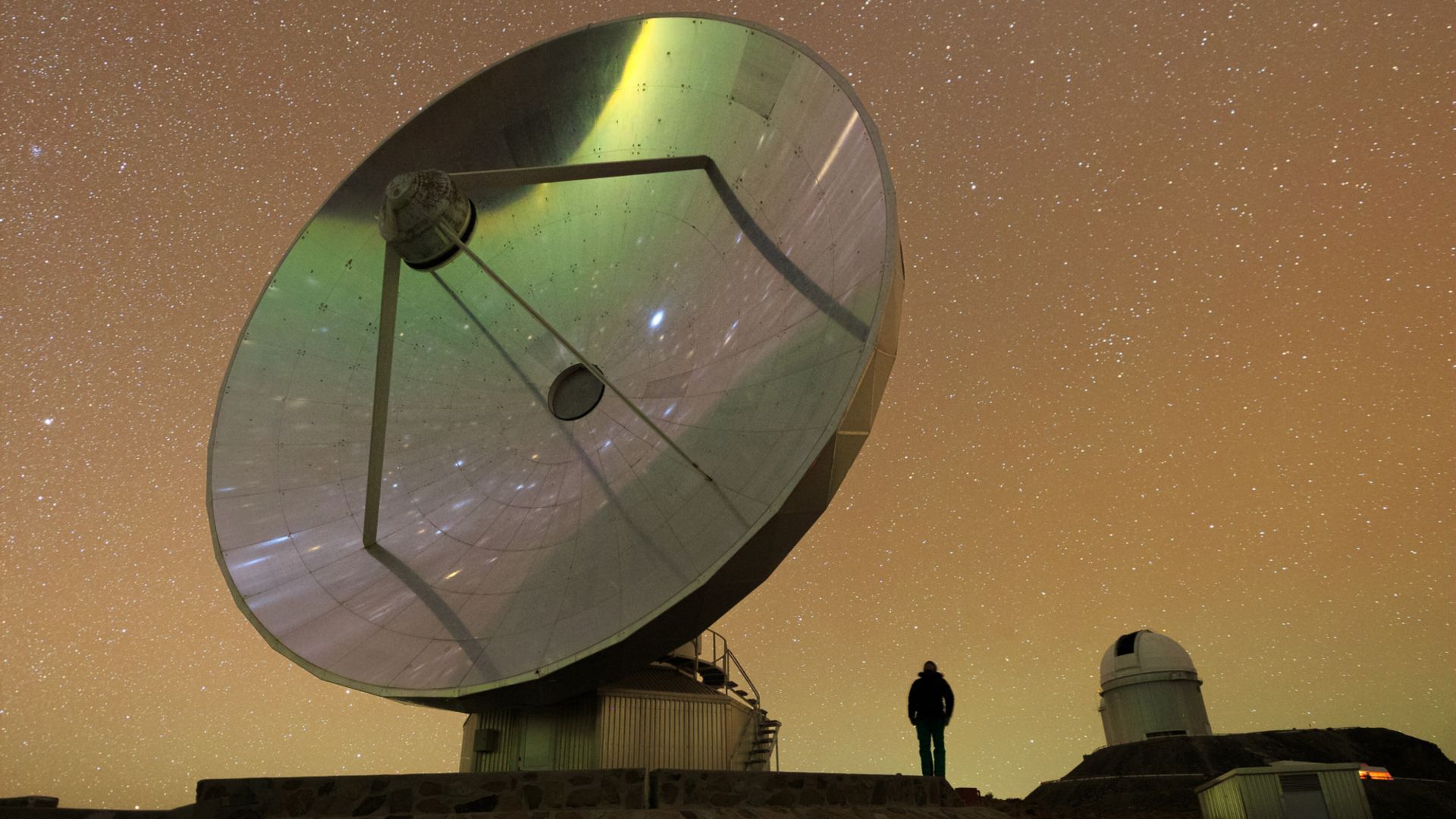
The universe in the eye of a telescope | Space photo of the day for Oct. 29, 2026
The Swedish-ESO Submillimetre Telescope (SEST) keeps its eye on the cosmos decades after being decommissioned.

The puppy-sized bats of Madagascar are shrinking
They aren't interested in blood, just fruit. The post The puppy-sized bats of Madagascar are shrinking appeared first on Popular Science.

A single brain signal may explain schizophrenia's most puzzling symptoms
Scientists have identified a weakened brain signal that may connect several seemingly unrelated symptoms of schizophrenia, including sensory processing difficulties, disorganized speech, and greater symptom severity. The surprising discovery could help explain the disorder's underlying mechanisms and potentially lead to earlier detection and new treatments.
All Information In One Place
Real-time headlines from trusted sources. Get the app now — stay updated, inspired, and ahead with breaking news!
