In this image, we can see a colorful view of an ancient, rocky Martian hill. (Image credit: NASA/JPL-Caltech/UArizona)This rainbow-hued rocky plain looks like the landscape of an alien world. And, it turns out, it is. What is it?In this image, we can see an ancient, rocky hill on Mars. In the Red Planet's Southern Highlands, this alien terrain is chock-full of minerals, which we can see clearly defined in this color-enhanced view of the region.This image was snapped by the HiRISE camera aboard NASA's Mars Reconnaissance Orbiter (MRO), which has been studying the planet's surface, atmosphere and climate since arriving in Martian orbit in March 2006. But this isn't exactly what the surface of the planet would look like through our eyes; the image is color-enhanced. Why would scientists take a natural-color image and turn it rainbow? Doing so enhances the slight color differences in these rocks, allowing researchers to pick out the different minerals. Why is it incredible? As pointed to above, enhancing colors in scientific images can be an incredibly useful tool for exploration. For instance, in this image, the blue- and green-toned rocks could be full of minerals like pyroxenes and olivine, according to scientists analyzing the image. And they think that the yellow, orange and red patches may contain minerals formed by past interactions with liquid water. By exploring the mineral content of rocks like this, researchers can peel back the layers of history within the Martian bedrock. The discovery of certain minerals, for example, can show that water flowed on Mars long ago, pointing to potentially habitable conditions. So, as we can see, this striking rainbow image isn't just a beautiful landscape; it's also hiding serious clues to Mars' history.
A rainbow of ancient rocks on Mars | Space photo of the day for Nov. 2, 2026
SP
Space.comBy Chelsea Gohd 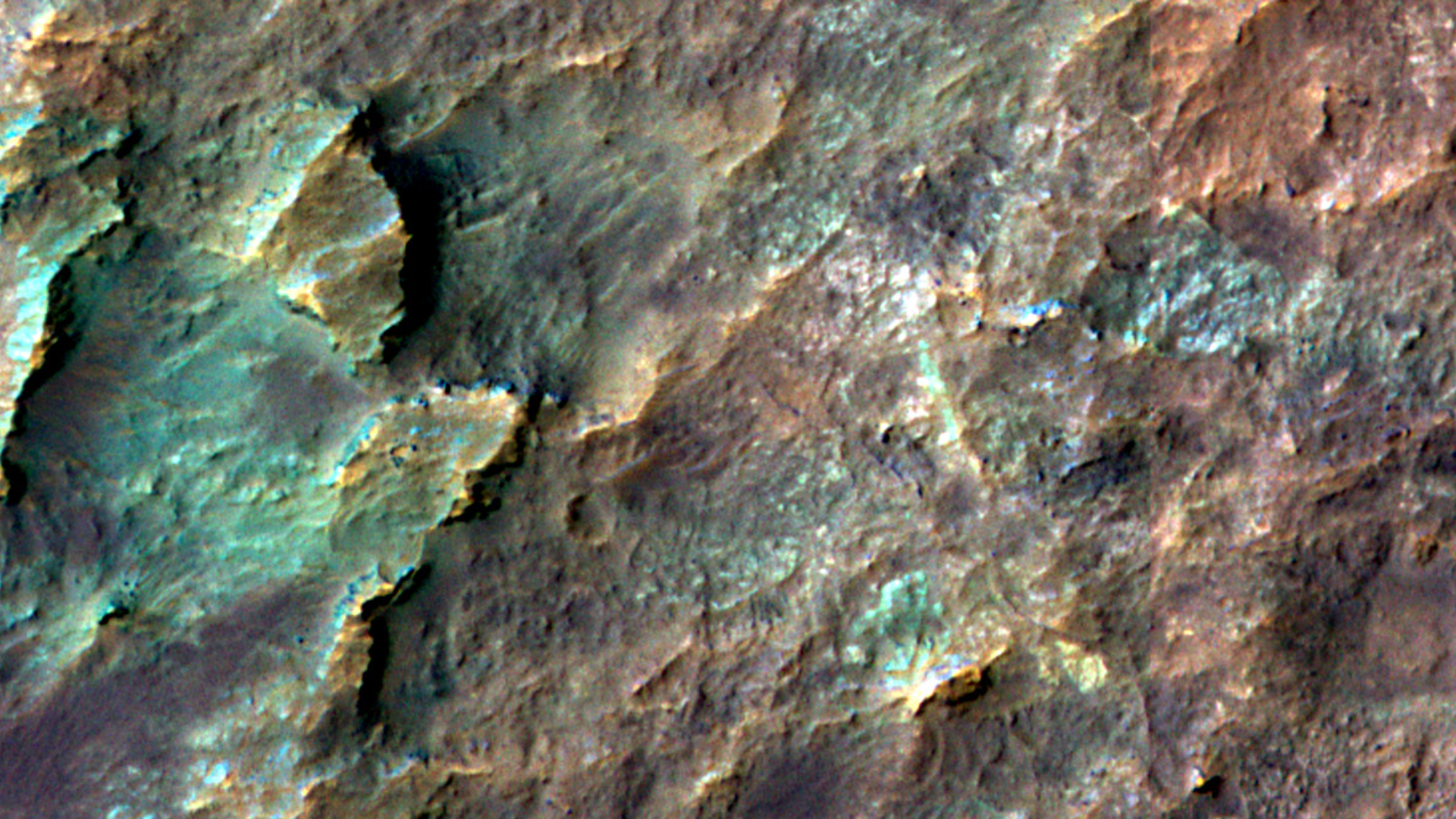
EXECUTIVE SUMMARY
In this image, we can see a colorful view of an ancient, rocky Martian hill.
Key Takeaways
- A rainbow of ancient rocks on Mars | Space photo of the day for Nov.
- In this image, we can see a colorful view of an ancient, rocky Martian hill.
- In this image, we can see a colorful view of an ancient, rocky Martian hill.
Read Complete Original Article
Published originally on Space.com