A revolutionary NASA telescope is making its way back to Earth—but will not survive the journey. The United States Space Force has honed its estimate for the Neil Gehreis Swift Observatory’s fiery atmospheric reentry. According to the latest calculations, the 2,500-pound orbital telescope will largely burn-up during its descent on or around Friday, November 6. “We’ve known this day would come since before Swift was launched,” Pennsylvania State University astronomer and Swift control lead John Nousek told AP News. “At least in low-Earth orbit, what goes up must come down. And that end is catastrophic.” Launched in 2004 on what was expected to be a two-year mission, the orbital space telescope ultimately spent nearly 22 years gazing deep into the cosmos. Swift’s contributions to astronomy, particularly the study of gamma-ray bursts (GRBs), cannot be overstated. After more than two decades in space, the observatory examined over 2,000 GRBs and more than 1,400 supernovae. Swift also recorded rarely seen tidal disruption events, in which stars are devoured by a nearby black hole. Most recently, the telescope was instrumental in documenting comet 3I/ATLAS, the third interstellar object ever detected passing through the solar system. An estimated 7,000 published scientific papers contain data collected by Swift, which averages out to roughly six papers per week during its almost 22-year run. “Swift leaves us with an extraordinary archive of multiwavelength observations that will fuel new discoveries for decades more,” Shawn Domagal-Goldman, director of NASA’s Astrophysics Division, said in October. While Swift will ultimately succumb to Earth’s gravitational pull, it nearly received a reprieve that would have extended its mission even longer. In July, NASA and the private space company Katalyst collaborated on an attempt to bump Swift back into a higher orbit using a specially designed robotic satellite. Unfortunately, the device malfunctioned while en route to the observatory, forcing mission engineers to abandon the attempt and leave Swift to its fate. That didn’t mean the telescope was ready to wind down just yet, however. Astronomers continued to utilize Swift in the months since then, and only recently said their farewells to the intrepid, tenacious observatory. The post A NASA telescope will likely plummet to Earth on Friday appeared first on Popular Science.
A NASA telescope will likely plummet to Earth on Friday
PO
Popular ScienceBy Andrew Paul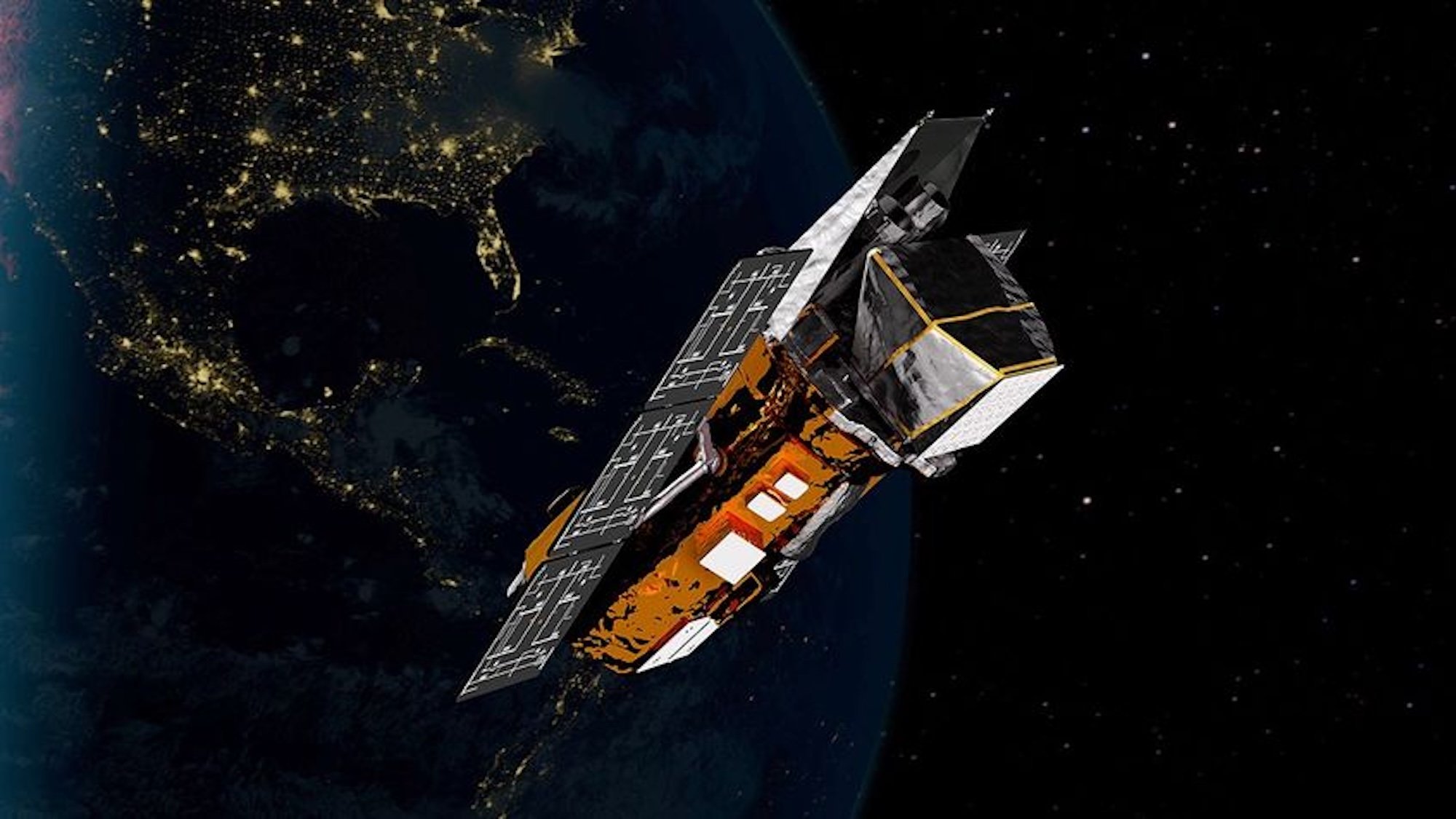
EXECUTIVE SUMMARY
The decommissioned Swift Observatory turned a two-year mission into more than two decades of science. The post A NASA telescope will likely plummet to Earth on Friday appeared first on Popular Science.
Key Takeaways
- A NASA telescope will likely plummet to Earth on Friday.
- The decommissioned Swift Observatory turned a two-year mission into more than two decades of science.
- The post A NASA telescope will likely plummet to Earth on Friday appeared first on Popular Science.
Read Complete Original Article
Published originally on Popular Science