If you've recently found yourself wide awake at 3 a.m., wondering how it's possible that yet again you're unable to sleep through the night, frustration is probably running pretty high.It may be comforting to know you're not alone. A 2025 U.S. News and World Report survey found that, remarkably, 89% of Americans regularly wake up during the night, and 46% had a sleep goal of trying to reduce nighttime awakenings. But help is at hand, in the form of Dr. Tom Chambers, a certified somnologist and Chief Medical Officer at Theta Sleep, Dr. Shelby Harris, a board-certified behavioral sleep medicine specialist and psychologist with BetterSleep and Hannah Shore, head of sleep science at Mattress Online. We've spoken to these three sleep experts to explore the common causes of 3 a.m. wake-ups, the fixes that can help you sleep through the night and when you should consider speaking to your doctor. Read on to find out more...Why do I keep waking up at 3 a.m.? Staring at the clock (or worse, getting a dose of bright light from your phone as you check the time) at 3 a.m. while sleep eludes you can prompt one frustrated question: 'Why?'"There are so many reasons why we might wake up at 3 a.m. or any other time overnight. Sometimes this is completely normal, some times there are things that we can tackle head-on with changes to our sleep routines, and some are suggestive of something more serious and might mean people should speak to their doctor," ESRS-certified somnologist Dr. Chambers explains. Below are some of the common reasons behind 3 a.m. wake-ups, as explained by the sleep experts we spoke to. Normal nighttime wake-upsYou might be surprised to know that up briefly during the night is actually very normal, we often don't even remember it. According to research, healthy adults can wake as many as five times a night in between sleep cycles, but likely won't recall them all in the morning. "It's not uncommon for a proportion of these wake-ups to end up being awake for a little while longer. It's when these wake-ups result in you spending hours awake ruminating on other things that this becomes an issue," Dr. Chambers says.(Image credit: Getty Images)Wake-ups related to sleep environment and sleep routineSome causes of nighttime awakenings are related to our sleep space and what we do in the lead up to bedtime (a.k.a our nighttime routine). Dr. Chambers delves into this:A room that is too hot or too cold: "This is common during hot summers and cold winters when the need for air conditioning, fans, or heaters makes it tricky to maintain the right temperature overnight."Too much fluid before bed: "This will make you wake up needing to pee overnight! [It] can be very common especially in health conscious individuals wanting to make sure they stay hydrated."Caffeine and/or alcohol: "Caffeine both disrupts sleep and acts as a diuretic (means you need to pee). Alcohol sometimes gives the illusion of better sleep and helps people fall asleep but it also acts as a diuretic and disturbs you usual sleep cycles."A loud room and/or a disturbed sleep environment: "Bed partners snoring or making noise, pets, a loud street, living near train tracks, and loud neighbours all can contribute to waking us up at 3 a.m. when we're in a lighter sleep stage."Light: "Even tiny amounts of light can be disruptive to sleep and causing nighttime awakenings."Stress, hormonal changes and agingAnother cause of nighttime awakenings can be chronic stress or anxiety, which can raise baseline cortisol levels. Since our Cortisol Awakening Response (CAR) causes levels of cortisol to naturally rise in the early hours (from around 3 a.m), a stress-induced rise in your baseline cortisol levels may lead to an unwanted wake-up during this process."As the night goes on, your sleep naturally gets lighter, so by 3 a.m. it doesn’t take much to wake you. Stress is a major factor in this, because cortisol starts rising toward morning and can kick in early when you’re under pressure," says Dr. Harris.Hormonal changes — including estrogen and progesterone fluctuating — that occur during perimenopause and menopause can also disrupt sleep. (Image credit: Getty Images)"Hormonal shifts like perimenopause can bring night sweats," says Dr. Harris, while Dr. Chris Winter, a double boarded sleep specialist previously explained that other impacts of these shifts can include anxiety, temperature changes, and more fragmented sleep.Both aging and hormonal changes can also contribute to waking at night to use the bathroom. Shore says that 3 a.m. "is also a common time to urinate, and we find this happens more as we get older due to a reduction in certain hormones, particularly around menopause," though she adds that "changes can happen in men too, and changes to bladder efficiency."Aging itself can also lead to disrupted nights, as according to the National Institute on Aging, shorter, light sleep in older adults can feature more nighttime awakenings.Clinical sleep disordersDr. Chambers points out that clinical sleep disorders like sleep apnea, restless leg syndrome and chronic insomnia can also all cause 3am wake-ups, and require medical advice. "Sleep apnea is incredibly common and often undiagnosed," he says, adding that the broad symptoms of the disorder include snoring, multiple bathroom trips at night, daytime tiredness and waking up feeling unrefreshed or with a headache."Often patients will wake up at 3 a.m. because they've stopped breathing during their sleep. They're wide awake as their oxygen levels have dropped, triggering a fight-or-flight response," the somnologist adds. A paper published in the journal Neuropsychiatric Disease and Treatment cited multiple studies that showed restless leg syndrome increased nighttime awakenings in those with the condition, while Dr. Chambers points out that "if you're regularly awake at 3 a.m., not falling asleep for a long time afterwards, and this impacts your daily life, it is almost diagnostic of clinical insomnia."6 ways to fix your 3 a.m. wake-ups and stay asleep all nightWhile some causes of 3 a.m. wake-ups can't be addressed by lifestyle changes alone, there are fixes to your sleep environment and nighttime routine that can help you avoid nighttime awakenings and sleep through the night more easily. 1. Don't overdo bedroom temperature control "Temperature control is very important during sleep and room temperature can have a big impact," says Dr. Chambers.According a paper published in Frontiers for Young Minds, "a thermal environment that is either warmer or cooler than the optimal range can increase wakefulness during the night."Research has shown that the ideal bedroom temperature for sleeping sits within the range of 65 to 70 F (18 to 21 °C).So while it may be tempting to crank up your heating overnights as the weather gets cooler (or, in warmer months, do the same with home cooling systems), Dr. Chambers cautions against it."Don't leave your heating or air conditioning on all night," advises the somnologist.2. Consider a cut-off time for drinking liquids (Image credit: Getty Images)It's important to "ease up on fluids in the evening," says Dr. Harris. Although it's essential to stay hydrated, and a relaxing cup of chamomile or peppermint tea may even help your sleep, research shows that volume and timing matter.One study explored liquid consumption two hours before bedtime, and found that all participants who drank 500ml or more experienced nocturia, and had a higher number of nighttime awakenings than the groups who drank less.If bathroom trips are waking you up over the course of the night, one option is to give yourself a cut-off time for liquids before bed.Dr. Chambers says that "in people who are waking up multiple times overnight to pee (and don't have a medical condition causing this) we'll sometimes suggest not drinking fluid after 7/8 p.m. in the evening."3. Don't overthink it (Image credit: Getty Images)"I think we have to understand that the 3 a.m. wake-ups are perfectly normal, especially if we are falling back to sleep within 20 minutes," Shore says.Frustratingly, overthinking a nighttime wake-up is only likely to make it last longer."Often people wake up and worry that they are not falling back asleep; they watch the clock and start counting how many hours they have left. This can further drive wakefulness, meaning the body starts producing wake-promoting hormones." She suggests having a winddown routine you can focus on instead if you wake up during the night, which gives your brain something else to focus on and allows you to relax. This could include deep breathing exercises like the 4-7-8 technique or box breathing, both of which help to slow heart rate and activate the parasympathetic nervous system. Or you could try progressive muscle relaxation, which involves tensing and releasing muscles throughout your body and can help relax you and relieve stress and insomnia."It's about trying to distract your brain and switch it off again so you can fall back to sleep easily," says Shore.4. Keep clocks out of the bedroomA tip that follows on naturally (and is linked to) not overthinking 3 a.m. wakeups is to not focus on the time itself if you find yourself awake during the night."It may also help to remove any clocks from your bedroom; if you can’t see the time, then it's one less thing to worry about," says Shore. If you can't do without a clock, or your phone, in the bedroom, Dr. Harris has a suggestion: "Turn the clock away so you’re not watching the hours tick by," she says.(Image credit: Getty Images)5. Reduce or limit caffeine and alcohol "Caffeine lingers for hours, ultimately making your sleep shallow," says Dr. Harris.Shore agrees that "Caffeine can drive wakefulness," and adds that "it is also a mild diuretic, meaning it can increase urination." She notes that people who enjoy a cup of caffeinated tea to relax before bedtime may actually be driving nighttime wakeups to take trips to the bathroom.Shore adds that alcohol "initially has a sedative effect but then can act as a stimulant too, driving wakefulness." Indeed, multiple studies have shown that alcohol can cause wakeups during the later part of the night and early morning. Not only that, Shore says "it can dehydrate you as well as increase urination, definitely none of the things you are wanting to do throughout the night!"To avoid all of the above, "stop drinking alcohol three hours before bed and try to cut off caffeine by noon so they both have time to wear off," advises Dr. Harris. 6. Optimize your sleep environment (Image credit: Future)"The ideal sleep environment is one that is cool, dark, and quiet," says Dr. Chambers.To avoid middle-of-the-night wake-ups caused by noise, light and overheating, you may need to adjust a few elements of your sleep space."Keep pets out of the bedroom where possible," says Dr. Chambers, who also suggests "invest in some ear plugs if you're near noise. There's good evidence showing they improve sleep quality in noisy environments!"We've discussed bedroom temperature above, but if you're someone who tends to sleep hot anyway, cooling bedding can be a wise investment. The best cooling mattresses are designed to prevent overheating at night, though a cooling mattress topper can be a more affordable way to achieve a temperate sleep. Similarly, while blackout blinds or curtains are one of the most effective ways to avoid light pollution disrupting your sleep, they're also not cheap. A much more wallet-friendly option is a blackout sleep mask — some, like the Aura Smart Sleep Mask, even include bluetooth-controlled speakers.Other tips for reducing nighttime awakenings and sleeping better "Waking up at the same time every day to ensure your body clock is steady," says Dr. Harris"The best thing you can try and do for your sleep is, where possible, maintain a consistent sleep routine. Try and get up and go to bed at roughly the same time every day and get plenty of morning light," says Dr. Chambers."Write down what is stressing you out before bed so they’re not waiting for you at 3am," says Dr. Harris.Waking up at 3.a.m. — when to see a doctor Modifying your nighttime routine and sleep environment is a great way to improve sleep and minimize disturbances to your rest, but there are times when it's important to seek medical advice — particularly if you're consistently waking up at 3 a.m. for months on end. "See a doctor if it’s happening most nights for a few months or dragging down your days. The same goes if it comes with snoring, gasping, night sweats, frequent bathroom trips or low mood," says Dr. Harris.Shore suggests that if you notice a regular pattern of nighttime wake-ups — she says "3-4 times a week for 3-4 months," is "normally the length of time we give to say it's not just a blip or a stressful moment" — and that they are affecting your daily functioning, it's time to seek help from a medical professional.Dr. Chambers points out that "clinical sleep disorders are incredibly common and if someone is waking up at 3 a.m. in the night every night for a long period of time they should consider seeing their doctor. At least one in four adults has a sleep disorder like insomnia, sleep apnea, or restless legs syndrome."
Wide awake at 3 a.m.? 6 ways to break the cycle and sleep through the night again
TO
Tom's GuideBy Jenny Haward 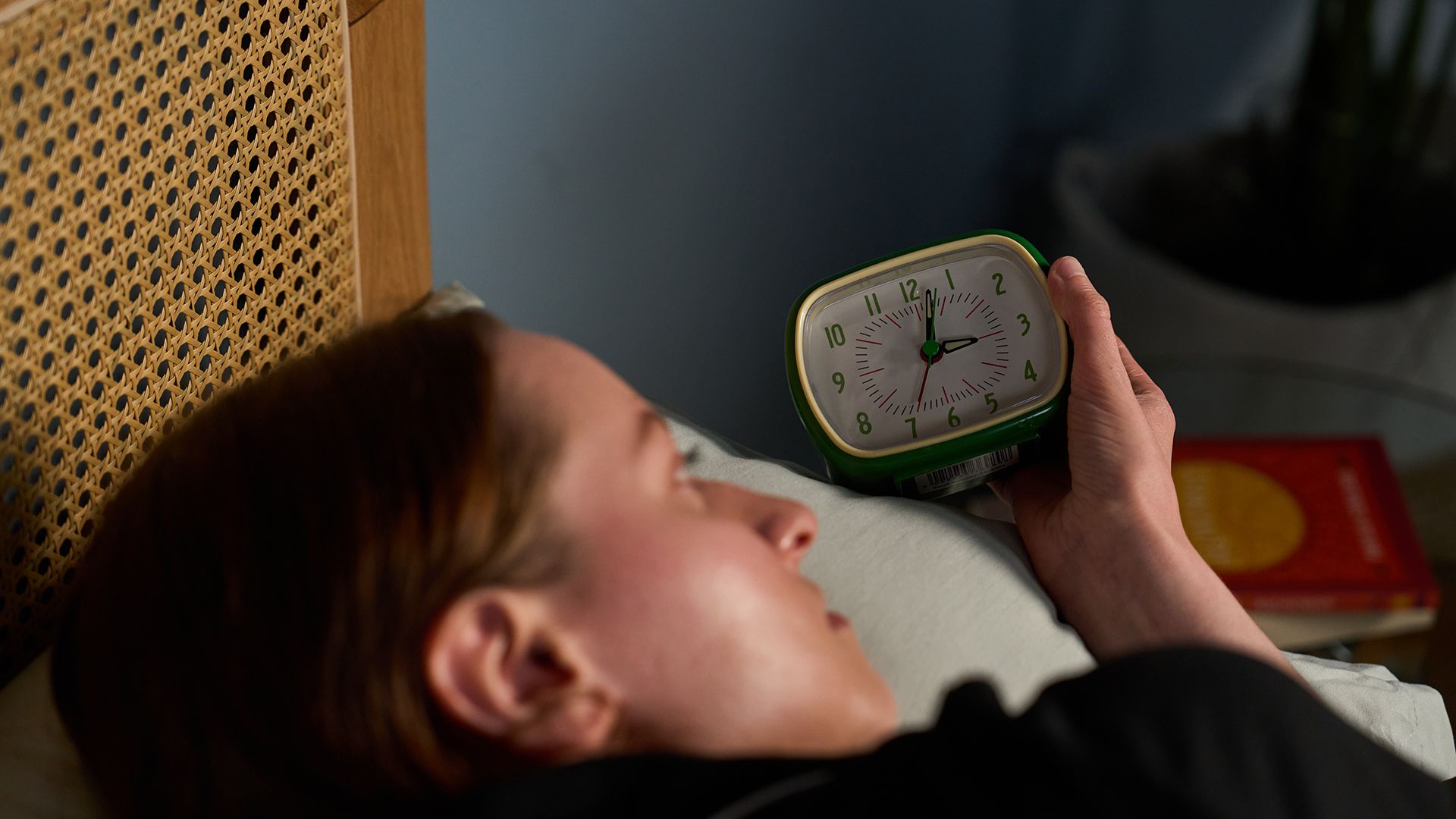
EXECUTIVE SUMMARY
Sleep experts Dr. Tom Chambers, Dr. Shelby Harris and Hannah Shore reveal what may be behind your 3 a.m. wakeups and how adjusting your nighttime routine and sleep space can help fix them.
Key Takeaways
- Wide awake at 3 a.m.?
- 6 ways to break the cycle and sleep through the night again.
- Shelby Harris and Hannah Shore reveal what may be behind your 3 a.m.
Read Complete Original Article
Published originally on Tom's Guide