A small Ohio town with just 6,600 residents has become an unlikely example of how communities can push back against the massive infrastructure powering the AI boom.On November 3, voters in Upper Sandusky, Ohio, overwhelmingly approved a measure prohibiting the construction of large data centers within city limits. Nearly 77% voted in favor, following months of opposition to a proposed $900 million data center and natural gas power plant.Organizers initially believed they needed 155 signatures to put the proposed ban on the ballot. They collected 301, only to discover that the actual requirement was higher and that many of their signatures had been rejected. With hours remaining before the deadline, they were still 20 valid signatures short, as accounted in substack post from the president of the national nonprofit Farm Action, Angela Huffman. I spoke to Ms. Huffman, one of the residents who helped organize the campaign, about how her community challenged a nearly billion-dollar development and what other towns facing similar proposals can learn from the experience.It started with a $900 million proposal(Image credit: Smartland Energy)Upper Sandusky sits in northwest Ohio, surrounded by farmland. Huffman's family has farmed about 10 miles outside town for six generations.In June, Smartland Energy proposed developing approximately 146 acres near the northern edge of the city. The roughly $900 million project would have included data centers and a 150-megawatt natural gas power plant.For residents, the proposal raised questions about electricity, water, infrastructure and the long-term future of their community.Upper Sandusky was already dealing with infrastructure questions surrounding a major new soybean processing plant. Another industrial development raised concerns about how much additional demand local systems could handle.Huffman, whose work at Farm Action focuses on corporate power in agriculture and rural communities, had already been examining the potential impact of data center expansion nationally.Now those concerns were reaching her own backyard(Image credit: Angela Huffman)When asked about the proposed data center, Huffman said, "We saw it as a threat to our rural way of life." She added that everyone had questions, "what's this doing to our water supply? How is this going to impact our electricity bills?" Residents also questioned whether the city's existing industrial zoning rules were appropriate for a project of this size.According to Huffman, people wanted to understand what the development would mean for their community before officials approved it.A Facebook post helped turn concern into action(Image credit: Shutterstock)The initial organizing effort began with something familiar to many small communities: a local newspaper article shared on Facebook.Huffman told me that a resident shared coverage of the proposal from the local newspaper called, Daily Chief Union in a community Facebook group. The post attracted hundreds of shares, bringing the development to the attention of residents who might otherwise never have heard about it.Huffman connected with the person who posted the article, and together they began organizing a response.Their dedicated Facebook group eventually grew to approximately 700 members, a significant number for a town of 6,600 people.But organizing online was only part of the effort(Image credit: Angela Huffman)Residents began attending public meetings, requesting government records and pressing city officials for information about the project.Huffman tells Tom's Guide, "Many people were initially uncomfortable speaking publicly, particularly when it meant being quoted in a newspaper or potentially creating tension with neighbors." Still, residents continued showing up. As opposition grew, Smartland Energy withdrew its zoning request, although the company continued efforts to build local support, including holding a public information event at a church. I asked Huffman if she attended Smartland Energy's information sessions and she said, "No, I'm not sure how many people did." Once the company withdrew the proposal, it didn't mean the development had been permanently abandoned, so residents continued organizing.The community's first victory bought them six months(Image credit: Angela Huffman)On July 6, Upper Sandusky City Council unanimously approved a six-month moratorium on data centers and associated power-generation facilities.The temporary pause gave officials time to examine the implications of large data center developments and consider new regulations. It also gave residents time to pursue a longer-term solution.Huffman tells Tom's Guide that the community had originally requested a 12-month moratorium. Although the city approved only six months, organizers recognized that the pause created an opportunity to put the question directly before voters.Working with attorneys from Conserve Ohio, a statewide organization that has supported similar campaigns, residents drafted a charter amendment. The proposal would prohibit construction of data centers with an electrical demand or peak load exceeding 25 megawatts within Upper Sandusky's city limits.Huffman notes that having a lawyer is key for towns hoping to fight against big tech. She says their town's lawyer was pro bono, and encouraged communities to either find a lawyer that will offer their services for free or even pay for a legal assessment at the very least. But even with a lawyer, to get it on the November ballot, residents needed enough valid signatures from registered city voters. That's where things nearly fell apart.They almost missed the ballot by 20 signaturesAccording to Huffman's account of the campaign, organizers were initially told they needed 155 valid signatures.They collected 301 and submitted them on August 3, believing they had comfortably exceeded the requirement. But election officials accepted only 192.Worse, organizers discovered that the city's charter actually required 212 valid signatures.After months of meetings, organizing and legal work, the entire effort was suddenly in jeopardy because of a 20-signature shortfall.With just hours remaining before the filing deadline, residents headed back out to collect more. On August 5, they submitted an additional 50 signatures. Officials accepted 37, bringing the final total to 229.That was just 17 more than required.Midterm elections sealed the town's fate(Image credit: Angela Huffman)Nearly 77% of voters supported the ban. On November 3, Huffman and other organizers returned to their local polling place, this time to watch residents decide the outcome.In her published account, Huffman describes arriving at 6:30 a.m. and remaining until polls closed at 7:30 p.m., spending the day outside holding signs and talking with voters.The results were decisive. According to the Daily Chief Union, 1,893 voters supported the charter amendment, compared with 568 who opposed it.The result followed months of uncertainty, including a withdrawn development proposal, a temporary moratorium and a petition drive that nearly missed its deadline.Upper Sandusky wasn't alone. Other Ohio communities also approved restrictions on data center development during the November election, reflecting broader concerns about how these facilities are approved and who gets a say in the process.Why residents are concerned about AI data centersThe rise of generative AI has created enormous demand for computing infrastructure. Training and running advanced AI models requires powerful servers, cooling systems and significant electricity. As technology companies expand their operations, new data centers are being proposed across the country, including in rural areas with available land.Developers and industry supporters argue that data centers can provide construction jobs, tax revenue and infrastructure investment.But residents also want to know how much of that economic benefit will remain in their communities, particularly when projects require substantial investments in electricity transmission, water systems and other infrastructure.During our conversation, Huffman identified several concerns that motivated residents in Upper Sandusky, including potential increases in electricity bills, water consumption, noise, environmental impacts and the possibility of changing the rural character of the community.Tom's Guide contacted Smartland Energy to ask about the project's future, its potential economic benefits, projected resource requirements and the company's response to the election result. The company did not respond by the time of publication.The local newspaper played an unexpected role(Image credit: Future / Camilla Sharman)One of the most interesting parts of my conversation with Huffman was the credit she gives to the local newspaper. The Daily Chief Union covered Smartland Energy's original proposal, bringing attention to a development that many residents might otherwise have missed.That reporting was subsequently shared on Facebook, where it helped connect people concerned about the project.Huffman emphasizes how important local journalism remains in rural communities, particularly when major companies propose developments that could permanently alter the surrounding area.In Upper Sandusky, newspaper reporting helped residents understand what was being proposed before decisions were finalized.It ultimately became an early catalyst for the organizing campaign.The fight isn't overAlthough the November 3 vote restricts large data centers within Upper Sandusky's city limits, it doesn't prohibit development throughout Wyandot County.Much of the surrounding area consists of unincorporated townships, some without comparable zoning protections.Huffman says residents are now working with people in those areas to explore additional restrictions, including asking county officials to consider a moratorium and zoning changes.That leaves an important unanswered question: Could Smartland Energy or another developer pursue a large data center just outside the city limits?For now, the city charter amendment applies to qualifying large data centers within Upper Sandusky, not to every possible project in the surrounding county.The bottom lineAs AI companies continue expanding their infrastructure, more Americans are finding themselves in the middle of debates over data center development.Upper Sandusky's experience shows how one community responded, beginning with a local newspaper article and a Facebook post before moving into public meetings, legal assistance and a ballot initiative.For a town of 6,600 people, that's a significant outcome and one Huffman encourages other communities with proposed data centers saying, "You can do something about it. You're not alone." More from Tom's GuideMan sues OpenAI alleging ChatGPT helped his wife try to murder him: it's the 10th homicide the AI chatbot has been accused of abetting in less than two yearsA few tech leaders are rebranding AI as ‘superintelligence’ — calling it that doesn’t make it accurateA new bill could ban powerful AI in the US — here's what it means for ChatGPT
A town of 6,600 people took on a $900 million AI data center — and won. Here's how they did it.
TO
Tom's GuideBy Amanda Caswell 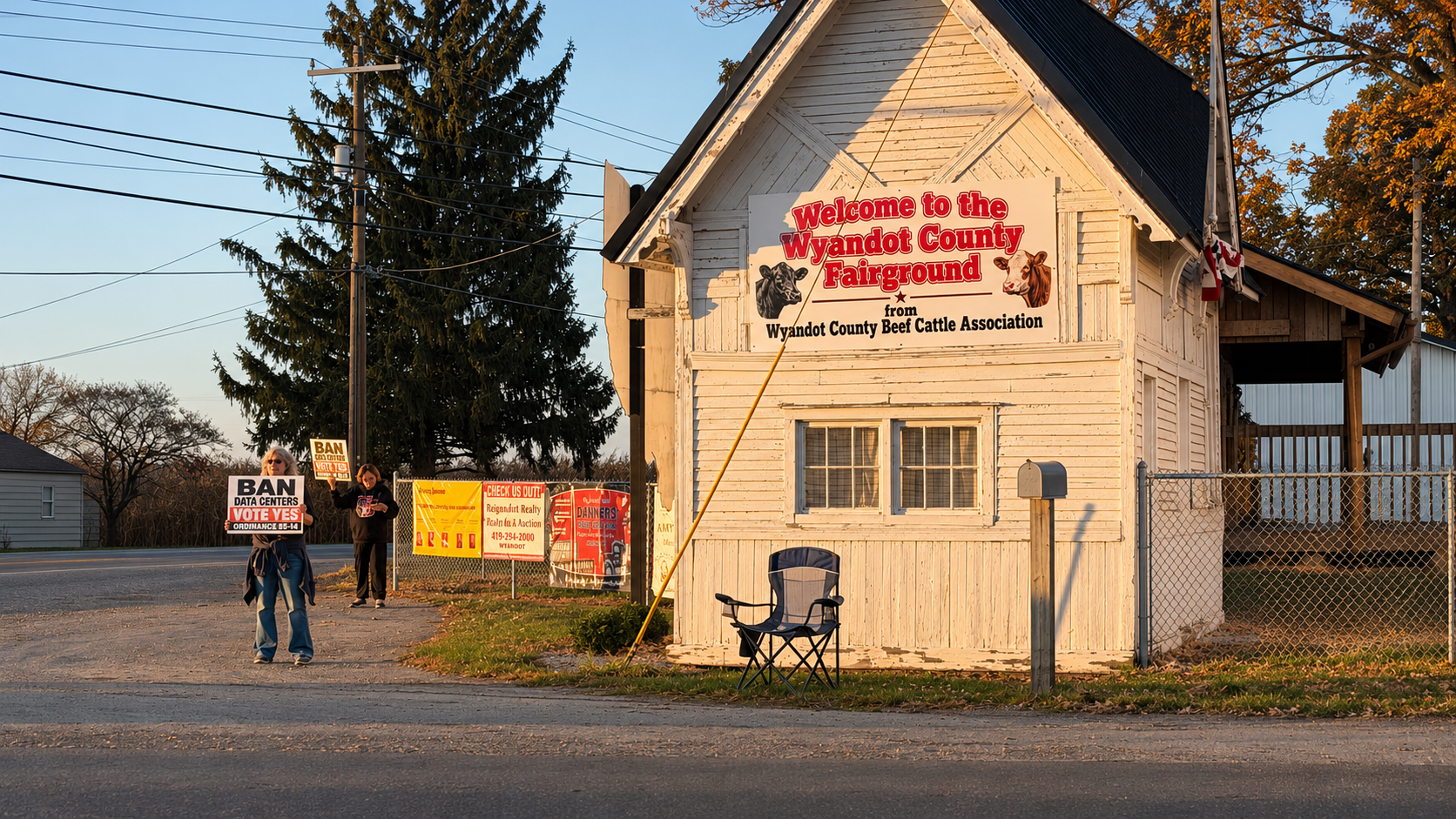
EXECUTIVE SUMMARY
A small Ohio town voted to restrict large AI data centers after a $900 million proposal sparked months of organizing. An organizer explains how they succeeded.
Key Takeaways
- A town of 6,600 people took on a $900 million AI data center — and won.
- Here's how they did it..
- A small Ohio town voted to restrict large AI data centers after a $900 million proposal sparked months of organizing.
Read Complete Original Article
Published originally on Tom's Guide