

The last days of Joe Louis, and the terrible cost of greatness: Louis vs. Rocky Marciano, 75 years later
In a segregated America, Joe Louis became something extraordinary: a Black heavyweight champion celebrated as a national hero, who gave his country everything only to spend his final years buried in debt to its government. Seventy-five years after his final fight, his remarkable life and heartbreaking decline tell a story that extends far beyond the boxing ring.
Key Takeaways
- The last days of Joe Louis, and the terrible cost of greatness: Louis vs.
- Rocky Marciano, 75 years later.
- Seventy-five years after his final fight, his remarkable life and heartbreaking decline tell a story that extends far beyond the boxing ring.
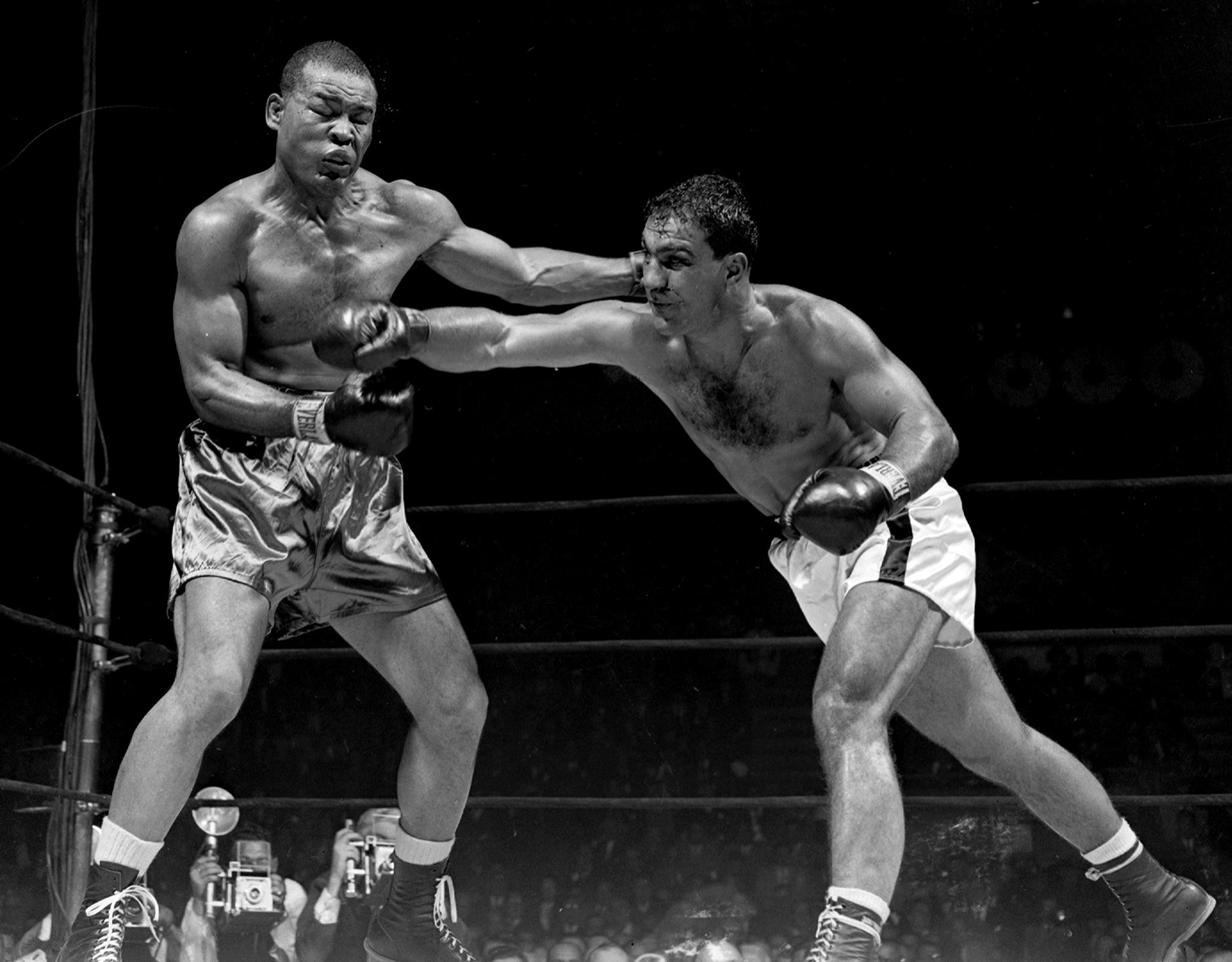
When it was over, America's hero lay more out of the ring than in it. Body sprawled on the apron. One foot hooked over the bottom rope. His head hanging over the edge as sportswriters at ringside reached up to keep him from falling to the floor. His bald spot was on prominent display, as if the world needed another reminder that the ravages of time had brought him here as much as that final right hand that put him all the way out.But that's not completely true. The fact is Joe Louis probably never would been in that ring at all if he weren't so deeply in debt to the United States government. His service during World War II, once lauded as so vital to America's war effort, wasn't enough to keep the Internal Revenue Service from hounding him over past due taxes.Louis had earned millions as a beloved champ, the first Black man since Jack Johnson to win boxing’s world heavyweight title. He'd also spent, gambled, or just plain frittered away his fortune many times over, with Uncle Sam constantly picking through the lint in his pockets to find whatever might be left.That tale of woe dampened few spirits in the opposing corner on October 26, 1951 — 75 years ago today. The 28-year-old Rocky Marciano, who'd come into this fight as a betting underdog, was celebrating a victory over the man who'd once been his hero. His unbeaten record, so carefully maintained by his wily manager, remained intact. Back home in Brockton, Massachusetts, where they'd learned to always bet on the boy they knew as Rocco Marchegiano, they were counting their winnings and planning the victory parade, which would eventually include a cake 10-feet high.But this wasn't even a title fight. For that, young Marciano would have to wait another year. But a knockout victory over the great Joe Louis was almost worth more. In the winner's locker room, manager Al Weill pointed at Marciano and said, "There stands two million bucks in cold cash."Over in the other locker room, Louis was reckoning with a bleaker future. The ex-champ lay facedown on a massage table with one hand resting in a bucket of ice as he answered the newspapermen's questions. Yes, he told them, this Marciano kid hit hard. Yes, probably even harder than Max Schmeling, the only other fighter to ever knock Louis out. Then again, Louis said, he was 22 years old back when Schmeling got to him."You can take more then than later on," he said. He didn't have to tell any of the reporters that this, what they were witnessing now, was the last stop of the "later on" period."An old man's dream ended," Red Smith would write of the fight in the New York Herald Tribune. "A young man's vision of the future opened wide. Young men have visions, old men have dreams. But the place for old men to dream is beside the fire."The story of how both men arrived at that intersection of boxing's past and future is a familiar one to any fight fan. It's the classic and also tragic tale of how the sport makes the young eat the old to secure their own place at the table. It's a story about what it meant — and what it was worth — to be a hero in post-war America. Even now, 75 years later, it remains a saga of hard triumphs and unpleasant realities. And still it has plenty to teach us about life in and out of the ring.Oct. 26, 1951: Rocky Marciano drives a right hand into Joe Louis in the eighth round of their heavyweight title fight.New York Daily News Archive via Getty ImagesWhen he first won the heavyweight title in 1937, knocking out "The Cinderella Man" James J. Braddock at Chicago's Comiskey Park, Louis vowed to be "a fighting champion." He meant it.His first year as champ, Louis defended the belt four times, culminating with a brutal first-round knockout of Schmeling to avenge his only professional loss. He would maintain that pace, notching four heavyweight title defenses per year, until 1941, when he somehow logged seven straight title defenses in one calendar year, a feat that will likely never be repeated. Before his reign was over, Louis would defend the heavyweight belt more than previous nine champions combined.That run was not without complications and criticisms. By the early 1940s, Louis had dispatched all serious contenders to the heavyweight throne. His management triad — Mike Jacobs, John Roxborough and Julian Black — kept him busy in order to keep the money faucet flowing. Sometimes that meant getting creative about his matchups, as when they tapped New Jersey bartender "Two Ton" Tony Galento to bring his colorful persona and bowling ball physique to Yankee Stadium for a shot at Louis' title.But the press had begun calling Louis' steady stream of opponents the "Bum of the Month Club," and the box office returns were diminishing. After earning a purse of nearly $350,000 (about $8.3 million in 2026 dollars) for his rematch with Schmeling, his first five fights in 1941 brought in less than $120,000 combined. It didn't help that money seemed to flow through Louis' hands like water in a mountain stream.In his exhaustive biography, "Joe Louis," Randy Roberts recounts a description of Louis' spending habits from lawyer and longtime friend Truman Gibson:"The thing you have to understand about Joe is that he lived every day," Gibson said. "I went to school, I planned for the future, Joe Louis lived every day."He kept apartments in Chicago and New York. He owned a sprawling horse ranch in Michigan. He had closets overflowing with expensive suits and he meticulously tracked what he wore so as not to be seen in the same outfit too many times. He handed money out freely to friends and strangers, and developed an almost pathological habit of gambling on his golf game. In an autobiography, Louis would recall how he'd started betting more and more heavily out on the links, "but damn, I was losing a lot of money."Heavyweight champion Joe Louis (L) and his manager, Julian Black, play cards.Bettmann via Getty ImagesOne friend recalled that Louis would occasionally come home from losing large sums on the links and then break his own clubs in disgust and frustration, only to buy more later."He was like a man with alcohol," said his longtime friend Sunnie Wilson. "It was an addiction."Louis' motivation to stay busy as champ was driven in part by his constant need to refill his coffers. But he was so far ahead of the pack as a fighter that finding him anyone who could put up enough of a fight to make for a good show only got more challenging. In 27 title fights between 1937 and 1948, only four opponents went the distance with Louis.Louis' toughest test in the ring during this period came against light heavyweight champ Billy Conn, who moved up a division to challenge him in the summer of 1941. Conn was undersized, but a deft technician whose quickness proved frustrating for Louis, who had become used to being the faster man at heavyweight."He was like a mosquito," Louis said later. "He'd sting and move."For the better part of 12 rounds, "The Pittsburgh Kid" picked Louis apart. His punches didn't seem to be damaging Louis, but he was clearly wearing the champion down and his confidence grew as the fight went on. In the 13th, Conn decided it was time to put Louis away. He knew he was ahead on the scorecards, but later explained that he believed the heavyweight title was something that should change hands via knockout — not via the judges.This proved to be a grave mistake. Once Conn decided to stand and trade rather than hit and run, Louis began tagging him with hard shots. A Louis left hook late in the round, followed by a thudding right behind the ear, sent Conn tumbling down, his head bouncing violently off the canvas.Conn rose slowly, appearing to stand just before referee Eddie Joseph reached a full 10-count. But one look in Conn's eyes and Joseph decided to wave it off. Conn offered no protest.Asked later why he didn't just stay away from Louis for the final three rounds and win the title on points, Conn replied: "What's the sense of being Irish if you can't be dumb?"The fight was such a dramatic sensation that a rematch seemed inevitable. Two things worked to prevent it. First, Conn broke his hand on his father-in-law's head during one of many arguments about whether he was good enough for the man's daughter, resulting in a delay. Then, on December 7, 1941, Japan bombed Pearl Harbor. The United States was at war, and soon Joe Louis was too.World heavyweight champion turned Army soldier, Joe Louis, enters the cockpit of a fighter jet.Library of Congress via Getty ImagesNo one outside the working class manufacturing town of Brockton, Massachusetts, had ever heard of Rocco Marchegiano at the start of World War II. Just another kid from yet another family of Italian immigrants, he was 18 when the U.S. declared war on Japan and Germany. Like the other boys he'd grown up with, he was essentially just waiting for the inevitable draft notice.That notice eventually arrived in 1943, leading to an entirely undistinguished career in the U.S. Army, except for one detail — it was where he first discovered boxing.The boy who would later become Rocky Marciano had always been a sports fanatic. He'd grown up on the sandlots of Brockton's Ward 2, the son of Italian immigrants who, like most others in the neighborhood, made their living in the city's factories. His father had come to America as a teenager, then enlisted in World War I, eager to fight for the adopted homeland he was so proud of. He'd been terribly wounded in battle, both by shrapnel and by the poison gas deployed by the Germans. He returned to work in a Brockton shoe factory after the war, but his body was shriveled and depleted by the toxins. It was said that, for the rest of his life, he always kept a hard candy in his mouth to drive out the lingering taste of the gas.In the America of Marciano's youth, baseball was the pinnacle of the athletic world. As a stocky, muscular kid with thick legs and short arms, Marciano was a natural as a catcher. He made for a powerful hitter, but he was comically slow on the base path. An uncle had built him a homemade heavy bag, which young Rocco thumped on regularly, but his actual fighting experience was limited to neighborhood tussles, which were so frequent as to be mostly unremarkable.He'd gotten a glimpse of professional boxing as a kid down at the Brockton Arena. According to Mike Stanton's excellent biography, "Unbeaten: Rocky Marciano's Fight For Perfection In a Crooked World," Rocco and friends would get into events for free by working odd jobs at the arena. At the height of the Great Depression, the promoter could only afford one set of gloves for the fighters, so Rocco and other kids would make themselves useful between bouts by quickly taking the gloves off one fighter and bringing them to the next man on the fight card so the event could proceed.Rocky Marciano with his mother, Lena Marchegiano, in Brockton, approximately July 1950.Boston Globe via Getty ImagesOne night they even got to stand close to greatness, when heavyweight champion Joe Louis made an appearance at a Brockton boxing event. The starstruck young boys, Rocco among them, followed Louis everywhere — even to the bathroom. One friend of Marciano's recalled that Louis had been uncommonly patient with their invasions of his privacy, pressing 50 cents into each boy's hand as he left.But Marciano didn't seriously lace up the gloves himself until the Army, and even then it was mostly to get out of other duties. He was not a good soldier by any metric. He chafed at the restrictions, at being constantly told what to do. But when his unit shipped out to the coastal city of Swansea, in the United Kingdom, it brought Marciano near enough to a real, working boxing gym run by a Welsh heavyweight named Jim Wilde.Marciano learned the first inklings of boxing craft there, but he also landed himself in serious trouble. Along with another soldier, Marciano was accused of beating and robbing a British man after a night of heavy drinking. Both men denied the charges and claimed self-defense against homosexual "advances," but were swiftly convicted in a court martial. While Marciano's unit headed to France to join the war, he sat in the brig, awaiting punishment. His commanding officer described the young private as "an unreliable and unsatisfactory soldier" whose prior offenses "have always been minor enough to avoid trial by court martial, but they have been consistent and numerous." He concluded that Marciano was "of no value to the Army."Marciano's war record remained a well-kept secret during his later rise to fame. When asked by reporters, he would typically remain vague, saying he saw no combat heroics and was just another one of the boys over there doing what he could. This read as good-natured humility in the papers, but also concealed the fact that he'd spent nearly two years as a military prisoner before being reassigned to Fort Lewis, Washington, where he extended his military service — unpaid — in order to turn his dishonorable discharge into an honorable one.Returning to Brockton after the war, Marciano was a high-school dropout whose dreams of a big-league baseball career were doomed by his slow legs. He'd learned to box in the Army, and had even logged some rough semblance of a few bouts with other soldiers. But it wasn't until a local promoter agreed to stick him in a fight for the sake of a hometown draw that he got a real taste of what boxing was like.Technically, it was an amateur fight, though Marciano — then still going by his family name "Marchegiano" — mostly did it for the $30 fee he'd receive for "expenses." He'd always been known as a tough kid in the neighborhood, ready and willing to fight all comers, but he wasn't in great cardiovascular shape. That was before he stopped at his uncle's house on the way to the arena and ate a big plate of macaroni, which did him no favors.His first opponent was an experienced amateur heavyweight named Henry Lester who easily evaded Marciano's wild swings. The neighborhood kid was a game brawler, which pleased the local crowd, but he wasn't much of a boxer. By the start of the second round, he was so exhausted that he could barely hold up his gloves. As Lester began pummeling him against the ropes, Marciano defended himself by kneeing Lester in the groin.He was immediately disqualified. He would later claim that it was an accident, but the referee that night remembered it differently."The kid just plain kneed him in the balls," he explained.Marciano was embarrassed, saying later: "That was my first hometown fight and I lost it." He resolved to never again show up for a fight in anything less than stellar shape.March 22, 1950: Rocky Marciano (R) works out on the speed bag, as middleweight Rocky Graziano watches in New York. (Photo by © Bettmann/CORBIS/Bettmann Archive)He mostly kept that promise to himself, becoming fanatical and even monastic about his training. Years later, deep in training camp while preparing to defend his heavyweight title, it was said that he even rejected the advances of famous actress Jayne Mansfield (though it was also said that he made up for lost time after retiring). Marciano believed, he said, that "you've got to make boxing a kind of religion. You believe in yourself and you believe in the things you got to do. You never forget them for a minute."But early on, Marciano's future in boxing seemed limited. Just being a dreadfully slow runner had doomed his hopes of playing professional baseball, even after a tryout with the Chicago Cubs. His short arms and plodding movements didn't auger well for his hopes of turning into a successful heavyweight. Even as he gained experience and training, he still fought like a brawler. Early opponents found him easy to hit, though nearly impossible to actually hurt.For those first few years as a pro, that was Marciano's saving grace. He couldn't box all that well. He wasn't especially clever as a fighter. At about 5-foot-10 and 185 pounds when he was in shape, he was undersized for the heavyweight division. But he could take anyone's best punch and keep coming forward. And once he inevitably got close enough to land his own shots, he hit like a train."I got a guy who's short, stoop-shouldered, and balding with two left feet," trainer Charley Goodman once said. "They all look better than he does as far as the moves are concerned, but they don't look so good on the canvas."Marciano's career began to get serious when he relocated to New York City and signed with manager Al Weill, a fast-talking, cigar-chomping wheeler and dealer who'd made the unlikely transition from competitive ballroom dancing to handling pro fighters. He had a reputation for penny-pinching and for exerting a domineering control over his fighters, while never losing sight of the main goal — stuffing his own pockets.As one writer put it: "Boxing will never be the spiritual leader of sports. And Al Weill will never be the spiritual leader of boxing."Weill could see that Marciano had several physical deficiencies in addition to his lack of general boxing skill, but he also saw the marketing potential in a heavyweight who could — and would — take a beating in order to deliver one-punch dynamite.Weill shepherded Marciano toward the trainer Goodman, who helped turn some of Marciano's physical shortcomings into stylistic assets. The most successful innovation was in teaching Marciano to fight out of a low crouch, making him even shorter but also harder to hit for taller, longer fighters. As they reached down for the ducking, driving Marciano, he would advance into their chests, hammering with short, powerful punches from inside their preferred range.The strategy worked well, especially against lower-level fighters. Weill was quick to see that Marciano's undefeated record (early semi-pro losses were kept off his record, aided by the change of name from Marchegiano to Marciano) was as important from a marketing perspective as his crowd-friendly, power-punching style. As Marciano climbed the ranks, Weill was often directly criticized for protecting a fighter still rough around the edges by booking him in nothing but easy fights.Earl Lofquist, a writer with the Providence Journal, had covered many of Marciano's early pro fights in Rhode Island, where he fought almost exclusively for the first couple years of his pro career. He criticized Marciano as overrated, writing that his opponents were "slightly animated punching bags." His handlers stressed that he'd picked up boxing relatively late in life, having only learned the sport in earnest in the Army. This placated some critics, but only for a time."You'd think the guy was a fragile egg to be kept under glass the way his opponents ([Roland] LaStarza excepted) have been handpicked," Lofquist wrote. "Whether this has been for Marciano's good can be doubted. His improvement over the past year has been slight. But then he has not been fighting anybody from whom he could learn anything."That was all about to change.Marciano's streak of knockout victories, along with his undefeated record, garnered more and more attention. And the state of post-war heavyweight boxing in America was shaping up as the perfect environment for his particular brand of brawling. All he needed was the right opportunity against the right opponent to make a name for himself that would ring out all over the country. This is how the misfortunes of a once great champion became the lucky break Marciano needed, and just in time.Oct. 3, 1951: Joe Louis and Rocky Marciano shake hands as James D. Norris, president of the International Boxing Club, looks on in New York.Bettmann via Getty ImagesDuring World War II, Joe Louis had been a poster boy for the U.S. Army — literally. He appeared on recruitment posters as "Pvt. Joe Louis," brandishing a rifle and bayonet along with a quote promising victory to America "because we're on God's side."For more than two years, the heavyweight champion's professional career was effectively on hold. Some of the fights he did have during the war, such as a 1942 bout against Buddy Baer, were essentially charity matches, with proceeds going to causes such as the Navy Relief Society. Louis was also instrumental in the Army's efforts to recruit more Black soldiers, and to sell the war effort itself to a community still suffering under brutal discrimination in most of the country.A saying at the time held that Black Americans believed in two things: God and Joe Louis. Early in the war, he was a vital bridge between the military apparatus of the nation and the Black soldiers who would be called upon to serve in segregated units that endured much poorer conditions. During World War II, the U.S. Armed Forces were still so racially segregated that a wounded white soldier would not be given blood taken from a Black one, and vice versa.Louis mainly served in the Special Services Division, traveling around for recruitment events and entertaining troops with boxing exhibitions. Behind the scenes, he worked to ease the path for other Black soldiers, including a young Jackie Robinson. Shortly before his release from the military in 1945, he was given an award citing his "incalculable contribution to the general morale" of troops.But it didn't take long for Uncle Sam to forget Louis' contributions once the war was over. As the IRS began examining his tax returns, it found one reason after another to increase Louis' overall tax bill. Even some of the charity bouts, for which he profited hardly at all, came back to bite him at tax time.It didn't help that Louis, who seemed to regard money as a thing that passed through his hands but was never fully owned by him, had already spent most of his earnings. The government kept adding to the tally, and the interest kept ticking the number up even higher. To get by, Louis was taking advances on future earnings from his managers, which placed him ever more firmly under their control.By 1950, following audits of several years' past tax returns, the IRS assessed Louis' debt to the U.S. government at around $500,000 — the equivalent of around $7.1 million today. He owed money to his managers, as well as to his ex-wife Marva, toward whom he hardly even attempted to be faithful, and whom he would marry and divorce twice — once in 1945, and then again in 1949.But even while he was successfully defending his heavyweight title, it became clear that Louis' skills were in decline. He won successive bouts in 1947-48 against "Jersey" Joe Walcott, though unimpressively. After the second bout, he declared himself finished with fighting at the age of 34."That's my last fight," Louis said. "I've been around a long time and I think that it's about time to quit. And I'm glad to quit with the title still mine."June 25, 1948: Joe Louis stops Joe Walcott in the 11th round to remain undefeated heavyweight champion of the world. Immediately after, Louis announced this was his "last fight."Bettmann via Getty ImagesRetirement did not come easy. Louis was restless, sometimes taking off on a whim and staying gone for days or weeks. He struggled to find ways of making enough money to keep pace with his ballooning tax debt, plus what he owed to the managers who had been slipping him money while keep a careful accounting of what they expected to get back. In 1950, he announced a comeback against Ezzard Charles, who'd claimed the vacant title by beating Walcott after Louis did.The fight was a sad affair. Louis looked slow and out of shape. He made it the distance, but the judges' decision for Charles was a formality.A report on the fight in The New York Times concluded: "Everybody knew his reflexes must have suffered. That's inevitable. Few suspected his coordination would be what it was, so amazingly lacking that it was non-existent."After the fight he again declared his retirement. "I'll never fight again," Louis told reporters. "Positively."But he did, of course. Just two months later. He had to. It was the only hope he had of earning enough money to be free of his debtors — both public and private — even though the returns on his bouts were getting smaller and smaller. Louis' heyday as champ had come in the age of radio. Millions of Americans listened to the play-by-play of his fights broadcast over the airwaves in the 1930s, but to see his boxing beauty and brilliance for themselves they had to buy a ticket.In post-war America, the television was rapidly replacing radio as the primary means of home entertainment. Between the end of World War II and the early 1950s, television ownership in America had grown from a few thousand sets to around 12 million. This changed the economic realities for boxing, and those who tuned in to see their hero Louis often wound up disappointed by his obvious signs of aging.Still, even a Louis in decline was good enough to beat most heavyweights of the era. After the title fight loss to Charles, he reeled off eight straight wins, though knockout victories were now in shorter supply. There was even talk that he might manage to work his way back to the heavyweight championship. For that, he'd need an eye-catching win. The young, undefeated Marciano seemed to be the only option who would fit the bill.Some in Marciano's camp questioned the wisdom of the match. Wasn't Louis exactly the kind of fighter Marciano should avoid? He had technique but also size and power. If Marciano was really a paper tiger, Louis could expose him. It didn't help that, either due to his own dire financial condition or his well-known dislike and distrust for Marciano's manager Weill, Louis had insisted on an uncommonly uneven cut for the proceeds of the fight. Louis would only fight Marciano if he received 45% of the money, leaving just 15% for the unbeaten youngster. Weill advised Marciano to take it anyway."Old guys like Louis go all of a sudden," Weill said. "If we don't get him first, someone else will."The fight was originally set for Manhattan’s Polo Grounds, but was moved to Madison Square Garden after Bobby Thompson hit the "shot heard round the world” to keep the New York Giants' season going with a National League pennant win in early October.By the day of the fight on October 26, 1951, Louis vs. Marciano had captured imaginations all over America. It was an especially hot ticket in Brockton, where a special ticket office had been opened to capitalize on Marciano's hometown fame. By this point, he was more than a hero to the people there — he was a cash cow. The people of Brockton were known for betting everything from the rent to the grocery money on their man."They couldn't afford to see me lose," Marciano said of his supporters in Brockton. "I always knew I would get up."But this time Marciano was the underdog. He had power, yes. His right hand had snapped off the front teeth of a recent opponent at the gums. But could he get close enough to land that punch on a savvy fighter like the former champ? Louis didn't seem to think so. He told reporters that he'd gone to watch film of Marciano's fight with Rex Layne, which took place earlier that same year, and had walked out of the theater."He can't fight," Louis said.When told of this, Marciano said he didn't blame Louis for walking out. He hadn't fought well that night. But he knew he could do better. He was also, despite the press and the attention and the stakes, seemingly unconcerned. As one trainer said of him, "He goes in for a fight like I go in for a glass of beer."Walking into Madison Square Garden that night, Marciano was walking into enemy territory. He had a vocal cheering section of a few thousand fans from Brockton, but the rest of the crowd seemed to be in the Louis camp.The famed boxing writer A.J. Liebling, writing about the fight in his classic boxing book "The Sweet Science," recalled that Louis had somehow looked younger than his 37 years while walking around in street clothes, with a hat that "hid the bald spot." But on fight night the bald spot and the softening midsection were on full display."It's when he gets into a ring that age comes on him," Liebling wrote of Louis.Oct. 26, 1951: Rocky Marciano uppercuts Joe Louis during their heavyweight title fight at Madison Square Garden.Keystone-France via Getty ImagesAny doubts about Marciano's ability to get close enough to hurt Louis were put to rest in the first round. He charged across the ring at the older man, bullying him back toward the ropes with his head in the former champ's chest. Liebling wrote that Marciano's right hand had "received all the advance publicity," but it was the left that wound up hurting Louis more in the fight."The way I figured it, Louis was being so careful about that crazy Marciano right that he was afraid to pull his own left back to hook," Liebling wrote. "He would just jab and drop his forearm onto Rocky's right biceps, so he couldn't counter. Sooner or later, Joe would throw the hook, I thought, and that would end the fight. It looked like a fight between two men with one good hand apiece."Louis did throw the left, and even landed cleanly with it. It was the same punch he'd used to drop so many opponents during his championship prime. But Marciano seemed entirely unbothered by it. He kept pressing forward, and late in the opening round landed a solid shot that wobbled Louis."I think that punch was the one that made Joe feel old," Liebling wrote.Then, in the middle rounds, Louis began to show signs of a revival. The jab came back to life. He seemed to be winning rounds. Maybe he couldn't hurt Marciano, but he could hit him and he could wear him down. He just had to stay mobile enough to avoid that right hand.But in the eighth, Marciano proved that he did in fact have two good hands. One leaping left hook was all it took to sit Louis down in the corner. He rose quickly to one knee, then waited for his head to clear. Once he rose to his feet, Marciano swarmed him. As Louis tried to tie his arms up, Marciano fired off short hooks and uppercuts, nothing but power shots, with more coming all the time, even if he missed with half of them.A slicing left came up almost from the floor and knocked Louis against the ropes, his legs trembling involuntarily. Marciano followed up with the same punch again, and now Louis' hands began to sink down toward his sides. He might have fallen right there if Marciano had stepped back and let him.Instead, the young contender uncorked that dreaded right hand on a now defenseless Louis, knocking him through the ropes and onto the ring apron.Oct. 26, 1951: The end of an era.Bettmann via Getty ImagesA count was unnecessary. The focus now was on helping Louis back into the ring, back to his feet, where he could congratulate the coming man of the division."I remember looking out at the crowd and how everyone just sat there in silence," Marciano recalled later. "Only the guys from my hometown in Brockton were making any noise."Once Louis was upright again, Marciano went over and offered his apologies."I'm sorry it had to be me," he said."You don't have to be sorry," Louis is said to have told him. "You licked me fair and square."Back in his office a couple weeks later, Weill couldn't stop gloating. He'd accurately assessed the situation for what it was, and now he and Marciano stood to make boatloads of cash from the fame that came with being only the second man to ever knock out Joe Louis."What did I tell you?" Weill said to Liebling. "You want to look out for them broken fighters."Oct. 27, 1951: Rocky Marciano reads the news the day after defeating Joe Louis.New York Daily News Archive via Getty ImagesLouis was finally finished with boxing. He meant it this time. He never fought another professional match, though he did keep a hand in various forms of fight sports purely for the money. For a time he even worked as a professional wrestler. When asked if that wasn't a humiliating vocation for the former heavyweight champ, he replied only that it "beats stealing."Not everyone could stomach seeing Louis in a wrestling ring. His second wife (but third marriage), Rose Morgan, was always against it."To me, Joe Louis was like the President of the United States," she told a reporter. "How would you like to see the President of the United States washing dishes? That's how I felt about Joe wrestling."An accidental injury forced him out of the field soon enough, though he would occasionally work matches as a referee. He still owed an astounding tax debt, and would ultimately die still under that burden."I owe the government well over $1,000,000 in back taxes," he said in the late 1950s. "I don't actually know how much the total is, and I don't think the government does either."But the government did know. The debt was around $2 million when Louis died in 1981. In his later years, some of Louis' behavior became increasingly erratic and worrisome to those around him. He began using drugs like heroin, which he initially blamed on a woman who he claimed had administered the drug while he was sleeping. He also used cocaine, and seemed to go through bouts of extreme paranoia.When he checked into hotels, he would tape cardboard over the vents and smear mayonnaise on the ceiling, which he said was to prevent poison gas from seeping into his room. He sometimes thought he was being tailed by hired killers, occasionally threatening strangers whom he thought were following him. In 1970, his fourth wife, Martha Jefferson, had him committed to a hospital for psychiatric evaluation. Every day she visited and brought him fruit, which Louis would distribute to the other patients.Louis spent most of his later years in Las Vegas, working as a casino greeter at Caesar's Palace. Gregarious and instantly recognizable, he was well-suited to the role. The casino would give him a pocketful of chips and he would happily gamble them away, which in turn encouraged other patrons to throw their money down right beside them, just so they could tell their friends back home how they had once shot dice with Joe Louis.His old foe Billy Conn recalled visiting him in Las Vegas and watching as Louis gave a chip worth $100 to a man begging for change. When Conn pointed out that he also had $25 chips and could have easily handed the man that one instead, Louis shrugged."What the hell's the difference?" he said. "I'm going to lose it anyway."Detroit, Michigan: A monument to boxer Joe Louis in the downtown district. The landmark is popularly known as The Fist.Roberto Machado Noa via Getty ImagesWhile he certainly felt the stress of his debts, Louis never seemed to grow bitter about the relentless hounding from the same government he once so eagerly served. He also refused to complain about life in the ring, or how earnings for boxers skyrocketed only after his time was done."I ain't sorry I fought when I did," he said. "In my time, I made $5,000,000, wound up broke, and owe the government $1,000,000 in taxes. If I was fighting today, I'd earn $10,000,000, would still wind up broke, and would owe the government $2,000,000."He did, of course, owe the government that sum when he died. Still, to observers he seemed to be a man with few regrets. Biographer Randy Roberts wrote that, by the time Louis retired for good at the age of 37, he was worse off in many ways than before the first time he slipped on a pair of boxing gloves."Then, he had nothing," Roberts wrote. "Now, he had much less. In between he had it all."Marciano, of course, went on to become the world heavyweight champion with a 1952 knockout of "Jersey" Joe Walcott. He defended the belt six times, retiring after his knockout of Archie Moore at Yankee Stadium in 1955. He became the rare heavyweight champion to walk away from the sport undefeated and actually stay that way. He faced his own struggles with retired life, overindulging his appetites for both food and women. He was also restless, traveling often, and hoarding cash in strange places, all due to a constant fear of losing it all.Even after retiring with a perfect 49-0 professional record, some critics still maintained that he was overrated. He'd come along at a particularly weak time for the heavyweight division, they said, then got out before the talent improved. Arthur Daley, of The New York Times, once observed that "no man reached the championship with more physical handicaps" than Marciano, but also noted, amid comparisons to boxing's prior greats, that "if Marciano is the second Jack Dempsey, the first Jack Dempsey should sue him for libel."Marciano Way in Brockton, Massachusetts.Boston Globe via Getty ImagesMarciano ultimately died in a plane crash the day before his 46th birthday. He was a passenger in a small Cessna plane, flying from Chicago to Des Moines, Iowa, where he had agreed to make an appearance at a restaurant. The pilot, who had limited experience flying at night, became disoriented in a fog bank. Reports later said there was only one tree in the field where he tried to set the plane down, and they had hit it."Start the count, he'll get up," the great Los Angeles Times sportswriter Jim Murray wrote after news spread of Marciano's death on August 31, 1969. "A lot of us today are wishing there were an honest referee in a cornfield in Iowa."Marciano remains the only man to retire undefeated as boxing’s heavyweight champion. There are still those who debate where he belongs in the all-time rankings, and whether it is truly ahead of Louis, who held the title for so long, defeated so many, and might have added even more triumphs to his tally if not for the outbreak of World War II. Just because Marciano beat him in his waning years, does that really make him the better heavyweight? It's an argument for barbershops to this day.One thing that's less debatable about Marciano is how much he made of his career despite what would seem to be major deficiencies. Even at the time, this perplexed onlookers. Liebling later told a story of being baffled as to the approach Ezzard Charles took in his bouts with Marciano. Why didn't he fight more aggressively? Why did he seem so content to be counted out after being dropped by the champ in their rematch? It wasn't until he pressed boxing trainer Freddie Brown on the question that he got his answer."He fought the way he fought because Marciano fought the way he fought," Brown explained. "… It is not like football. Rocky never gives you the ball."Sept. 1, 1955: Rocky Marciano and Joe Louis, two all-time legends of the ring.The Stanley Weston Archive via Getty ImagesAuthor's note: A great debt is owed to the following texts, all of which are highly recommended for readers who wish to know more about this chapter of boxing history:"Unbeaten: Rocky Marciano's Fight For Perfection In A Crooked World" by Mike Stanton"Joe Louis: My Life" by Joe Louis and Edna Rust"The Sweet Science" by A.J. Liebling"Joe Louis" by Randy Roberts"Once There Were Giants: The Golden Age Of Heavyweight Boxing" by Jerry IzenbergJoe Louis: The Great Black Hope" by Richard Bak"At The Fights: American Writers On Boxing" edited by George Kimball and John Schulian"Beyond Glory: Joe Louis, Max Schmeling, And A World On The Brink" by David Margolick"50 Years At Ringside" by Nat Fleischer
Read Complete Original Article
Published originally on Uncrowned
Related News
एनपिएलमा आज दुई खेल हुँदै : विराटनगर र चितवन तथा कर्णाली र जनकपुर खेल्ने
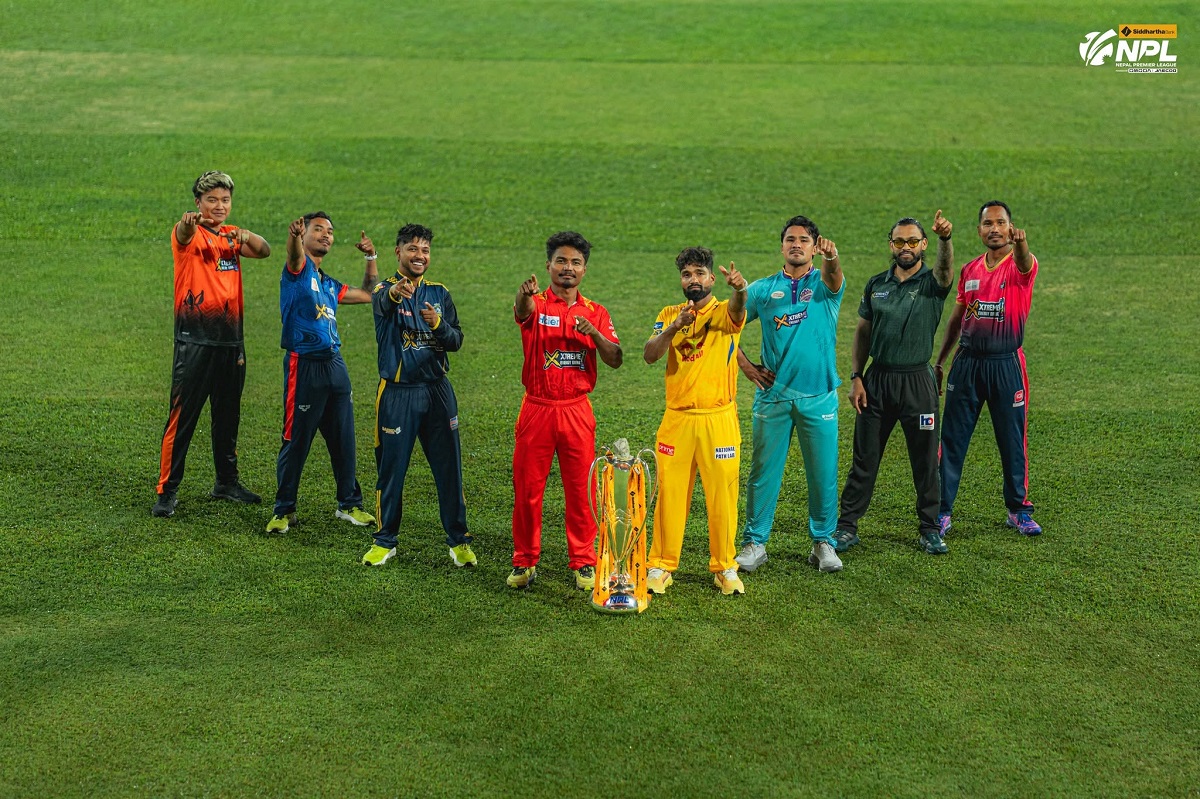
काठमाण्डु – नेपाल प्रिमियर लिग (एनपिएल) मा मंगलबार दुई खेल हुँदैछन् । दिउँसो १२ः३० बजे हुने पहिलो खेलमा विराटनगर किङ्ग्स र चितवन राइनोज आमनेसामने हुनेछन् भने अपराह्न ५ बजे हुने दोस्रो खेलमा कर्णाली याक्स र जनकपुर बोल्ट्सबिच प्रतिस्पर्धा हुनेछ। सन्दीप लामिछानेको नेतृत्वमा रहेको विराटनगर किंग्समा लोकेश बम, बसिर अहमद, प्रतिश जीसी, सुवास भण्डारी, नारायण जोशी, […] ...
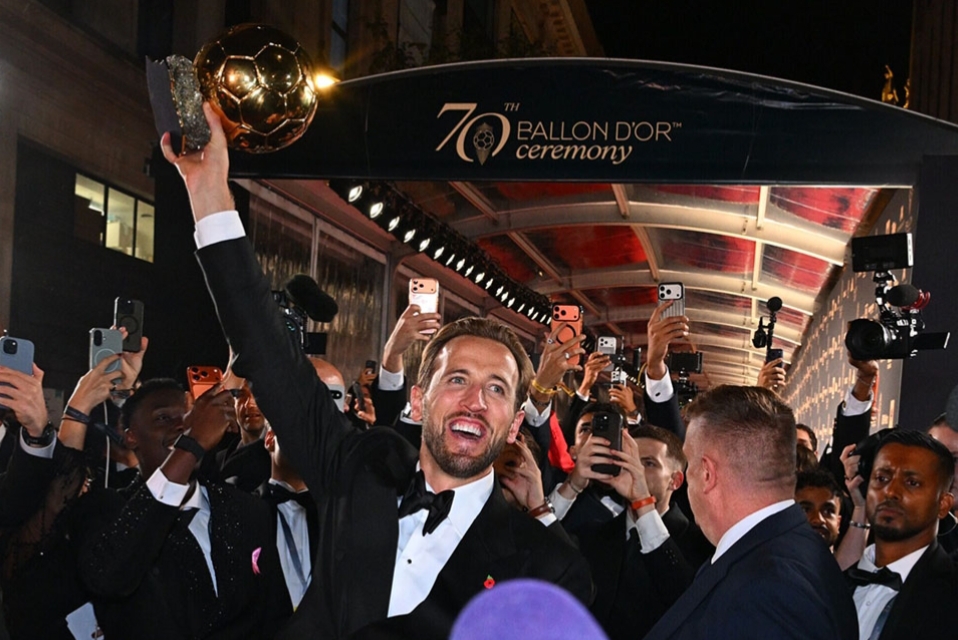
बालोन डी’ओर कसरी बन्यो फुटबलको ‘ओस्कार’ अवार्ड ?
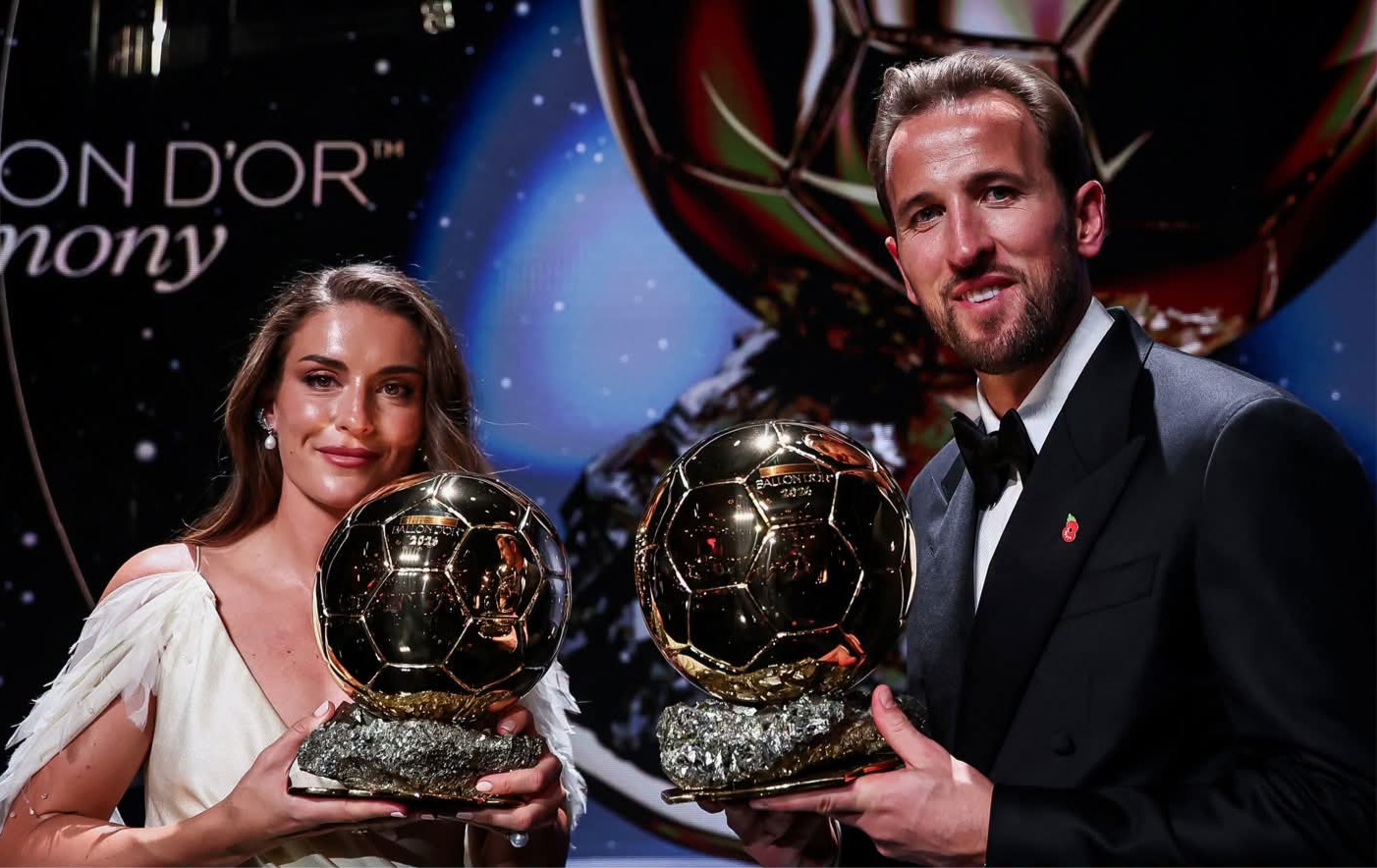
काठमाण्डु– विश्व फुटबलको सबैभन्दा प्रतिष्ठित व्यक्तिगत अवार्डमध्ये एक बालोन डी’ओर अहिले खेलाडीको उत्कृष्टता मापन गर्ने सम्मानमा मात्र सीमित छैन। यो खेलाडीको प्रतिष्ठा, बजार मूल्य, क्लबको छवि र समर्थकबीचको बहससँग जोडिएको ठूलो अन्तर्राष्ट्रिय समारोह बनेको छ। सन् १९५६ मा पहिलोपटक प्रदान गरिएको बालोन डी’ओरको यात्रा अहिलेको भव्य समारोहसम्म आइपुग्दा निकै परिवर्तन भएको छ। सुरुवाती समयमा सामान्य […] ...
All Information In One Place
Real-time headlines from trusted sources. Get the app now — stay updated, inspired, and ahead with breaking news!
