On Nov. 11, 1966, the Gemini 12 mission launched an astronaut crew into orbit and set the stage for NASA's Apollo program to land humans on the moon. Gemini 12 was the last mission of the Gemini program. It had two astronauts on board: Jim Lovell and Buzz Aldrin. NASA wanted to send humans to the moon. But first, it needed to make sure crews had the right skills, like docking vehicles in space and taking spacewalks. Before Gemini 12, astronauts struggled with spacewalks because there weren't enough handholds on their spacecraft. NASA made some spacewalk changes for Gemini 12. Aldrin performed three spacewalks and spent more than five hours working in space with no major problems. Gemini 12 also successfully docked to an unpiloted Agena booster that launched the same day. The astronauts returned to Earth after four days in space. Both Aldrin and Lovell went on to join the Apollo program. Aldrin became the second person to walk on the moon during Apollo 11, and Lovell became the commander of Apollo 13.The Gemini 12 astronauts James Lovell and Edwin Aldrin lifted off aboard a Titan launch vehicle from the Kennedy Space Center on November 11, 1966, an hour and a half after their Agena target vehicle was orbited by an Atlas rocket. (Image credit: NASA/MSFC)Why it matteredGemini 12 may have closed out NASA's Gemini program of two-person space missions, but it established the mission also established the fundamentals of spacewalking that Apollo astronauts would use when they walked on the moon. It's fitting that Aldrin was the primary spacewalker of the mission. A rookie astronaut (and the first to earn a Ph.D.), Aldrin set a precedent by training for his spacewalk in a neutral buoyancy pool in Maryland to better simulate working in weightlessness. Then he did it again as the second person to walk on the moon on Apollo 11."This approach became so successful, underwater training has become the primary spacewalk training method used by the United State, Russia and China," NASA officials said in a mission overview. "Today, NASA’s Neutral Buoyancy Laboratory in Houston is large enough to include mockups of major sections of the International Space Station. As such, it is the largest indoor body of water in the world, with 6.2 million gallons of water."Astronaut Buzz Aldrin practices spacewalking tasks for Gemini 12 in an underwater mockup of his spacecraft in 1966.NASAThe Gemini 12 astronauts walk out to their launch pad with signs on their back denoting "THE END" of the Gemini program.NASA/MSFCNASAThe Agena docking target for Gemini 12 launched into orbit just over 90 minutes ahead of Lovell (the mission commander) and Aldrin. Aldrin ended up using a sextant to help Lovell rendevous with the agena after they lost radar lock within 74 miles of the vehicle. During his spacewalks, Aldrin installed handrails, used foot restraints and other tools that have since become routine on spacewalks in orbit. They also tested tools and techniques that Aldrin and other moonwalks would use on the moon. Gemini 12 also tested a computer-controlled reentry technique when it returned to Earth on Nov. 15, landing Lovell and Aldrin just 3 miles from their target near their recovery ship the USS Wasp in the Atlantic Ocean, about 600 miles east of Cape Canaveral. Want more space history? Check out our full On This Day In Space Story archive and watch our On This Day In Space videos on YouTube.
On this day in space! Nov. 11, 1966: NASA launches Gemini 12 mission with astronaut icons Buzz Aldrin and Jim Lovell aboard
SP
Space.comBy Hanneke Weitering 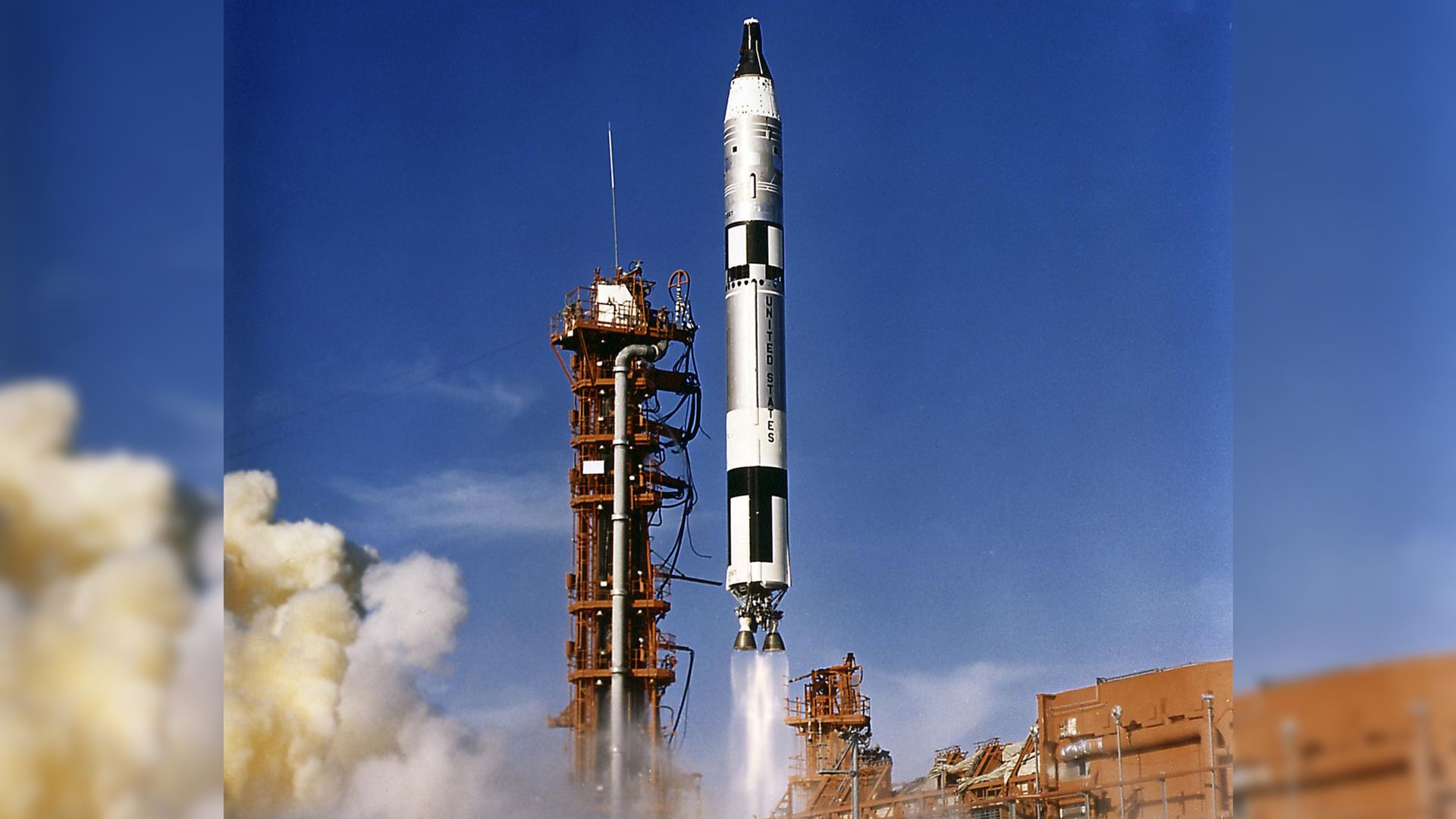
EXECUTIVE SUMMARY
On Nov. 11, 1966, the Gemini 12 mission launched an astronaut crew into orbit and set the stage for NASA's Apollo program. Here's why it mattered.
Key Takeaways
- On this day in space!
- 11, 1966: NASA launches Gemini 12 mission with astronaut icons Buzz Aldrin and Jim Lovell aboard.
- 11, 1966, the Gemini 12 mission launched an astronaut crew into orbit and set the stage for NASA's Apollo program.
Read Complete Original Article
Published originally on Space.com