For the first time, astronomers witnessed a gigantic exoplanet dramatically vanish from view. But the “hot Jupiter” located about 1,000 light-years from Earth didn’t evaporate into the vacuum of space. Instead, the gravitational pull from an uncomfortably close neighbor is causing TOI-2535 b to wobble in its orbit thanks to the same dynamics dictating solar and lunar eclipses. The unusual discovery is detailed in a study recently published in Astrophysical Journal Letters, and relies on observations gathered by NASA’s Transiting Exoplanet Survey Satellite (TESS) orbital telescope. “We think of the universe as resembling clockwork, where everything is regular, but that’s not true,” Samuel Yee, a University of California Los Angeles (UCLA) astronomer and study co-author, explained in a recent profile. “If there are multiple planets in a system, they can affect each other’s orbits.” Astronomers first began examining TOI-2535 b in April 2019 using TESS. The eagle-eyed telescope identifies new planets by flagging subtle changes in stellar brightness. These changes are often caused by a previously unknown planet’s transit in front of its star as seen from Earth. In some ways, TOI-2535 b resembles our solar system’s largest planet, but it is even closer to its own star than Mercury is to our sun. While Mercury takes 88 days to complete the trip, TOI-2535 b circles back around once every 8.25 days. While using TESS to get glimpses of TOI-2535 b over the next seven years, researchers realized the hot Jupiter’s transits didn’t occur on a regular schedule like most other planets. Instead, the exoplanet’s light fluctuations could arrive upwards of six hours earlier or later than predicted. Over time, astronomers also noticed these transits become shallower and shorter. Then, in March, TOI-2535 b simply didn’t show up during the space telescope’s scan of the system. Researchers including Yee now believe their hot Jupiter isn’t alone—it actually has an incredibly close gas giant neighbor with a comparatively tilted orbit. The two planets’ relationship causes them to essentially wobble like a pair of tops, eventually throwing one another out of alignment so that they disappear from Earth’s viewpoint. “This is the most extreme example we’ve seen because the two planets are interacting so strongly,” said Yee. “The planet’s orbit is tilting so quickly that its transit disappeared while we were watching.” The forces at play are the same as those that ensure eclipses don’t follow a regularly repeating cycle. UCLA astrophysicist and study co-author Erik Petigura explained that this is due to the moon’s tilted orbit, which comes from its cataclysmic early formation following a collision with Earth. “If the moon’s orbit around the Earth was perfectly aligned with the Earth’s orbit around the sun, we would see an eclipse every month,” Petigura explained. Yee, Petigura, and their colleagues are lucky to have spotted TOI-2535’s disappearing act when they did. Based on their calculations, its next transit in front of its star won’t occur for another 30 to 50 years—although they may see its partner planet sooner once it emerges from behind its stellar anchor. The post A wobbly exoplanet vanished—but astronomers aren’t worried appeared first on Popular Science.
A wobbly exoplanet vanished—but astronomers aren’t worried
PO
Popular ScienceBy Andrew Paul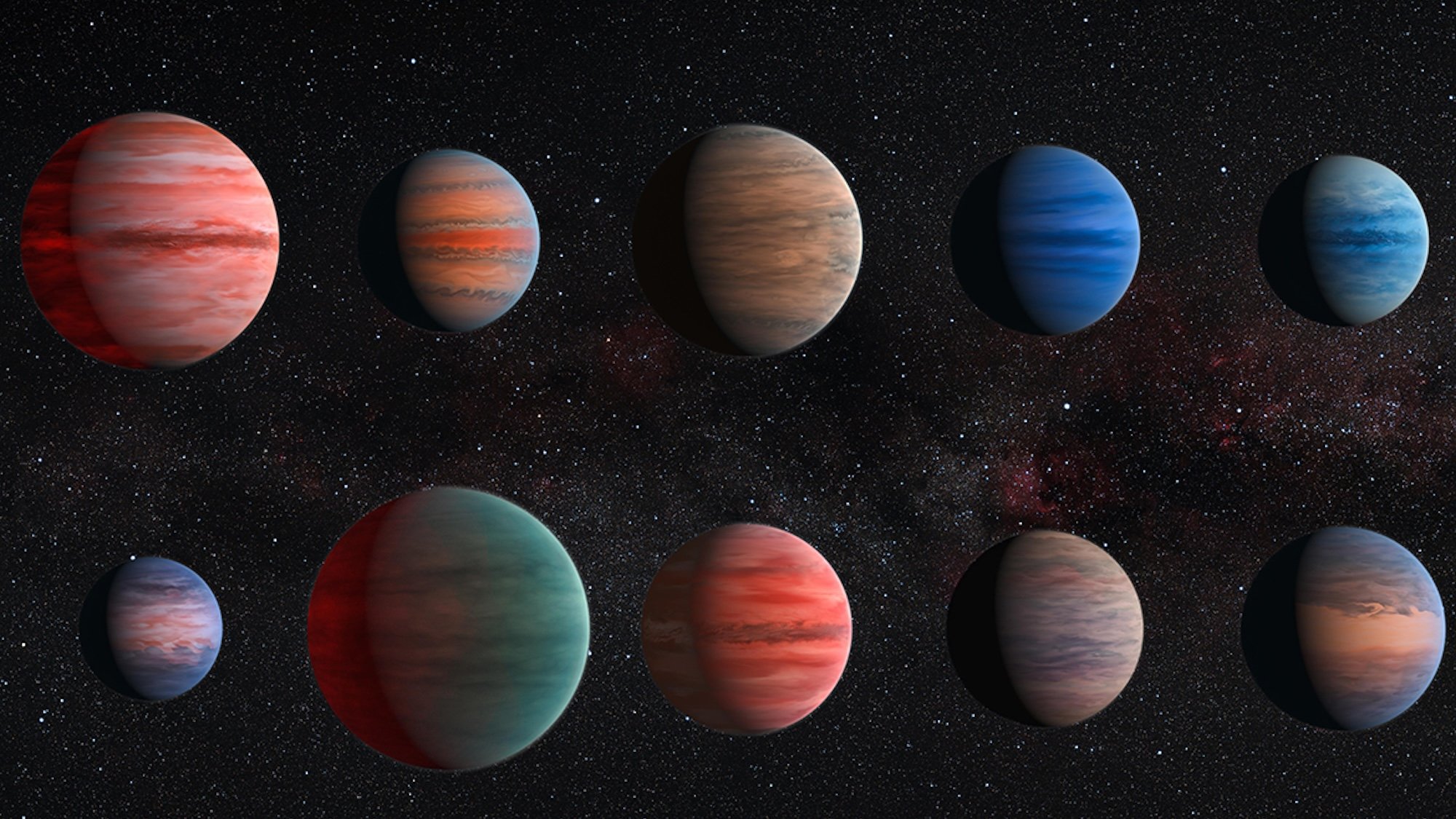
EXECUTIVE SUMMARY
The 'hot Jupiter' is about 1,000 light-years away from Earth. The post A wobbly exoplanet vanished—but astronomers aren’t worried appeared first on Popular Science.
Key Takeaways
- A wobbly exoplanet vanished—but astronomers aren’t worried.
- The 'hot Jupiter' is about 1,000 light-years away from Earth.
- The post A wobbly exoplanet vanished—but astronomers aren’t worried appeared first on Popular Science.
Read Complete Original Article
Published originally on Popular Science