If you were on the Internet in the early 2000s looking for free browser games to play, OGame was a blooming sci-fi strategy sensation that couldn't be ignored. With online servers providing the structure for a living and evolving universe where players fought, traded, and created empires from scratch, its limited visual presentation was no issue.Times have changed, but GameForge hasn't gone anywhere. OGame has been ported to mobile devices, and content updates have kept it alive and fresh for much longer than a plethora of installable MMO games. With the Orion update, which will hit the newly launched universes (servers) on November 6, OGame is introducing conflicts against non-player-character (NPC) enemies, wave-based battles, co-op missions, and completely new systems that can also be disrupted by other players.The game's endurance and such a major reinvention are stunning achievements, so we asked GameForge's Martin Liedtke (Director, Products of Browser Games) and Enrico Mareth (Senior Project Manager for OGame PC and Mobile) about the many challenges of working on OGame alongside the community for so long, what Orion is bringing to the table, and what's next for this worldwide phenomenon.Some quotes have been editorialized and lightly trimmed for better flow.(Image credit: Gameforge)"OGame has an enduring core: You build an interstellar empire, and your decisions matter... Keeping it fresh means adding meaningful choices to that foundation," said Liedtke. "Orion adds missions against automated opponents (PvE) alongside missions open to other players (PvP)... It supports different appetites for risk."The GameForge veteran noted, however, that it's the community that "supplies another kind of freshness" after the studio releases the new content. "We develop the systems; players create much of the history." Part of this approach is keeping tabs on how very different kinds of players approach what's available. "Some commanders concentrate on their economy; others enjoy expeditions or carefully coordinated fleet operations... Orion follows that approach; more experienced players can dig into fleet composition, progression, and cooperation. The aim is to offer worthwhile choices."Liedtke also noted that "OGame's PvP has become a sophisticated contest of information and coordination" over time. Some players like to scout targets and organize combined attacks when enemy fleets are vulnerable. Those battles resolve automatically, but it's the planning that "can be remarkably intricate," especially after so many years of updates.The PvE in Orion doesn't sacrifice any of those intricacies or density. In fact, it's adding a "more structured layer" that gives players clear objectives. In most cases, they'll have to cooperate to obtain better rewards. "There is a strong case for introducing that kind of cooperative PvE earlier. It gives players another reason to build and use fleets together."Over two decades later, how people choose to engage with OGame has changed, pushing GameForge to consider supporting new platforms. Today, mobile devices have become essential to free-to-play games' success over time. Mareth told us their importance "has made touch controls, navigation, and clarity on smaller screens central development considerations," even if thousands of players still remain attached to PC as their main platform. "We're currently working on a design overhaul of the app, combining what we've learned with players' feedback."(Image credit: Gameforge)Liedtke also said there is more overlap between PC and mobile players than you might imagine. "The same player might check their empire on a phone and spend a longer session planning in the browser." Liedtke also noted that "Different playstyles also have different needs," adding that activities like mining and trading fit "comfortably" into short mobile sessions, but complex fleet operations benefit from sitting in front of one's PC.While it's a game of interstellar conflict and sci-fi spaceships, OGame does take a lot of inspiration from real-life science, even if it stretches that science well past its limits. "When ships are destroyed in battle, the debris field can form a moon around a player's planet," explains Liedtke. "The chance (of that happening) is linked to the real lunar cycle: it is higher around a full moon than a new moon." (Image credit: Gameforge)He noted it's a "playful connection" to astronomy, "rather than a simulation of how real moons form," but the developers thought it was cool to influence the game via things that happen in our own sky.This possible in-game "event" also led to one of the best examples of player ingenuity in OGame: Moonshots. Liedtke explained that "players organize deliberate battles and exchange sacrificial fleets to help one another obtain those valuable moons. They have turned destruction into a cooperative project. For a designer, the lesson is to examine what players can achieve together, as well as what an individual action rewards."As the team figured out how to develop "the more imaginative side of science fiction" in OGame's universe, they also decided to explicitly use deuterium for fusion research and as fuel. Star Trek fans will recognize this as the starship fuel of that universe, but it is a real substance: one of two stable isotopes of hydrogen. "Those scientific references give the universe familiar foundations," remarks Liedtke.In OGame's shared galaxy, Orion is introducing "anomalies" as a central new feature, which Liedtke described as "mission sites you uncover with a new scanner" before it's required to send in ships. "Combat missions ask you to hold position against waves of automated fleets; peaceful missions put your cargo ships to work collecting rewards." The twist is these missions are open to co-op... but also to rival commanders that can attack the objectives marked as PvP. While you can theoretically ignore them, better rewards await for daring commanders.With PvE bringing all sorts of new design opportunities to the table, Liedtke pointed out the Orion update "gives us a foundation to learn which kinds of missions players find rewarding" as GameForge looks to the strategy MMO's future. "Personally, I would like to explore encounters that make commanders reconsider what to send and how to work together. Discovery becomes more interesting when it changes your plan." Sounds exciting, though Liedtke quickly added that this isn't an official announcement of future features.(Image credit: Gameforge)OGame's 25th anniversary is in 2027, and while the team is tight-lipped on what the team has planned, Liedtke noted that "Reaching a quarter of a century in 2027 will be an extraordinary moment for OGame. We owe that longevity to the team's continued work and, above all, to the players who keep building empires, forming alliances, and giving this universe its stories."OGame is available on PC (via browser and GameForge's own platform) and on mobile devices via the App Store and Google Play. The Orion update arrives on November 6, 2026.
'OGame' developers explain how the browser-based sci-fi game has lasted 24 years ahead of the huge Orion update
SP
Space.comBy Fran Ruiz 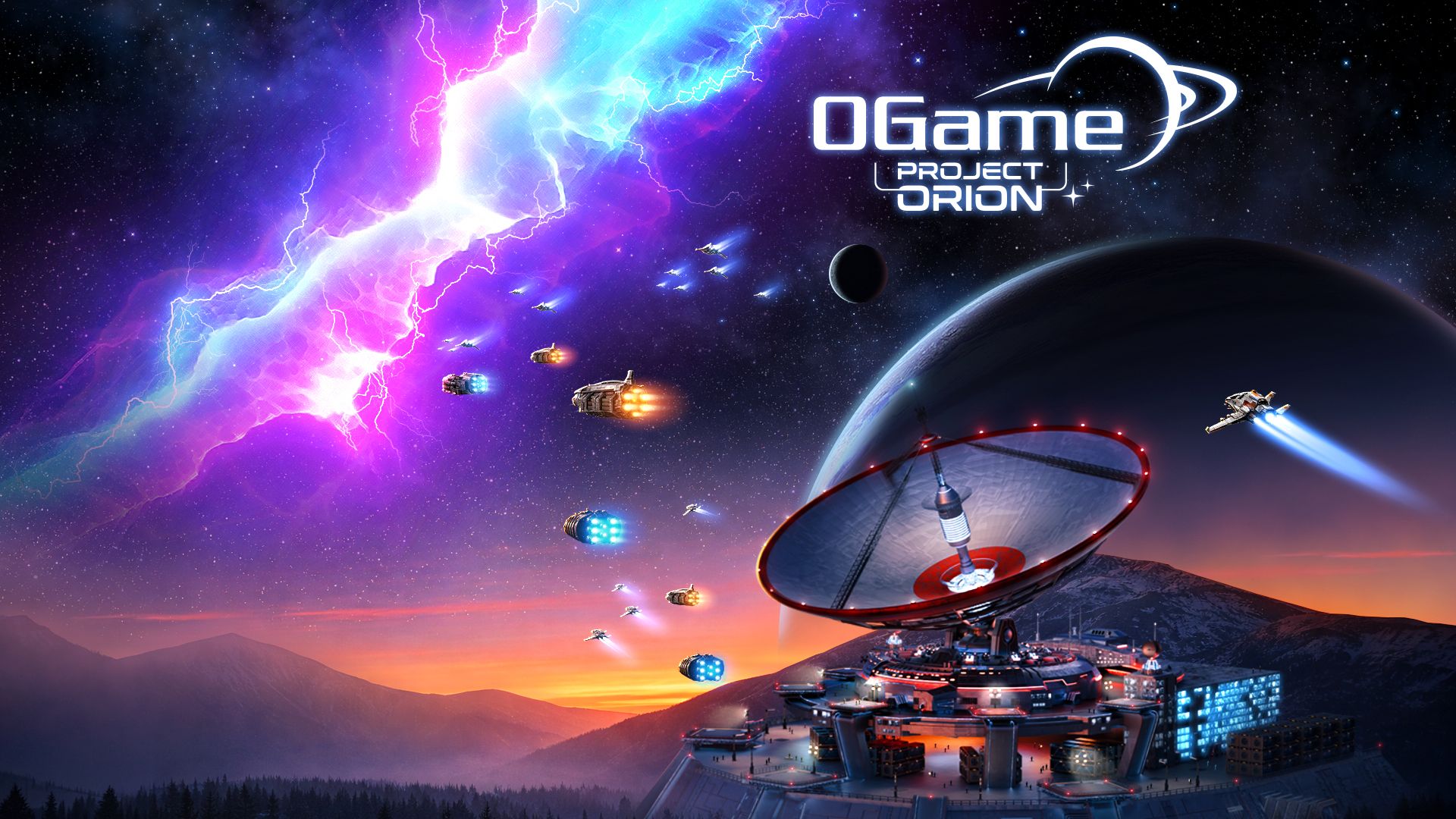
EXECUTIVE SUMMARY
The OG sci-fi browser game is still going strong.
Key Takeaways
- 'OGame' developers explain how the browser-based sci-fi game has lasted 24 years ahead of the huge Orion update.
- The OG sci-fi browser game is still going strong.
- If you were on the Internet in the early 2000s looking for free browser games to play, OGame was a blooming sci-fi strategy sensation that couldn't be ignored.
Read Complete Original Article
Published originally on Space.com