
November’s Night Sky Notes: Light-Day Away

Twin Travelers In 1977, NASA launched twin spacecraft Voyager 1 and 2, taking advantage of a once-every-175-year planetary alignment of the four largest planets in our solar system: Jupiter, Saturn, Uranus, and Neptune. Using six gravity assists between them, this Grand Tour gave us up-close views of the gas and ice giants, including several moons. […]
Key Takeaways
- November’s Night Sky Notes: Light-Day Away.
- Using six gravity assists between them, this Grand Tour gave us up-close views of the gas and ice giants, including several moons.
- […] 2 min read November’s Night Sky Notes: Light-Day Away NASA’s Voyager mission took advantage of a once-every-175-year alignment of the outer planets for a grand tour of the solar system.
2 min read November’s Night Sky Notes: Light-Day Away NASA’s Voyager mission took advantage of a once-every-175-year alignment of the outer planets for a grand tour of the solar system. The twin spacecraft revealed details about Jupiter, Saturn, Uranus and Neptune – using each planet’s gravity to send them on to the next destination. Voyager set the stage for such ambitious orbiter missions as Galileo to Jupiter and Cassini to Saturn. Today both Voyager spacecraft continue to return valuable science from the far reaches of our solar system. NASA/JPL-Caltech Twin Travelers In 1977, NASA launched twin spacecraft Voyager 1 and 2, taking advantage of a once-every-175-year planetary alignment of the four largest planets in our solar system: Jupiter, Saturn, Uranus, and Neptune. Using six gravity assists between them, this Grand Tour gave us up-close views of the gas and ice giants, including several moons. By the 1980s, the two probes went their separate ways at Saturn. As Voyager 2 continued toward Uranus and Neptune, Voyager 1 grabbed one more portrait of the solar system (excluding Mercury and Mars), including a final image of the pale blue dot we call home. The Golden Record Cover NASA/JPL-Caltech Playlist “Hello from the children of planet Earth.” Every good road trip needs some music to match. In this case, each craft carries the Golden Record, a 12-inch phonograph record with spoken greetings in 55 languages, 27 musical tracks, 116 images, and other sounds from Earth. Each record is protected by an outer cover featuring etchings showing our Sun’s location relative to 14 pulsars, along with instructions on how to play it. The design used various metals to protect the information encoded from space radiation: the record used copper and gold plating, and the cover used aluminum. The cover was electroplated with an ultra-pure sample of the isotope uranium-238. Uranium-238 has a half-life of 4.468 billion years. Are We There Yet? Did you know that a light-minute is a measure of distance, not time? In August 2012 and November 2018, Voyager 1 and 2 crossed the heliopause, the boundary where the Sun’s solar wind meets the interstellar medium. Using NASA’s Deep Space Network, Earth communicates with both spacecraft and tracks each on its journey. At the time of this article, the Canberra antenna tracked Voyager 1 at 25.80 billion km, or just over 16 billion miles. This graphic shows the position of NASA’s Voyager 1 and Voyager 2 probes, outside of the heliosphere, a protective bubble created by the Sun that extends well past the orbit of Pluto. NASA/JPL-Caltech On November 18, 2026, 49 years after its launch, Voyager 1 will cross the one-light-day mark, 16.1 billion miles from the Sun. You may have heard the term light-year in your favorite sci-fi movie or show, or when stargazing and referring to an object outside of our solar system. This video best demonstrates the different distances between the inner solar system, outer solar system, and beyond, using light measurements. Additionally, track each Voyager spacecraft here. You can get a real understanding of what a gravity assist might be like with our Gravity Assist activity and learn what it’s like to measure a “light minute” with our Measuring a Kid Minute activity guide!
Read Complete Original Article
Published originally on NASA News
Related News

Type 2 diabetes breakthrough as 54% achieve remission in just 6 months
A promising new study suggests that more than half of younger adults with type 2 diabetes could achieve remission in just six months through a combination of a low-calorie diet and structured exercise. Researchers found that 54% of participants under age 45 who followed an intensive diet and exercise program achieved remission, compared with just 4% receiving usual care.
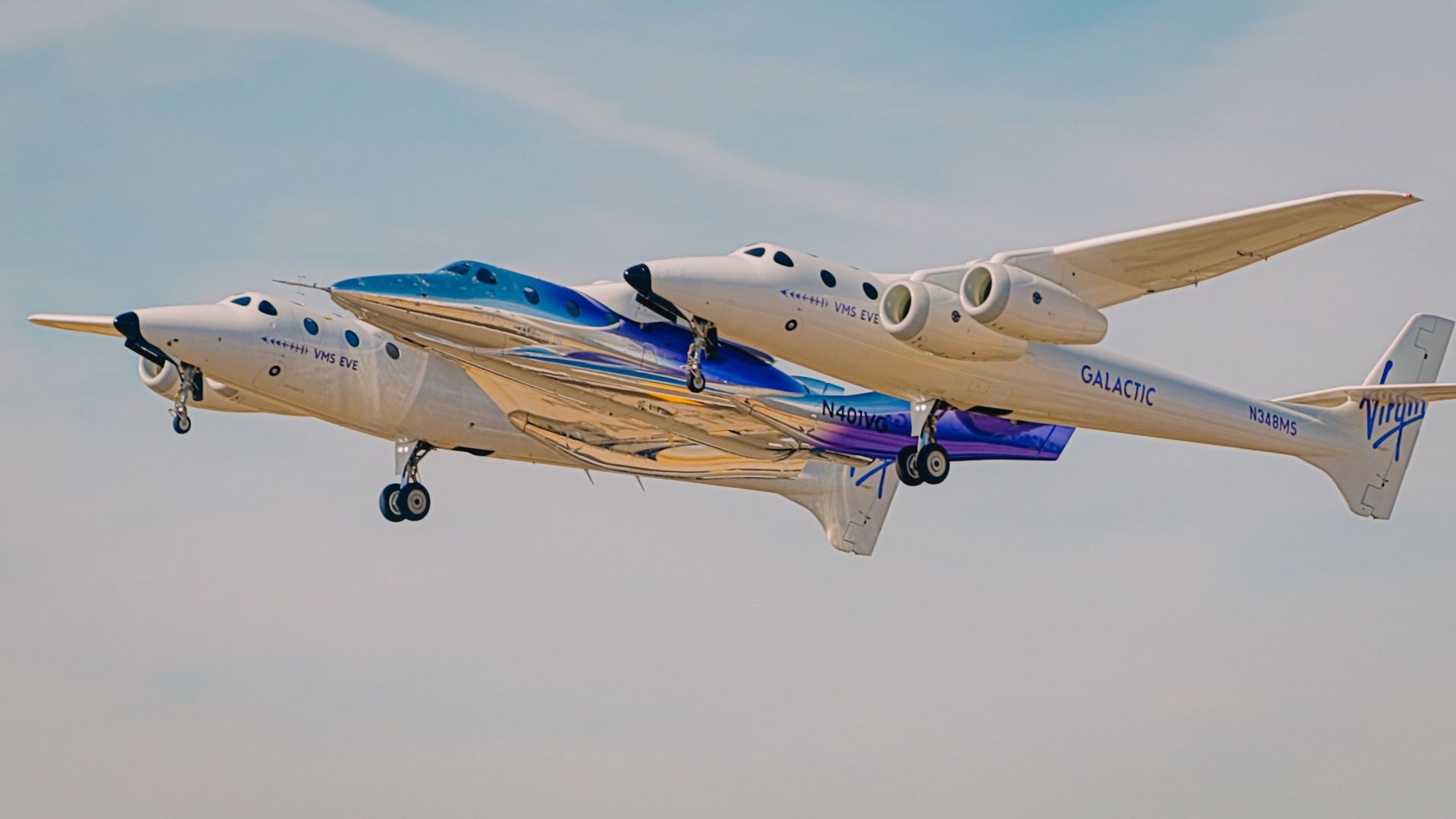
Watch Virgin Galactic's new 'Delta-class' space plane take to the skies for the 1st time (video)
Virgin Galactic's first "Delta-class" space plane, the newly named Apeiron, lifted off for the first time on Thursday (Oct. 29) —beneath the wings of its carrier aircraft.
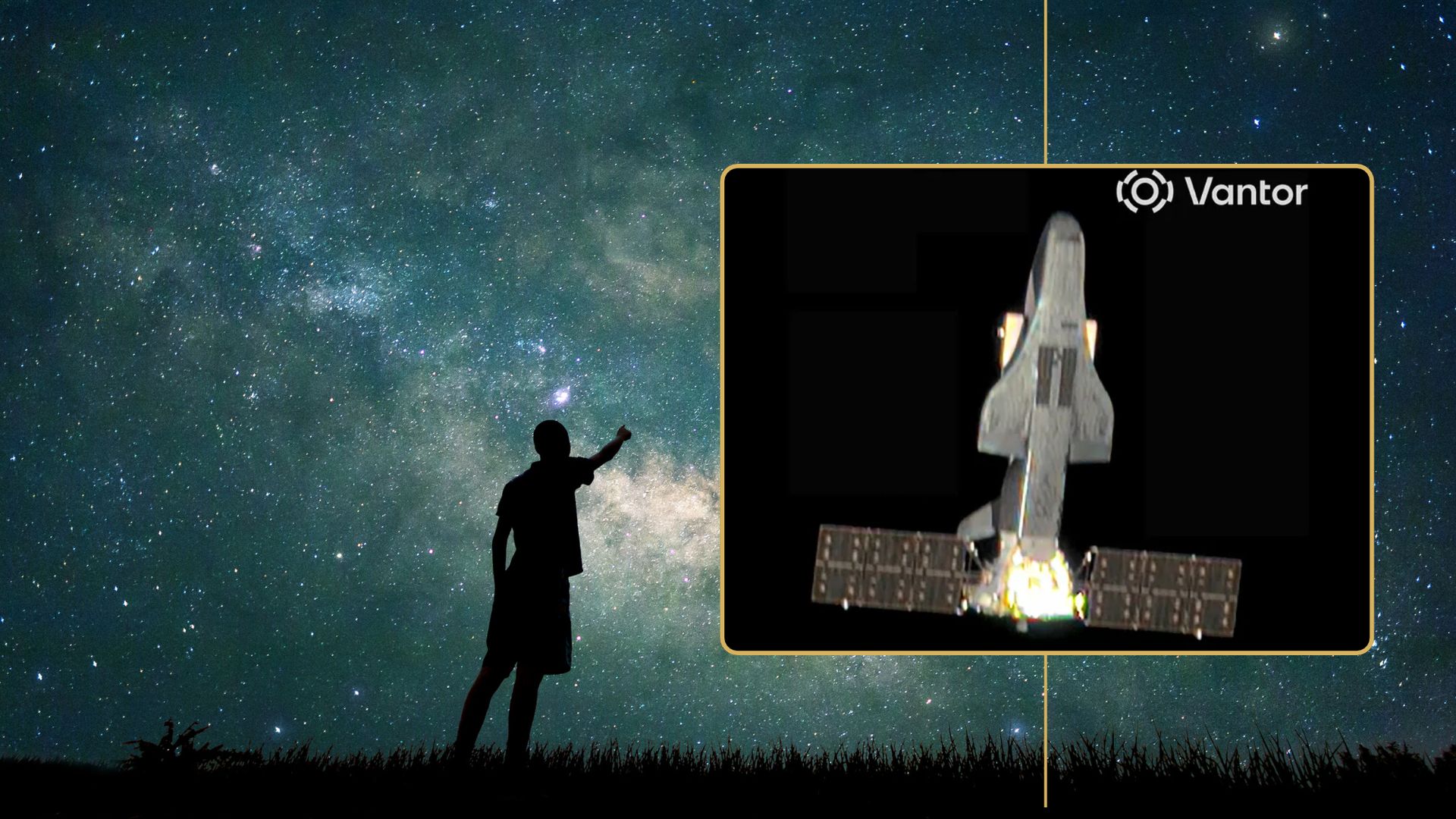
China's secretive space plane is flying over the US this week — here's how to see it for yourself
Early risers across the U.S. could catch a glimpse of China's mysterious Shenlong spacecraft with the naked eye.
Physicists created a tiny universe and watched time emerge without a clock
Scientists have created a miniature universe in the laboratory that could help answer one of the biggest mysteries in physics: What is time, and where does it come from? Using 24,000 ultracold atoms, a University of Birmingham researcher built an isolated quantum system that repeatedly expands and contracts, mimicking the Big Bang and a possible Big Crunch. Remarkably, the experiment showed that time could emerge from changes happening inside the system, without relying on an external clock.
All Information In One Place
Real-time headlines from trusted sources. Get the app now — stay updated, inspired, and ahead with breaking news!
