The Hubble Space Telescope has captured a breathtaking view of thousands of stars glittering like cosmic jewels in a dazzling display of blue, gold and orange. But this spectacular scene is far more than just a pretty picture. Some of these stars are almost as old as the universe itself and could hold clues to how our Milky Way formed. M30 is a globular star cluster located approximately 27,500 light-years from Earth. (Image credit: ESA/Hubble & NASA, M. Libralato, G. Piotto, A. Sarajedini)What is it? The exquisite image released by ESA on Nov. 5 shows Messier 30 (M30), a densely packed collection of stars located approximately 27,500 light-years from Earth in the constellation Capricornus. M30 is a globular cluster, a roughly spherical collection of tens of thousands to millions of stars held together by gravity.Our Milky Way is home to at least 150 of these ancient stellar gatherings, some of which are estimated to be between 11.5 billion and 13.5 billion years old. For comparison, the universe itself is approximately 13.8 billion years old! Why is it amazingBesides looking like a vast cosmic treasure trove glittering across the universe, M30 also has a fascinating story to tell. Globular clusters are essentially cosmic time capsules. Their ancient stars preserve chemical clues about the conditions that existed when they formed, helping astronomers piece together the Milky Way's early history. Astronomers have also discovered that M30, along with several other globular clusters, traverses the Milky Way in the opposite direction to the galaxy's rotation. This unusual motion raises the intriguing possibility that M30 may not have formed in our galaxy at all. It could have simply been captured by the Milky Way billions of years ago.
Hubble Space Telescope reveals glittering stars with mysterious origins | Space photo of the day for Nov. 11, 2026
SP
Space.comBy Daisy Dobrijevic 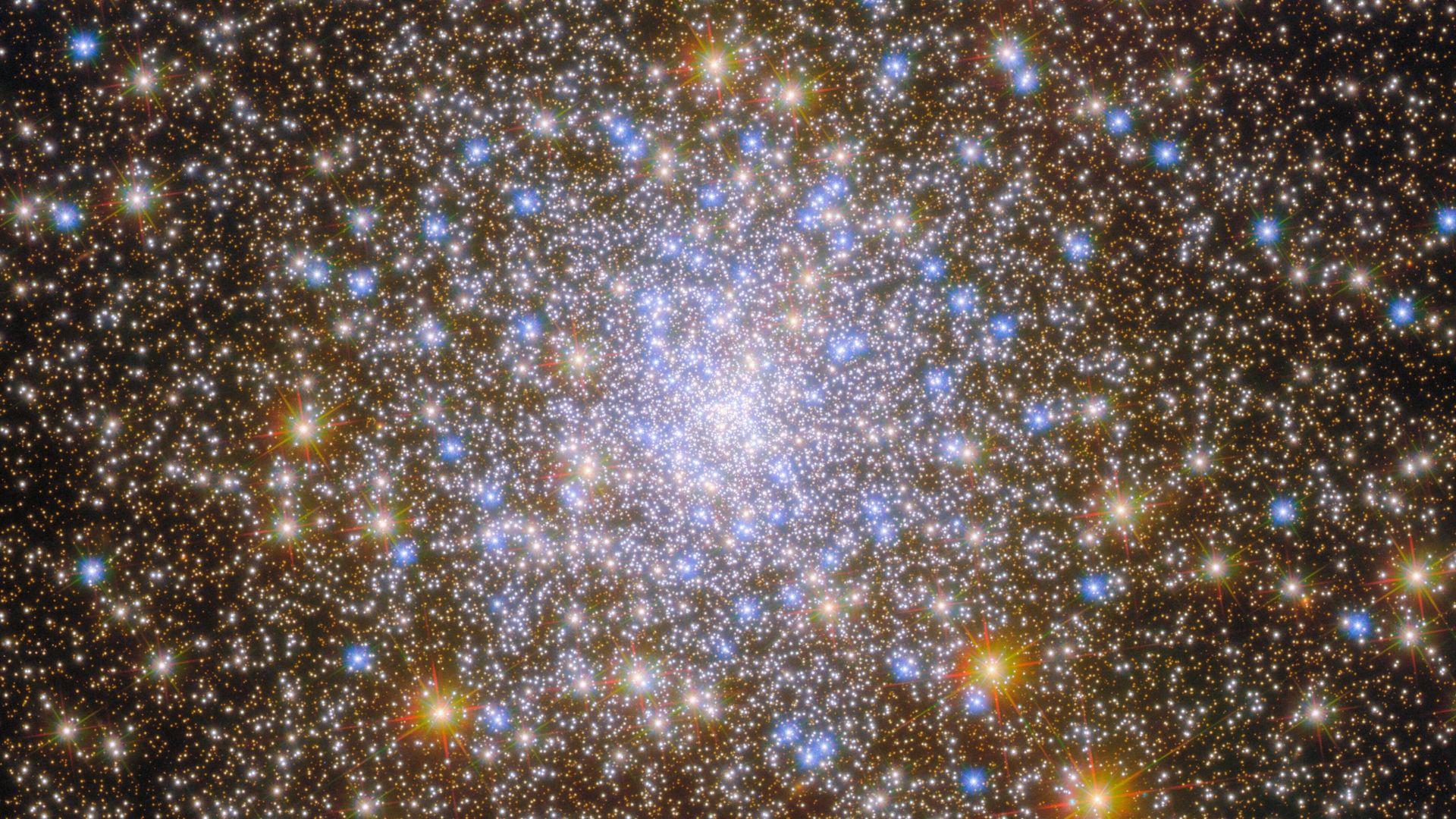
EXECUTIVE SUMMARY
This dazzling collection of ancient stars could hold clues to the Milky Way's past.
Key Takeaways
- Hubble Space Telescope reveals glittering stars with mysterious origins | Space photo of the day for Nov.
- This dazzling collection of ancient stars could hold clues to the Milky Way's past.
- The Hubble Space Telescope has captured a breathtaking view of thousands of stars glittering like cosmic jewels in a dazzling display of blue, gold and orange.
Read Complete Original Article
Published originally on Space.com