
Europe's Space Rider vehicle comes crashing down during drop test
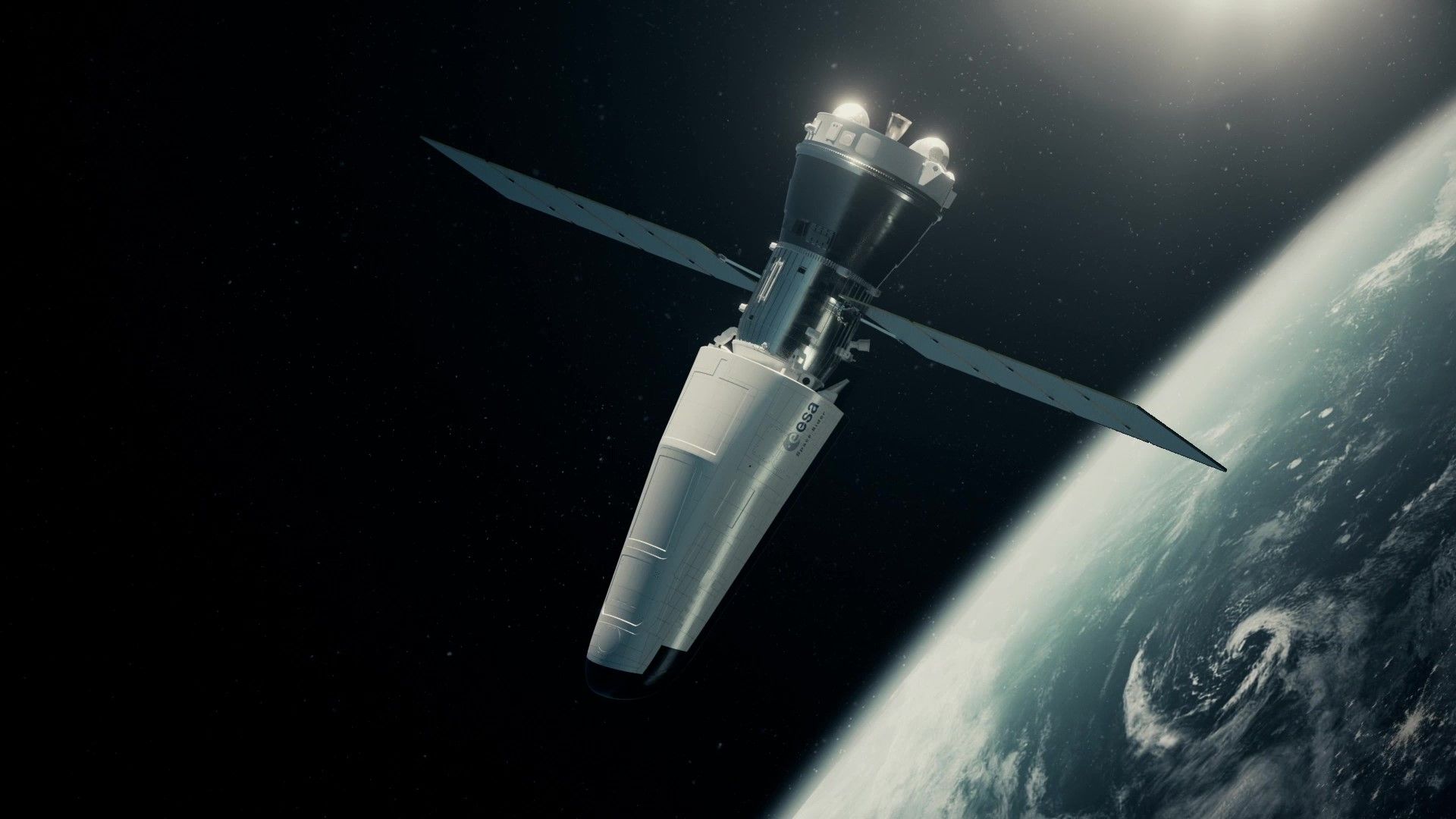
The full-scale prototype of Europe's Space Rider orbiter failed to deploy its parachute during a drop test earlier this month, but ESA officials hope the setback won't delay progress toward its first reusable spacecraft.
Key Takeaways
- Europe's Space Rider vehicle comes crashing down during drop test.
- Europe has dropped the ball on the prototype for its first reusable spacecraft.
- Or, rather, the prototype itself was dropped — on purpose — but the outcome of its fall was not what engineers had hoped for.
Europe has dropped the ball on the prototype for its first reusable spacecraft. Or, rather, the prototype itself was dropped — on purpose — but the outcome of its fall was not what engineers had hoped for. The incident occurred during an Oct. 6 drop test of the full-scale Space Rider model, from the European Space Agency (ESA). The robotic vehicle's initial drogue parachute deployed successfully, but its main parafoil detached during deployment, leaving the prototype unable to slow its descent before crashing into the ground, according to ESA officials. The cause of the failure remains under investigation."Following several successful tests using representative vehicle masses, the latest system-level drop test in October was not completed as planned due to an anomaly during the parafoil deployment sequence," an ESA spokesperson confirmed in an email to Space.com. "An independent investigation is ongoing to determine its root cause and inform the next steps."Space Rider is being developed as Europe's first reusable orbital spacecraft — an uncrewed vehicle designed to carry scientific experiments to orbit for up to two months, then return them to Earth for analysis. Its method of return, though, differs from that of any other spacecraft in operation today. Space Rider''s wingless, lifting-body design relies on a steerable parachute, or parafoil, to maneuver toward its landing area. This allows it to perform runway-style touchdowns, as opposed to other, less accurate parachute-aided recoveries in current practice.This month's drop test was intended to demonstrate that ability, which is a critical requirement for Space Rider's planned reuse after missions in orbit, but the impact of its failure may not end up disrupting its ultimate development timeline. According to Géraldine Naja, ESA's director of space transportation, the vehicle's other remaining qualification tests aren't holding back its path to launch. "We hope that this test will not damage, or let's say lead us to modify, the remaining schedule and qualification activities," Naja said during an ESA Council media briefing on Oct. 22. "In any case, the remaining qualification activities are not on the critical path of the development of the Space Rider."Naja described the incident as an unfortunate but important event. "We have had many successful tests before, but testing and validation is part of the development of a space system," she said.The lost vehicle was a full-scale test model assembled to evaluate Space Rider's descent and landing systems. The minivan-sized mockup reproduced the size and flight characteristics of its reentry module, with avionics to control its autonomous guidance and navigation systems, but the vehicle was far from a space-ready article.Render of ESA's Space Rider orbiter. (Image credit: European Space Agency)The Oct. 6 test took place at a military range on the Italian island of Sardinia, where the mockup was released from a helicopter at an altitude of approximately 2 miles (3 kilometers). According to Naja, the vehicle's initial drogue parachute triggered as expected and began slowing the Space Rider mock-up's descent before its larger, steerable parafoil was supposed to unfurl. The parafoil, however, detached during deployment, leaving the vehicle in freefall before impacting the ground. ESA has subsequently recovered all the craft's components.This month's event was the first drop test since an unsuccessful attempt in May, when a sensor flagged an issue during preparations, prompting engineers to abort the test before the model was released. Following that, Space Rider's testing range, operated by Italy's Ministry of Defense, was unavailable from June through September.Space Rider's descent and landing qualification campaign began in 2025, with previous successes demonstrating its parafoil deployment and autonomous capabilities. Beyond its landing systems, Space Rider also underwent separate thermal protection testing earlier this year, exposing its heat-shield materials to temperatures around 2,900 degrees Fahrenheit (1,600 degrees Celsius) in plasma wind tunnel trials.ESA has targeted Space Rider's first orbital mission for later this decade.
Read Complete Original Article
Published originally on Space.com
Related News

NASA Invites Media to 2026 von Braun Space Exploration Symposium
Members of the media are invited to join NASA at the 2026 von Braun Space Exploration Symposium from Monday, Oct. 26, to Wednesday, Oct. 28, at the University of Alabama in Huntsville. This year’s symposium is focused on humanity’s return to the Moon, sustainable lunar infrastructure, advanced space propulsion, and the evolving space workforce. Panels […]
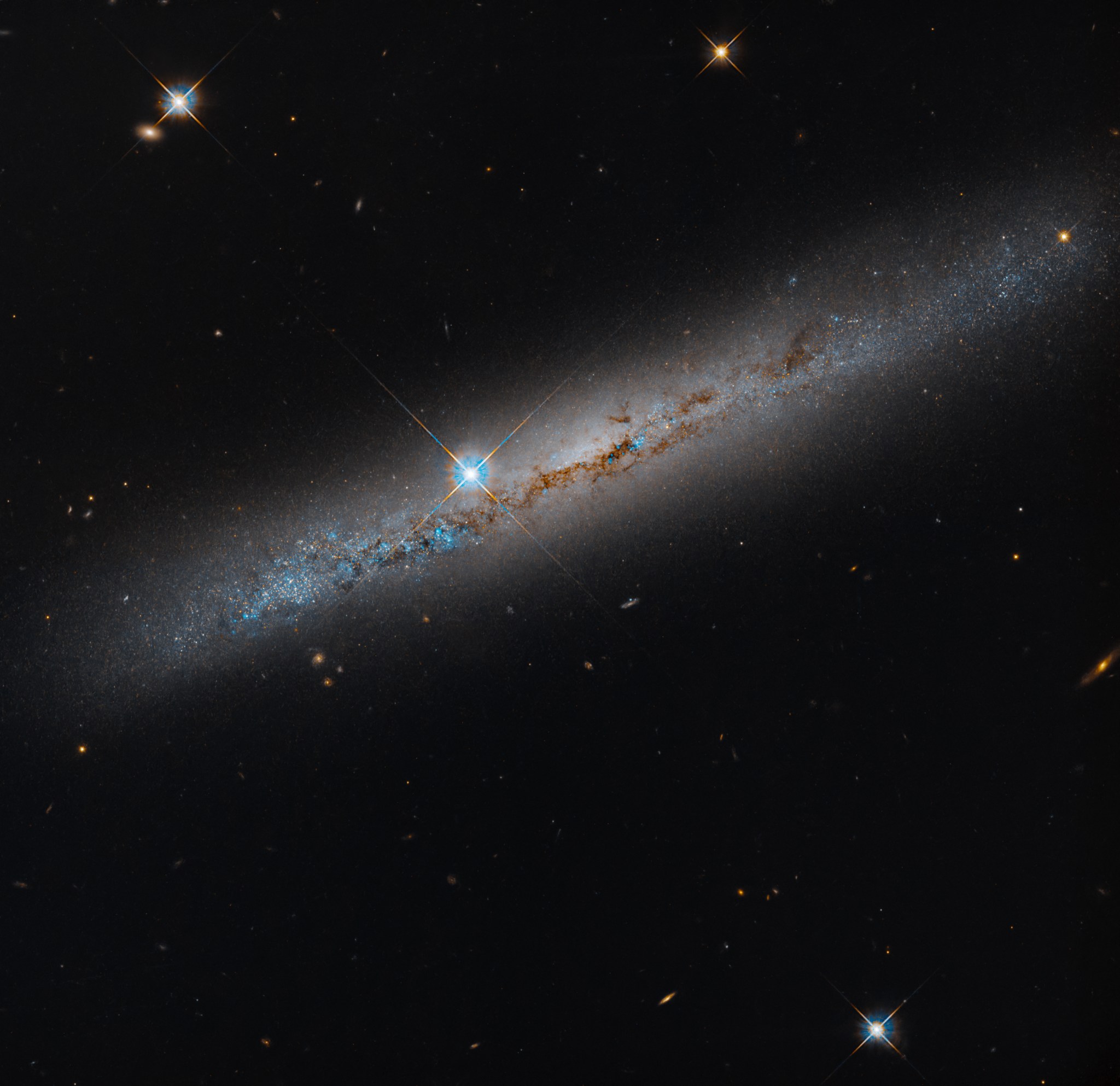
Spiral’s Edge
This NASA Hubble Space Telescope image released on Oct. 16, 2026, features the edge-on, intermediate spiral galaxy NGC 1827, located roughly 37 million light-years away in the constellation Columba, the Dove. Hubble captured the image as part of a survey looking at 260 satellite galaxies around 22 Milky Way-like host galaxies within a radius of […]
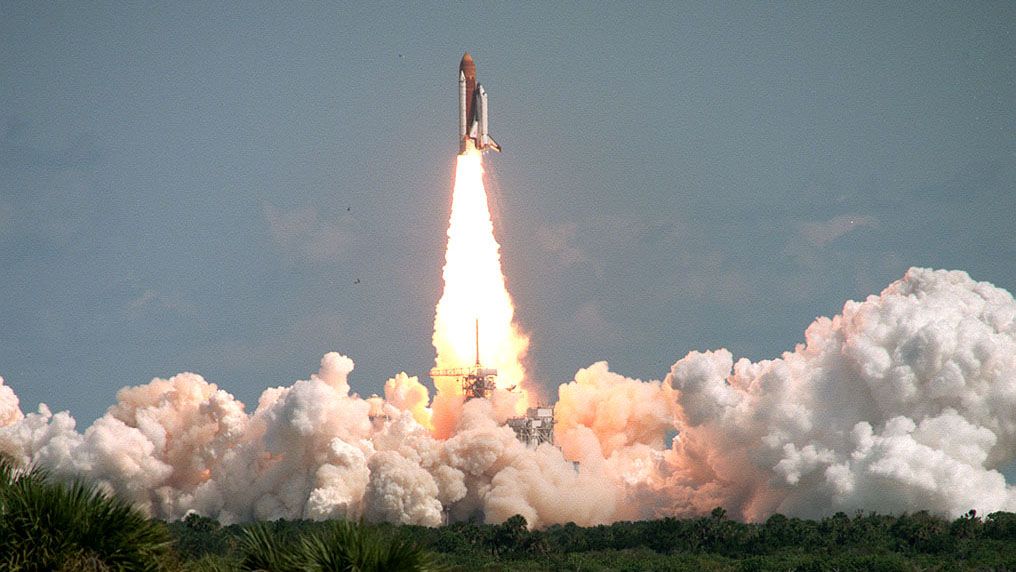
On this day in space! Oct. 22, 1992: Ashes of 'Star Trek' creator Gene Roddenberry launch into space on NASA shuttle
On Oct. 22, 1992, the space shuttle Columbia launched into space with the ashes of Gene Roddenberry, the creator of "Star Trek." Here's why it mattered.
All Information In One Place
Real-time headlines from trusted sources. Get the app now — stay updated, inspired, and ahead with breaking news!
