

Derek Rae reflects on his storied career calling soccer in the United States

From the Miracle of Istanbul to the biggest stages in world soccer, Derek Rae has spent more than four decades bringing the sport’s most memorable moments to life. He has worked professionally at every men’s FIFA World Cup since 1990 and commentated on every men’s World Cup and European Championship on U.S. television since 2004.…
Key Takeaways
- Derek Rae reflects on his storied career calling soccer in the United States.
- From the Miracle of Istanbul to the biggest stages in world soccer, Derek Rae has spent more than four decades bringing the sport’s most memorable moments to life.
- He has worked professionally at every men’s FIFA World Cup since 1990 and commentated on every men’s World Cup and European Championship on U.S.
Credit: Fox SportsFrom the Miracle of Istanbul to the biggest stages in world soccer, Derek Rae has spent more than four decades bringing the sport’s most memorable moments to life. He has worked professionally at every men’s FIFA World Cup since 1990 and commentated on every men’s World Cup and European Championship on U.S. television since 2004.I sat down with Rae to talk about his remarkable broadcasting career. From his early days in Scottish radio, his unexpected venture into NFL broadcasting, to his passion behind a career spanning decades.The following interview has been lightly edited for clarity.Q: I see you began commentating at a young age on local hospital radio in Aberdeen. How did you get started, and how did that eventually lead to your first televised game in Scotland in the 1980s?Derek Rae: I started broadcasting during the 1974 World Cup, when I was seven. I had a portable cassette recorder and would walk around mimicking what I heard on television. Eventually, I began recording pickup matches at the park or school. Sometimes I’d play and commentate simultaneously, which probably wasn’t particularly successful on the playing front!I later took my recorder to Aberdeen home games, sitting at the front of a stand and talking for 90 minutes. I became known as the silly lad who brought a tape recorder to games and talked to himself. Without realizing it, I was building a body of work. Hospital radio allowed patients to follow local news and sport. I did that as a teenager and it eventually led to my professional career.I was also inspired by David Francey, a Scottish broadcaster with a rich voice. I sent him a letter and a tape, expecting never to hear back. Instead, he sent a beautiful handwritten letter with feedback and encouragement. I still use techniques he recommended. Later, while at university, I sent him another tape. His boss, Charles Runcie, head of sport at BBC Scotland, invited me in for a chat. Within weeks, I was commentating on Kilmarnock against Dumbarton,. I didn’t know it was effectively an audition: Francey had a knee problem and they needed someone who might fill in for England against Scotland at Wembley three nights later. That became my second professional game. I started at 19, which would be almost impossible nowadays.Q: You grew up in Aberdeen and developed a passion for German football. What drew you to the Bundesliga and German soccer culture?Rae: My interest in German football and the language developed together. In the U.K., we began learning German or French at around eight, and I was desperate to study German because the 1974 World Cup in West Germany sparked my interest in its language and culture.Aberdeen sits on the North Sea, so we could pick up German radio stations clearly. I listened to the news and Bundesliga commentary, often from Hamburg. I also stayed with a family near the former East-West German border that gave me first-hand experience.Q: You eventually left the BBC and moved to Boston in 1991. What prompted that decision and how did the United States influence your career?Rae: I first visited Boston on Columbus Day in 1988. I remember arriving at Logan Airport on a beautiful autumn day, with the leaves near their peak. Walking around Cambridge, I thought the city felt right. Back at my hotel, I turned on the television and found the National League Championship Series between the New York Mets and Los Angeles Dodgers. I was immediately gripped by the game and fascinated by American broadcasting.By 1991, I’d spent five years with the BBC and commentated in 19 countries. I had a terrific job, but I was young and wanted to try something different. I moved to Boston, freelanced and later became a press officer for the city’s 1994 World Cup organizing committee. It was a tremendous experience that gave me insight into how Americans viewed soccer. Those years were invaluable. I don’t think I would have developed the same understanding of America and American sport without them.Q: You called the 2005 Champions League final between Liverpool and Milan for ESPN. Does that remain the most memorable match of your career?Rae: I doubt it will be topped in my lifetime as a commentator. Milan were the cream of European football, with Paolo Maldini, Carlo Ancelotti, Kaká, and Andriy Shevchenko. Liverpool, by contrast, weren’t considered Europe’s best team. I expected Milan to win comfortably. The first half seemed to confirm that. Milan scored early and went into halftime with a commanding lead. I was checking my notes for the largest winning margin in a European final because I genuinely thought it could finish 6-0 or 7-0.Then the second half happened. Liverpool brought on Dietmar Hamann, changed their shape, and Steven Gerrard scored. Suddenly, it was 3-1, then 3-2. You could feel the atmosphere changing. Xabi Alonso scored from the rebound after his penalty was saved, completing an extraordinary comeback.During the shootout, Jerzy Dudek began moving his body and legs in a peculiar way. I remembered Bruce Grobbelaar doing something similar in Liverpool’s 1984 European Cup final against Roma. I made the connection on air, referring to the spaghetti-legged Grobbelaar. That’s perhaps the moment I’m happiest with because it came from watching and remembering football history. When Dudek saved Shevchenko’s penalty, I said, “Against all the odds, against all expectations, Liverpool are the champions of Europe.”You can hear the astonishment in my voice. I almost couldn’t believe I was saying it. Liverpool were huge underdogs, and the story was incredibly romantic. I’ll remember that final forever.Q: Another memorable moment came during Euro 2008, when the broadcast of Germany against Turkey was disrupted by a feed outage. What happened?Rae: It was a commentator’s worst nightmare. I was working with Andy Gray on the semifinal, calling the game off-tube from Bristol, Connecticut. The first half went normally, but a major worldwide satellite problem caused the feed to go down. We weren’t at the stadium, so we couldn’t switch to radio commentary. ESPN only had pictures from a fan zone in Berlin, and we were told to keep talking, react to the fans and provide whatever updates we could. You can’t make that situation perfect. You rely on your training and do the best you can.There was another complication: ESPN planned to show the match again, so we had to wait for the second-half feed and re-commentate from scratch, already knowing the score and everything that had happened. It’s another chapter in what I call life’s rich broadcasting pageant.Q: You also did an alternate British-English broadcast of Thursday Night Football for Amazon Prime Video. How did that unusual project come about, and what was the experience like?Rae: It came at a good time. In 2017, after almost a decade back in the U.K., my wife and I decided to return to Boston as our base. I’d left BT Sport without a firm plan. I was 50 and still wanted to broadcast, but on my own terms rather than tied to contracts.The first people to contact me were at Amazon Prime Video. They said, “Don’t laugh, but we’re going to try something different.” They wanted an alternate feed of Thursday night NFL games with a European or British soccer commentary style. My name came up, along with Tommy Smyth, my longtime Champions League partner. Viewers could choose the main broadcast or ours. We did it for a couple of years, and I had a grand old time.I never claimed to be an NFL expert. Tommy and I brought our own styles and terminology, with producer Jeff Strauss helping us through nuances we didn’t quite understand. People enjoyed it because it was different. As the only broadcast, it probably wouldn’t have worked, but as an alternative, it was a nice change of pace. Amazon encouraged me to make it sound like my Champions League commentary on ESPN: a little gravitas, theatricality and something more grandiose than the typical American style.It was a memorable experience with a great team. I doubt I’ll do it again, but I wouldn’t trade it for anything. I’m never going to be known as an NFL commentator, nor would I ask to be.Q: Your handwritten commentary notes recently got a lot of attention online. Why do you continue to write everything by hand?Rae: People see my notes and think, “I can’t read that, so how can he?” But it’s not about the finished product. It’s about the learning process before a game. Preparation is essential to me. I start with a blank sheet, divide it in half and color-code everything. Research suggests color-coding helps information stick, but writing things down is important, too.That goes back to studying German. I’d write the German word on one side of a page and the English translation on the other, then cover one side and test myself. It’s the same principle with commentary.The notes aren’t a script. They’re a fail-safe and memory jogger. I already know the information; the notes help me recall specific details. When Luis Díaz scored his hat trick against Leipzig, for example, I’d written down that he’d scored a Bundesliga hat trick against Hoffenheim the previous season. I could confirm the detail rather than risk pulling it out of thin air.Every commentator has their own method. This is what works for me, and after more than 40 years, I know how I operate best.Q: You were closely involved with ESPN’s Bundesliga coverage until the partnership ended. Were you disappointed to see that relationship come to an end?Rae: Yes, I was very sad. I’d been part of the team since ESPN acquired the rights in 2020. It was a dedicated group led by producer Kostas Karipidis. ESPN did a lot well, from commentary to on-site reporting and surrounding coverage. People like Archie Rhind-Tutt, Thomas Hitzlsperger, Patrick Owomoyela, Arne Friedrich, and Bastian Schweinsteiger were involved at various points.My first concern was whether people might lose their jobs. I’d seen that happen when broadcasters lose major rights, so I was relieved that didn’t appear to be the case here. I still work on the Bundesliga world feed, so I’m involved with the league. But the ESPN years were special because I was part of a team that cared deeply about the product.Q: You’re returning to ESPN for select La Liga matches. How does it feel to be back working with the network?Rae: When ESPN lost the Bundesliga rights, I half-expected us to thank each other and go our separate ways. Instead, they asked whether I’d be interested in doing around 20 select games, predominantly La Liga. I looked at my schedule and decided I wanted to do it.ESPN has been a constant in my broadcasting life since 1993. I also called La Liga for the network between 2004 and 2009, so it’s a competition I know and enjoy. I’m thrilled to remain part of the ESPN family, especially because I get to work alongside Ian Darke again. He’s probably my very best friend in the television business. We talk pretty much every week, and he’s a brilliant commentator.Q: You commentated on 12 matches at the 2026 World Cup for Fox, working alongside Rob Green. What stood out about that experience?Rae: It was one of my favorite World Cups and a terrific broadcasting experience. I love working with Rob Green. Our personalities are similar and I think we complement each other well. We’d also worked together at Euro 2024 in Germany.We started on the West Coast before heading to Mexico. Calling two matches at Estadio Azteca was a bucket-list experience. I never expected to call a game there, let alone two: Mexico against Czechia and Mexico against Ecuador. The atmosphere was unlike anything else. Anyone who’s worked at the Azteca will tell you it’s a temple of football. I’ll remember those experiences forever.The tournament ended on a high with Argentina against Egypt. Argentina were on the brink of elimination and Lionel Messi’s goal to make it 2-2 was pivotal. I kept my commentary simple: “Lionel Messi, the savior for Argentina,” and let the crowd take over. Without that moment, Argentina were out. It was an emotional roller coaster and a fantastic match to finish our tournament.Q: You’re known for your attention to pronunciation, particularly when it comes to players’ names. What goes into getting those details right?Rae: Early in my career, I noticed the English-speaking world wasn’t always respecting Portuguese. I’m not fluent in the language and I won’t pretend its pronunciations are straightforward. But because I started learning languages young, I’ve never approached a name by asking, “How can it possibly be pronounced that way?” Instead, I’ve thought, “Well, that’s how it is.”Bruno Fernandes is a good example. I began recording his name for EA FC in 2018, before he became so well known in England. I researched the pronunciation and used the Portuguese form.My philosophy is to be authentic. That doesn’t mean I get every name right. We all make mistakes; what’s important is acknowledging and correcting them. When James Tavernier joined Rangers, he joked at his introductory press conference that his surname was pronounced the French way. Many people, including me, took that seriously, so I used that pronunciation in his first match. Before his second game, I went down the tunnel and asked him directly. He clarified his pronunciation, and I corrected myself on air the following week.There’s a line from one of my musical heroes, Gerry Rafferty: if you get it wrong, you’ll get it right next time. I think we can all stand by that.Q: After more than 40 years, how do you stay excited about the job, and what would you like to see change about soccer broadcasting?Rae: I think we’ve sometimes lost sight of football’s magic. There’s been a shift toward making pregame and postgame shows the main event instead of letting the game take center stage. I understand why: producers can control a studio show in ways they often can’t with a world feed.But my heart sometimes sinks when the commentators are off-site while the presentation team is at the stadium. Ideally, everyone would be there. If you’re serving the viewer, I believe having the commentator on-site is more valuable than having the presentation team there simply for the visuals.The game should be the priority. We shouldn’t lose sight of that.Q: Finally, is there a commentator from any sport, past or present, you’ve always wanted to work alongside but never had the chance to?Rae: I’d have to think long and hard because I’ve been fortunate to work with some of the best co-commentators in English-language football. But if I could go back in time and work alongside someone, it would probably be Richie Benaud.Anyone who follows cricket will know the name. He was an Australian cricketer and captain who moved into journalism and broadcasting, eventually becoming the voice of cricket. He could present, commentate and offer analysis. He was articulate, knowledgeable and distinctive – a broadcaster’s broadcaster. Whenever I called an Australia game at the 2022 World Cup in Qatar, I’d sometimes open with “Morning, everyone,” as a nod to Richie’s distinctive way of beginning a broadcast. Sadly, I never met him. But if I could go back in time and join a broadcast with someone from another sport, it would be Richie Benaud.The post Derek Rae reflects on his storied career calling soccer in the United States appeared first on Awful Announcing.
Read Complete Original Article
Published originally on Awful Announcing
Related News
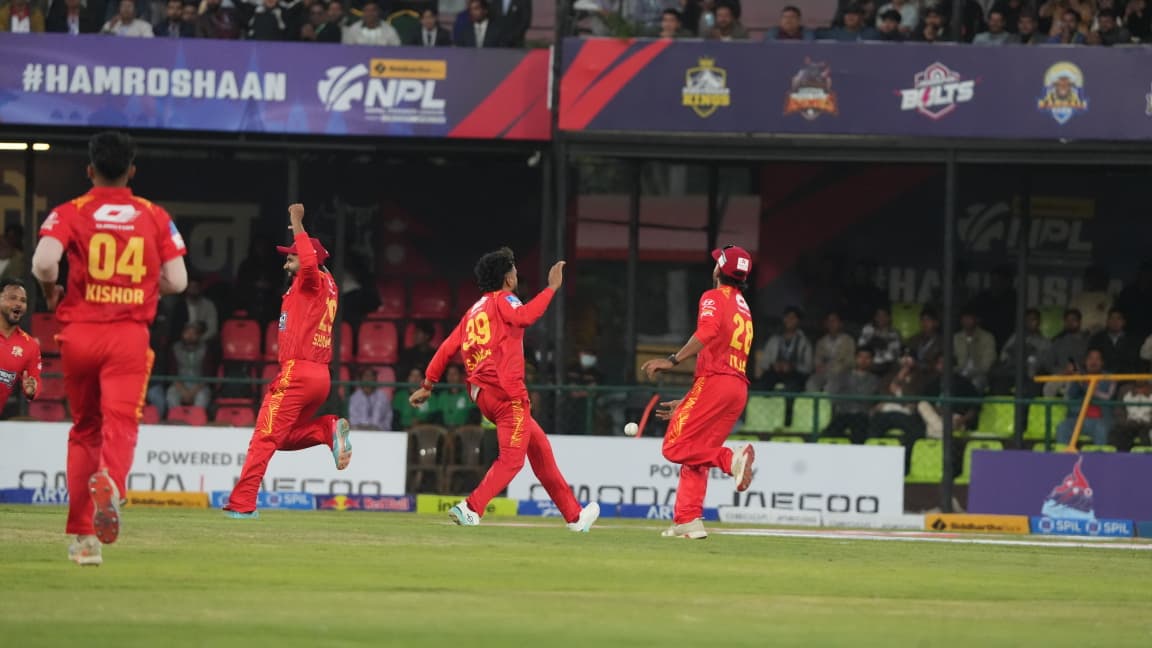
एनपीएलमा लुम्बिनीको विजयी सुरुआत
काठमाण्डु – नेपाल प्रिमियर लिग (एनपीएल) तेस्रो संस्करणको पहिलो खेलमा लुम्बिनी लायन्सले विजयी सुरुवात गरेको छ । सोमबार भएको पहिलो खेलमा लुम्बिनीले सुदूरपश्चिम रोयल्सलाई ७ विकेटले पराजित गरेको छ । सुदूरपश्चिमले दिएको ८८ रनको लक्ष्य लुम्बिनीले ९.५ ओभरमा ३ विकेट गुमाएर भेट्टाएको छ । डार्सी शर्टले १८ बलमा ४ चौका र ३ छक्काको मद्दतले ४० […] ...
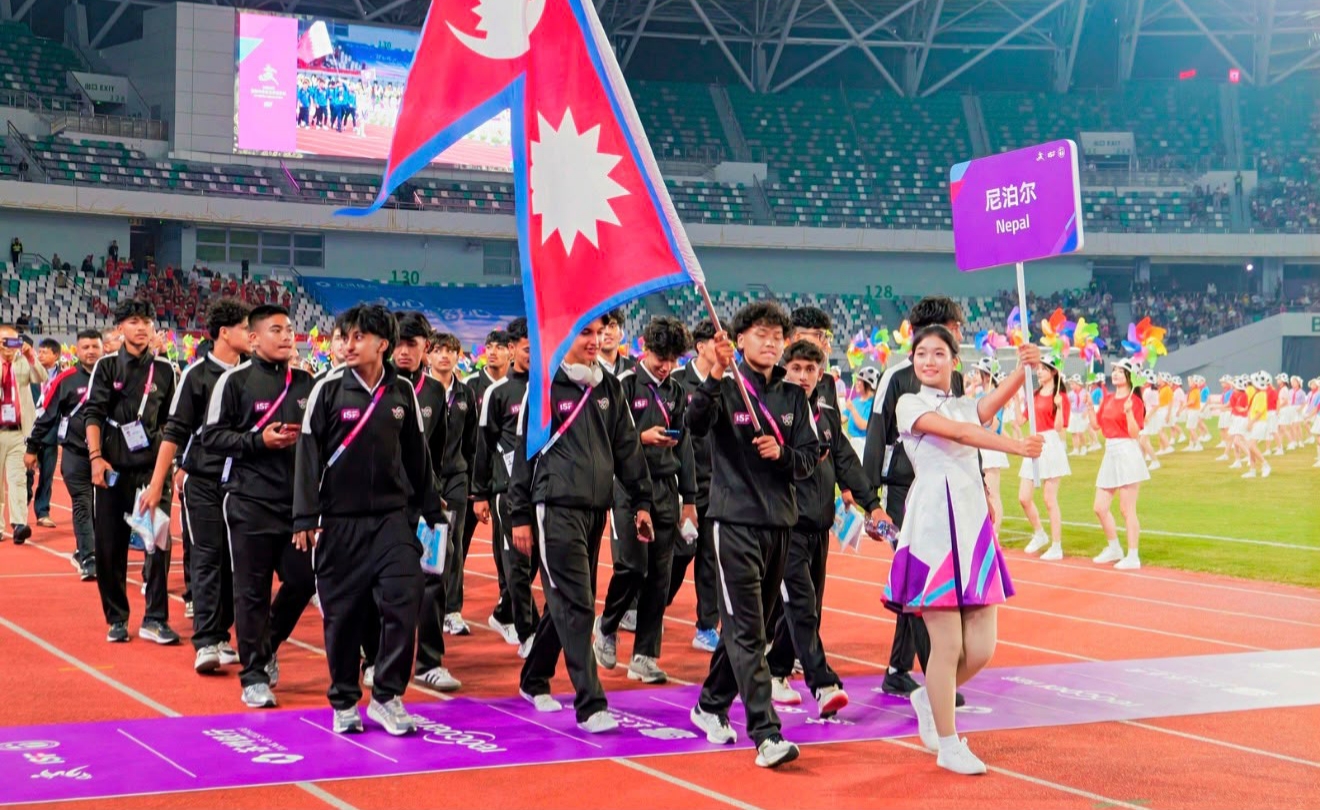
आईएसएफ फुटबल विश्वकप २०२६ मा नेपाल २९औँ स्थानमा
आईएसएफ फुटबल विश्वकप २०२६ मा नेपाल २९औँ स्थानमा ...
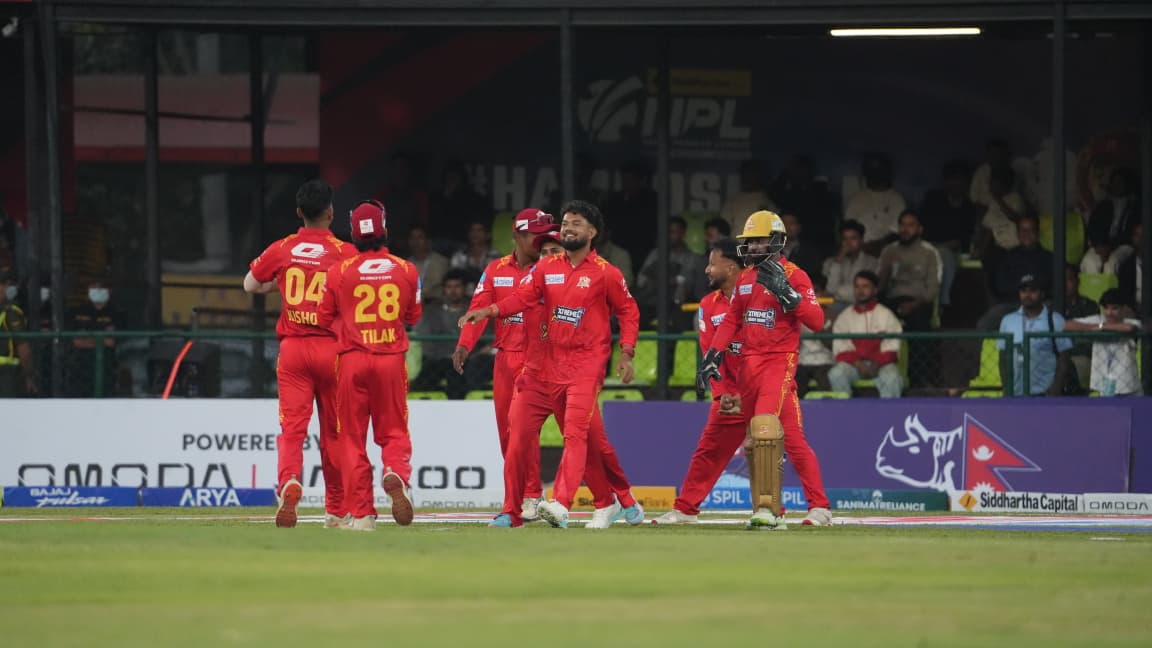
किशोर महतो र शेर मल्लसामु सुदूरपश्चिमका अनुभवी विदेशी खेलाडीको पनि जोर चलेन
काठमाण्डु- नेपाल प्रिमियर लिग (एनपीएल) को तेस्रो संस्करणको उद्घाटन खेलमा सुदूरपश्चिम रोयल्सको ब्याटिङ लुम्बिनी लायन्सको कसिलो बलिङसामु निरीह बनेको छ । टस हारेर पहिले ब्याटिङ गरेको सुदूरपश्चिम १७.२ ओभरमा ८७ रनमै अलआउट भएको हो । साविक उपविजेता सुदूरपश्चिमलाई सस्तैमा समेट्ने क्रममा लुम्बिनीका किशोर महतोले चार विकेट लिए भने शेर मल्लले तीन विकेट हात पारे । […] ...
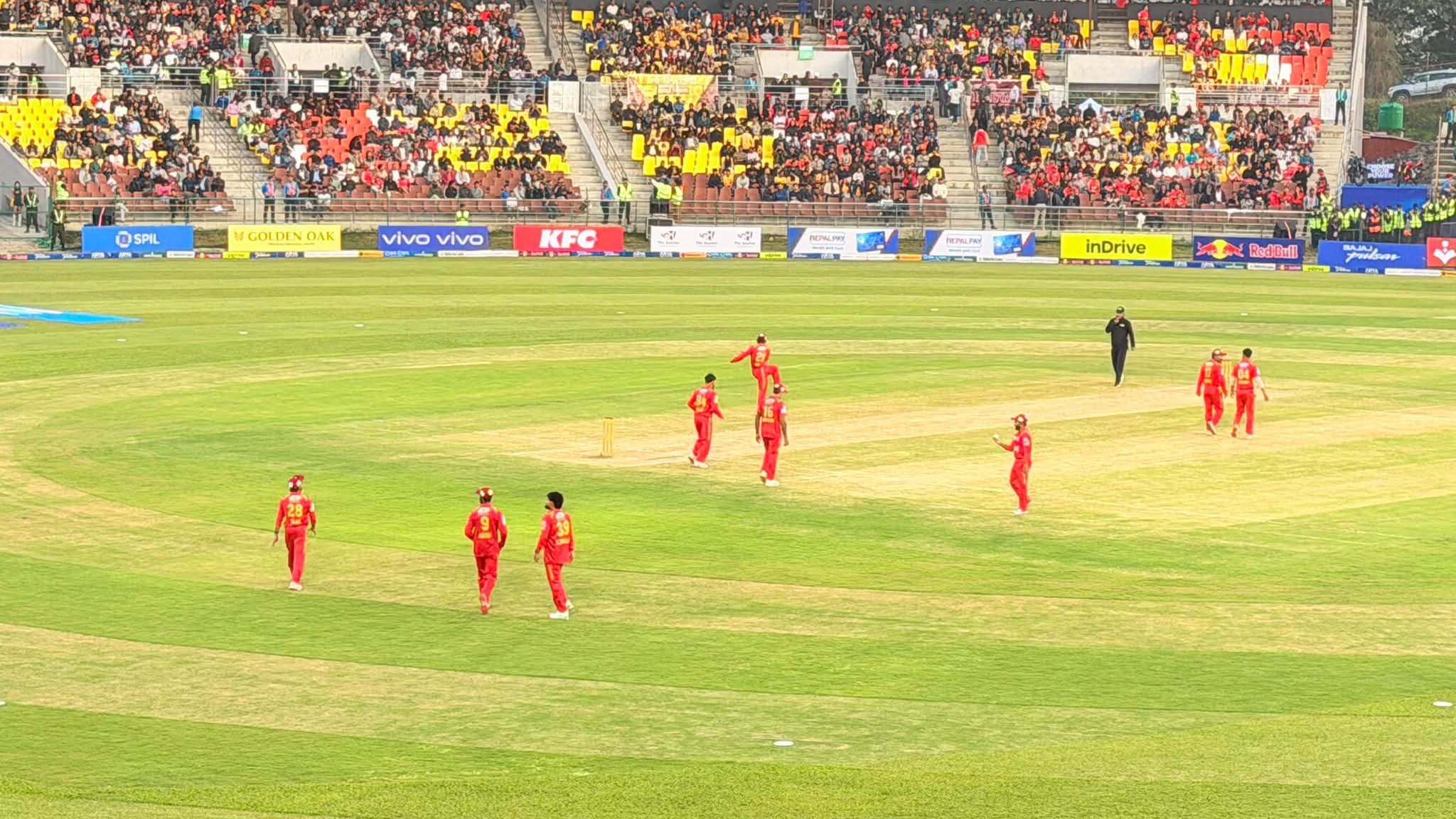
सुदूरपश्चिमले लुम्बिनीलाई दियो ८८ रनको लक्ष्य
सुदूरपश्चिमले लुम्बिनीलाई दियो ८८ रनको लक्ष्य ...
All Information In One Place
Real-time headlines from trusted sources. Get the app now — stay updated, inspired, and ahead with breaking news!
