
Christine Lagarde Is Leaving the ECB: Here’s What She Really Thought About Bitcoin
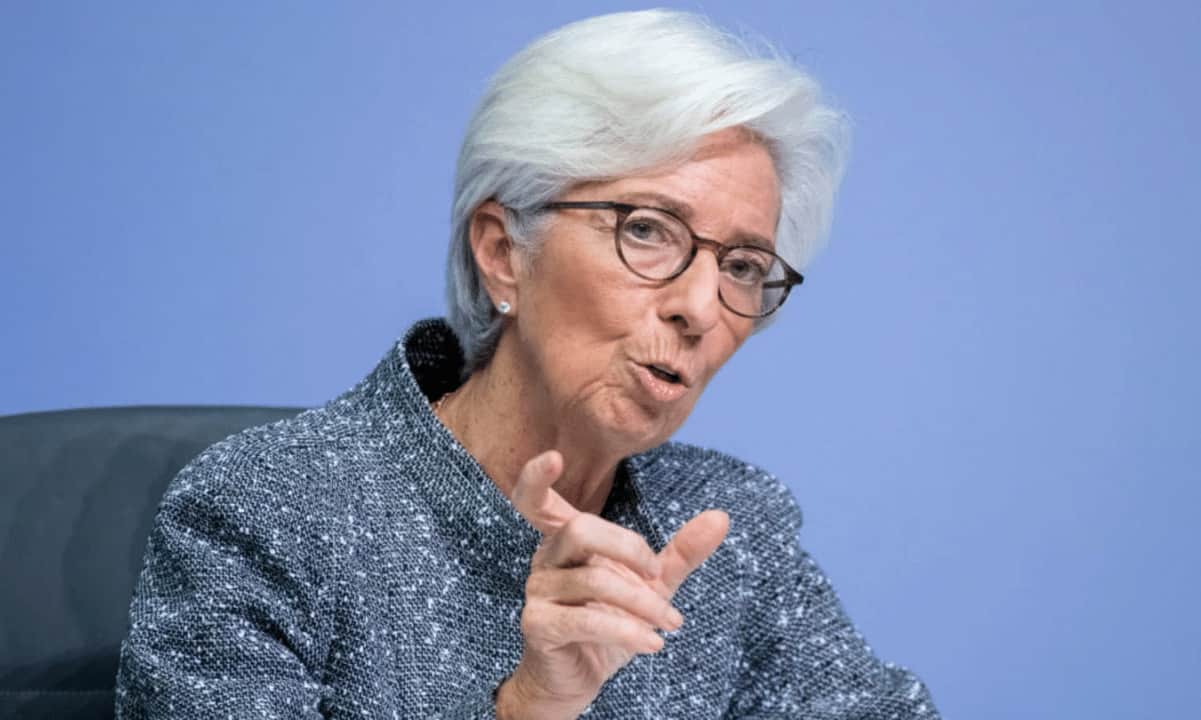
From calling BTC highly speculative to ruling it out of central-bank reserves, her position on the asset remained consistently negative.
Key Takeaways
- Christine Lagarde Is Leaving the ECB: Here’s What She Really Thought About Bitcoin.
- From calling BTC highly speculative to ruling it out of central-bank reserves, her position on the asset remained consistently negative.
- European Central Bank President Christine Lagarde announced earlier this week that she will step down on February 7, 2027, about eight months before her term is scheduled to end.
European Central Bank President Christine Lagarde announced earlier this week that she will step down on February 7, 2027, about eight months before her term is scheduled to end. The former IMF chief has led the ECB since November 2019, a period during which she became one of the most prominent critics of Bitcoin and crypto among global central bankers. Worth Nothing Her hostility toward BTC and the broader market dates back to January 2021. At the time, she spoke at the Reuters Next conference and described the largest cryptocurrency as a “highly speculative asset” and accused it of facilitating funny business as well as money laundering, even though we know that the public blockchain allows everyone to trace each transaction. Unlike banks. She also argued that regulation had to be coordinated globally because such loopholes would inevitably be exploited. One of her strongest statements came in 2022 when she said crypto assets were “worth nothing” and were “based on nothing.” She claimed that there was no underlying asset or structure providing an anchor of safety. She also warned that inexperienced investors could suffer major losses and contrasted private cryptocurrencies with a future digital euro backed by the ECB. There was some irony to this, though. Lagarde revealed that one of her sons had invested in crypto despite her multiple warnings. By late 2023, she said he had lost around 60% of his investment, prompting him to “reluctantly” concede that she had been right. Her stance remained strongly against BTC even as its institutional adoption accelerated over the past few years. No Bitcoin Reserves Rewinding the clock to 2021, Lagarde asserted that the prospects of central banks holding Bitcoin were “out of the question” and rejected the idea that the asset constituted a genuine currency. That position became particularly relevant in January 2025, when Czech National Bank Governor Ales Michl floated the possibility of studying Bitcoin as part of the country’s reserves. Lagarde responded that reserve assets needed to be liquid, secure, and safe, while avoiding money-laundering concerns. She said she was confident that Bitcoin would not enter the reserves of any central bank represented on the ECB’s General Council. Even in a 2026 interview with The Wall Street Journal, her view remained largely the same. Although she praised distributed ledger technology as innovative, she drew a sharp distinction between the tech and cryptocurrencies, describing the actual assets as speculative. Once again, she said they are worth nothing. All of her views have remained anti-Bitcoin, so perhaps, just perhaps, her departure could be good news for the industry. The post Christine Lagarde Is Leaving the ECB: Here’s What She Really Thought About Bitcoin appeared first on CryptoPotato.
Read Complete Original Article
Published originally on CryptoPotato
Related News

Jupiter Lend’s withdrawal liquidity rebounds from near zero to 29 million USDC
An October 31 API reading shows partial recovery, with available USDC at about 7% of reported total assets. Read the full story on CryptoSlate Understand the crypto stories that matter and what to watch next. Get The Catalyst in your inbox

Ethereum faces 420K ETH supply overhang, yet bulls remain hopeful – Why?
Ethereum faces 420K ETH supply overhang, yet bulls remain hopeful – Why? AMBCrypto
Morpho Borrow Rates Hit Roughly 40% as PT Market Liquidity Dries Up
Morpho Borrow Rates Hit Roughly 40% as PT Market Liquidity Dries Up The Defiant

Banks are owed $349B by private credit funds that may not be collecting cash from borrowers
Private credit funds can count interest as income even when the borrower hasn't sent them any cash, because some loan contracts let businesses add interest to what they owe. That gives a company more time to pay, but it doesn't extend the same courtesy to the fund, which could have borrowed money from a bank… Read the full story on CryptoSlate Understand the crypto stories that matter and what to watch next. Get The Catalyst in your inbox
All Information In One Place
Real-time headlines from trusted sources. Get the app now — stay updated, inspired, and ahead with breaking news!
