

Astronauts deploy solar array on 100th US spacewalk by International Space Station crew members
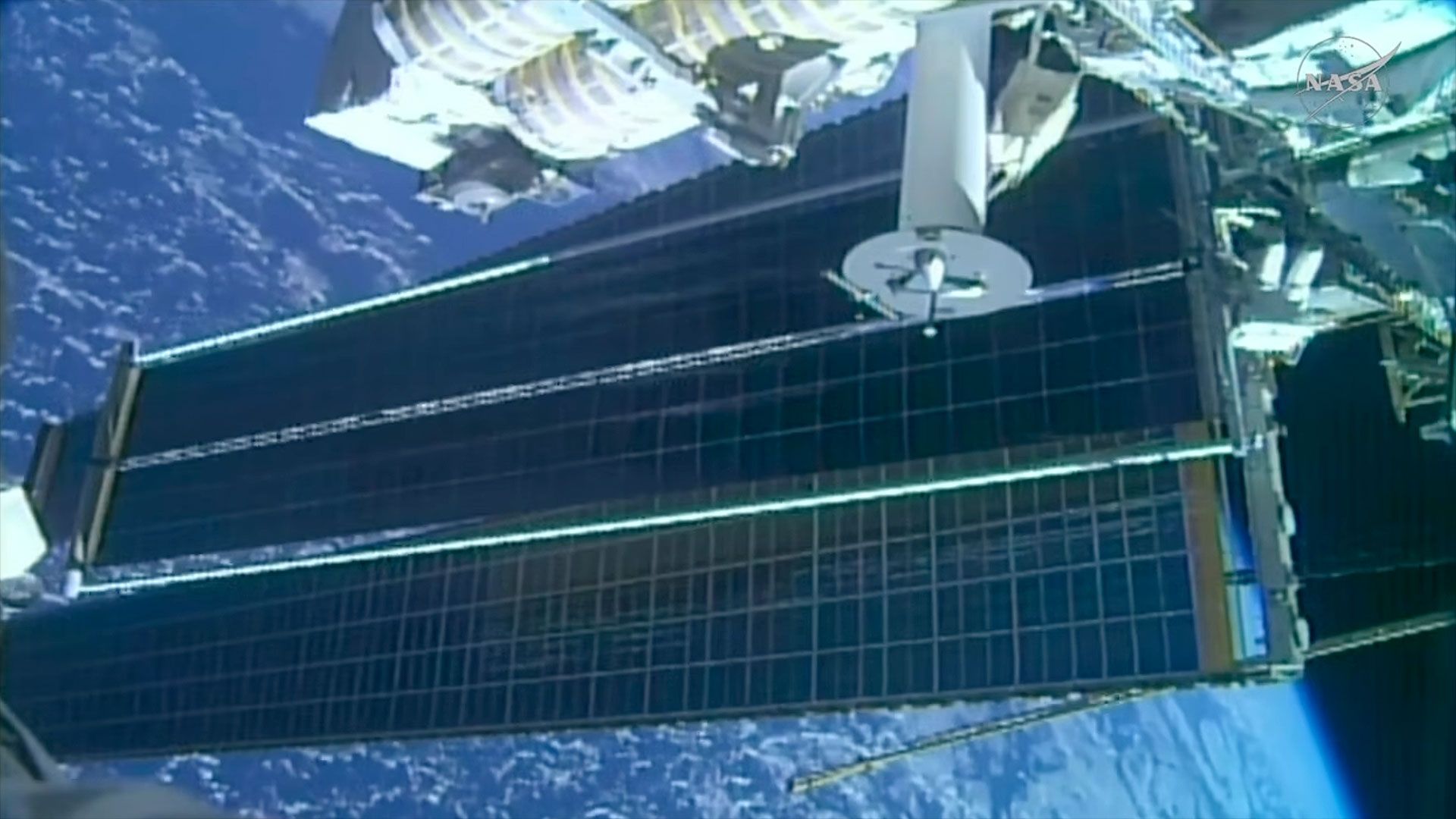
NASA astronaut Anil Menon and Joshua Kutryk of the Canadian Space Agency deployed a new solar array on Thursday (Oct. 29) during a seven-hour spacewalk outside the International Space Station.
Key Takeaways
- Astronauts deploy solar array on 100th US spacewalk by International Space Station crew members.
- NASA astronaut Anil Menon and Joshua Kutryk of the Canadian Space Agency deployed a new solar array on Thursday (Oct.
- 29) during a seven-hour spacewalk outside the International Space Station.
Two astronauts successfully installed and deployed the second-to-last upgraded solar array for the International Space Station (ISS) during the 100th U.S. spacewalk from the orbiting outpost.Anil Menon of NASA and Joshua Kutryk of the Canadian Space Agency (CSA), both ISS Expedition 75 crewmates, completed the 7-hour-and-11-minute extravehicular activity (EVA) at 3:08 p.m. EDT (1908 GMT) on Thursday (Oct. 29). The spacewalk began and ended inside the U.S. Quest airlock, with both astronauts wearing NASA's extravehicular mobility unit (EMU) spacesuits.It was the first spacewalk by a Canadian astronaut since April 2019, when David Saint-Jacques ventured into the void with NASA's Anne McClain.NASA astronaut Anil Menon carries a rolled-up solar array to the site where it will be deployed while riding on the end of the Canadarm robotic arm during a spacewalk outside the International Space Station on Thursday, Oct. 29, 2026. (Image credit: NASA)Once outside, Menon and Kutryk worked on unbolting the ISS roll-out solar array (iROSA) from a temporary stowage platform. The 10-by-2-by-4-foot (3-by-0.6-by-1.2-meter) rolled-up assembly was delivered to the space station inside the unpressurized trunk of SpaceX's Dragon cargo capsule earlier this month, on the company's 35th ISS resupply mission for NASA.Menon then secured himself at the end of the Canadarm2 robotic arm and carried the 750-pound (340-kilogram) iROSA to the space station's port side, where he and Kutryk next installed it on the 2A electrical power channel. Kutryk made his way to the worksite along the station's backbone truss.Using bolts to mount the IROSA in place and connecting its electrical cables to tie it into the station's power system (during a night pass, out of safety concerns), the array was ready to be extended. No motor was needed to deploy the iROSA to its 63-foot (19-m) length. The potential energy held by the assembly's rolled-up carbon composite booms was enough to fully unroll the panel."And we see the iROSA deploying now," reported Mission Control four hours and 23 minutes into the spacewalk. About 12 minutes later, the array had fully extended, draping over about half of the larger but less capable legacy panel on the P4 truss. The station's eight original arrays are showing degraded power output as they have exceeded their 15-year design life. The iROSAs, when used in tandem with their older counterparts, have increased the station's power supply by 20% to 30%.The additional power is needed to support ongoing and planned station operations, including its safe and controlled deorbit, which is currently scheduled for 2030.Having worked ahead of their schedule, Menon and Kutryk removed some of the beams holding the final iROSA in place on its temporary platform and rotated two launch locks that were used in its delivery on Dragon.Thursday's EVA was the 100th U.S. outing from the space station without a now-retired space shuttle docked to the complex. Overall, it was the 285th spacewalk in support of ISS assembly, maintenance and upgrades, including 66 EVAs out of the Russian segment of the station and 119 by visiting shuttle crews.The seventh and penultimate International Space Station (ISS) roll-out solar array (IROSA) is seen unfurling after its installation by two spacewalkers on Thursday, Oct. 29, 2026. (Image credit: NASA)The first U.S. spacewalk outside of the Quest airlock was made by Expedition 4 crewmates Carl Walz and Daniel Bursch on Feb. 20, 2002. The 5-hour-and-47-minute EVA mostly tested Quest's systems and completed "housekeeping chores.""Being outside, I can say it is always sunny in space," said Menon at the conclusion of Thursday's EVA. "I find it incredible what we have been able to do to provide new solar arrays to the space station. In fact, we have been ... doing complex operations like this for over 26 years.""This is USOS [United States Operating Segment] EVA 100, which is an incredible milestone. I think it really signifies how much we have done," he said.This was Menon's fourth spacewalk and Kutryk's first. Menon has now logged 26 hours and 31 minutes working in the vacuum of space during his current stay on the space station. Kutryk is the fifth Canadian astronaut to conduct an EVA. He and Menon are scheduled for another EVA on Nov. 5, when they are expected to install the eighth and final iROSA, completing the five-year process to upgrade the station's power supply.
Read Complete Original Article
Published originally on Space.com
Related News
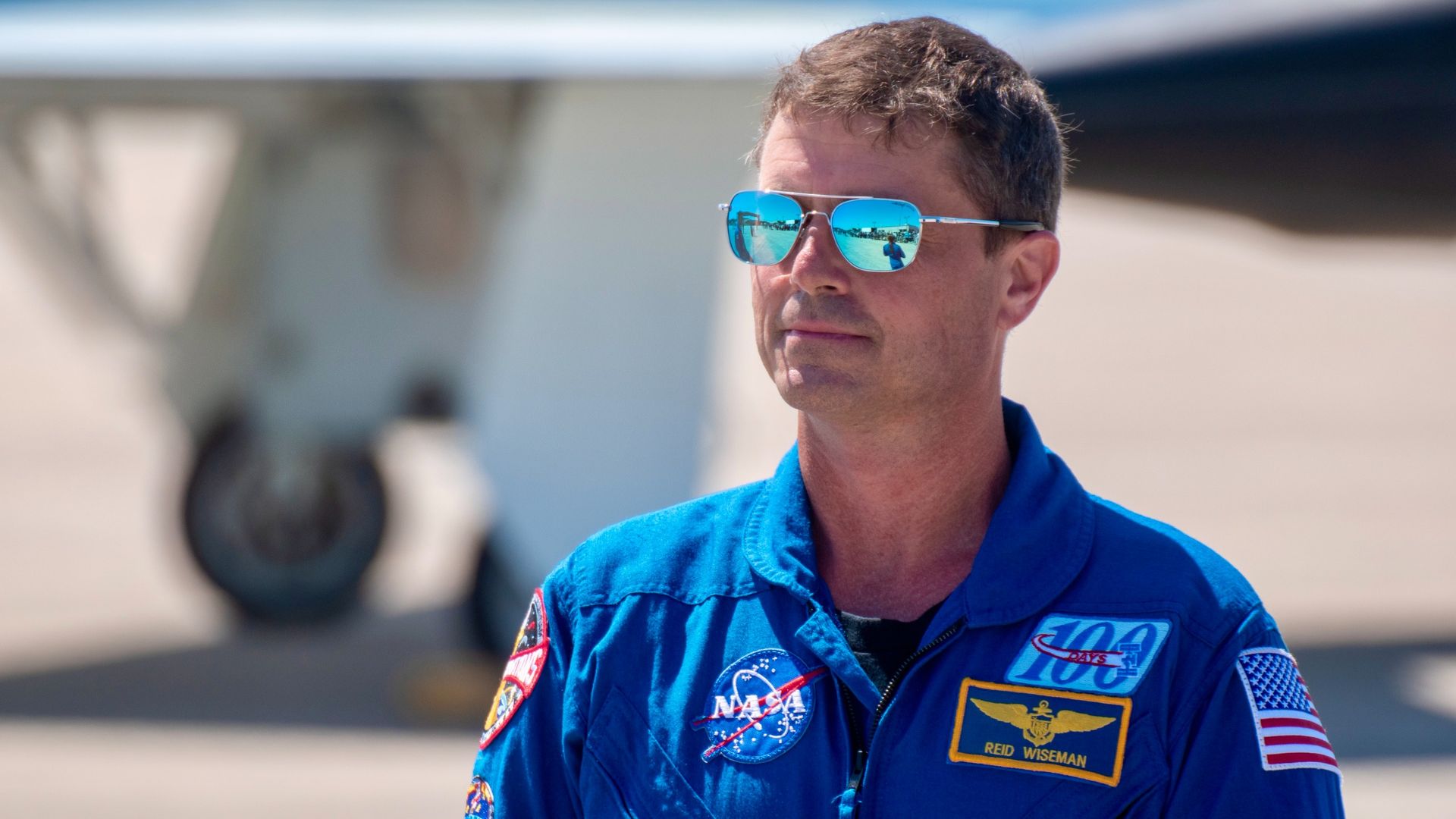
Artemis II commander Reid Wiseman named deputy director for NASA's Jet Propulsion Laboratory
The leader of NASA's first mission around the moon in half a century is the last to announce what's next for him after retiring from active astronaut duty.
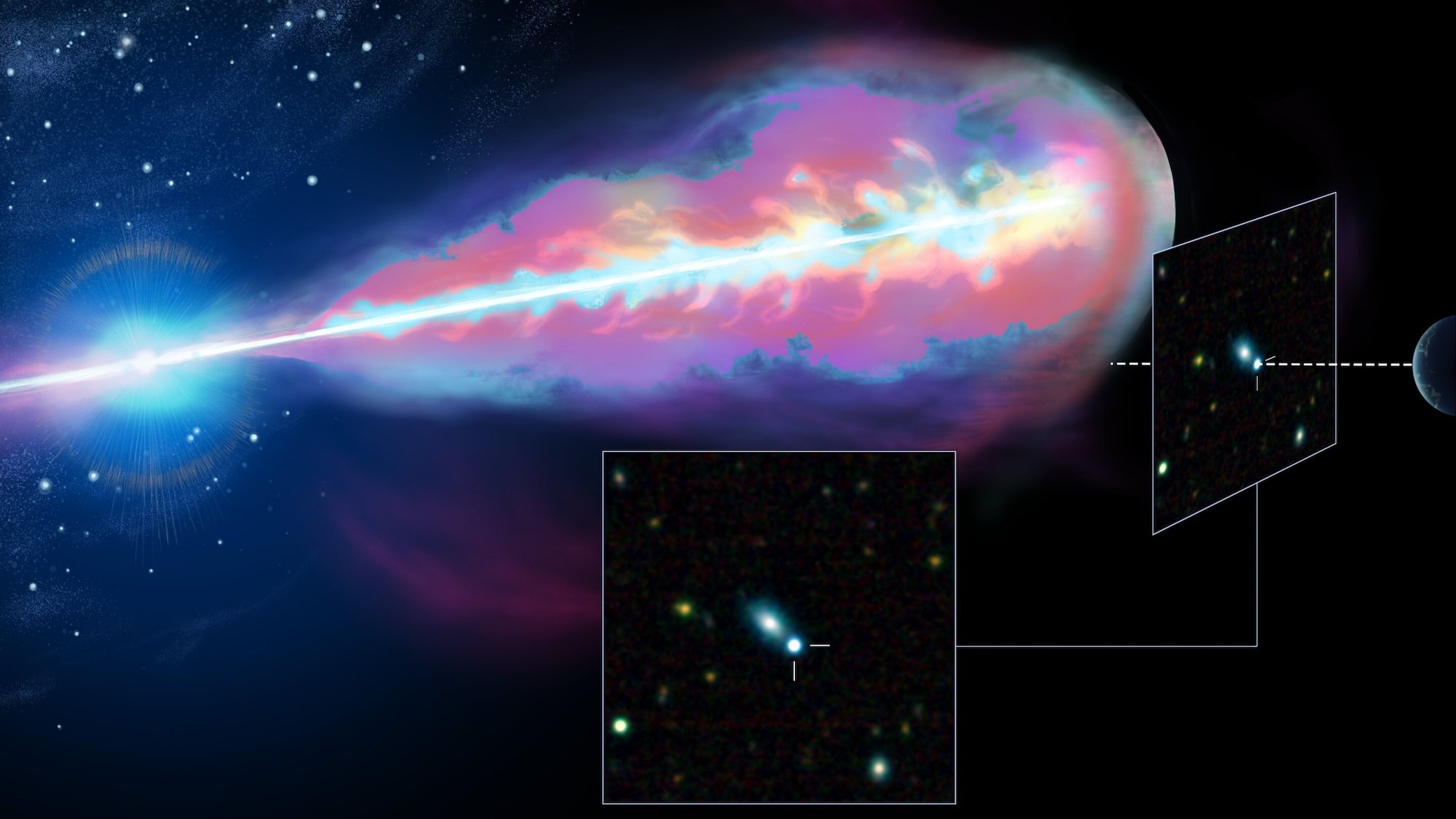
Gamma-ray burst is one of the brightest in decades
It shot out a billion years’ worth of solar energy through a pencil-sized jet. The post Gamma-ray burst is one of the brightest in decades appeared first on Popular Science.

Plant biology provides inspiration for PFAS replacement
Forever chemicals are renowned for their durability and their non-stick properties, but they persist for years in the environment. An alternative inspired by plants doesn't have the same problem
All Information In One Place
Real-time headlines from trusted sources. Get the app now — stay updated, inspired, and ahead with breaking news!
