
APOD: 2026 November 1 – Colors of the Moon
APOD Science APOD APOD: 2026 November 1 –… Today’s APOD Archive Submissions Index Search Calendar RSS Education About Discuss APOD Astronomy Picture of the Day Discover the cosmos! Each day a different image or photograph of our fascinating universe is featured, along with a brief explanation written by a professional astronomer. Colors of the […]
Key Takeaways
- APOD: 2026 November 1 – Colors of the Moon.
- APOD Science APOD APOD: 2026 November 1 –… Today’s APOD Archive Submissions Index Search Calendar RSS Education About Discuss APOD Astronomy Picture of the Day Discover the cosmos!
- Each day a different image or photograph of our fascinating universe is featured, along with a brief explanation written by a professional astronomer.
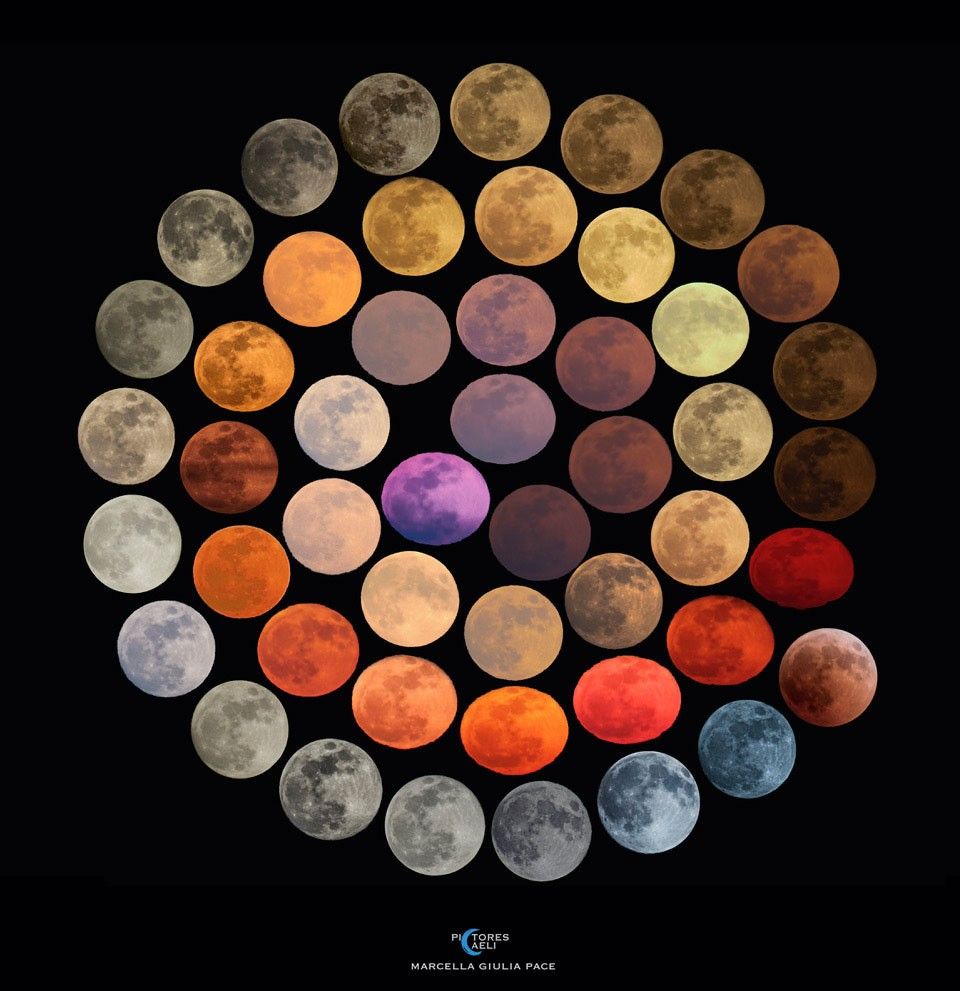
APOD Science APOD APOD: 2026 November 1 –… Today’s APOD Archive Submissions Index Search Calendar RSS Education About Discuss APOD Astronomy Picture of the Day Discover the cosmos! Each day a different image or photograph of our fascinating universe is featured, along with a brief explanation written by a professional astronomer. Colors of the Moon Explanation: What color is the Moon? It depends on the night — and the time. Outside of the Earth’s atmosphere, the dark Moon, which shines by reflected sunlight, appears a magnificently brown-tinged gray. The featured image highlights a collection of apparent colors of the full moon on Earth, documented by one astrophotographer over 10 years from different locations across Italy. A red– or yellow-colored moon usually indicates a moon seen near the horizon. There, some of the blue light has been scattered away by a long path through the Earth’s atmosphere, sometimes laden with fine dust. A blue-colored moon is more rare and can indicate an atmosphere carrying larger dust particles. What created the purple moon is unclear — it may be a combination of several effects. The last image captures the total lunar eclipse of 2018 July — where the moon, in Earth’s shadow, appeared a faint red — due to light refracted through air around the Earth. Have you ever seen an unusually colorful Moon? Tomorrow’s picture: open space Date: November 1, 2026 Credit & Copyright: Marcella Giulia Pace Authors & editors: Robert Nemiroff, Jerry Bonnell, Cecilia Chirenti, Keighley Rockcliffe A service of: ASD at NASA / GSFC,NASA Science Activation & Michigan Tech. U. Random APOD Generator Yesterday’s Image APOD: 2026 October 31 – Night on a Spooky Planet Tomorrow’s Image
Read Complete Original Article
Published originally on NASA News
Related News

Rare damselfly spotted by restored chalk river
The Herts and Middlesex Trust says it is "thrilled" the new wetlands are helping species thrive.

Scientists say a forgotten particle may explain why the universe exists
A mysterious particle overlooked for decades may hold the key to why matter survived the Big Bang, allowing stars, planets, and life to exist. Scientists believe this forgotten neutrino reshaped the early universe and may have left detectable gravitational wave signals that could help unlock the cosmos’s deepest mysteries.
Scientists discover the hidden “muscles” trees use to straighten themselves
Scientists have discovered that trees can sense their own shape and straighten their trunks using specialized wood that acts like opposing muscles. This remarkable ability helps trees maintain their posture and could lead to stronger forests, better timber, and more resilient crops.
All Information In One Place
Real-time headlines from trusted sources. Get the app now — stay updated, inspired, and ahead with breaking news!
