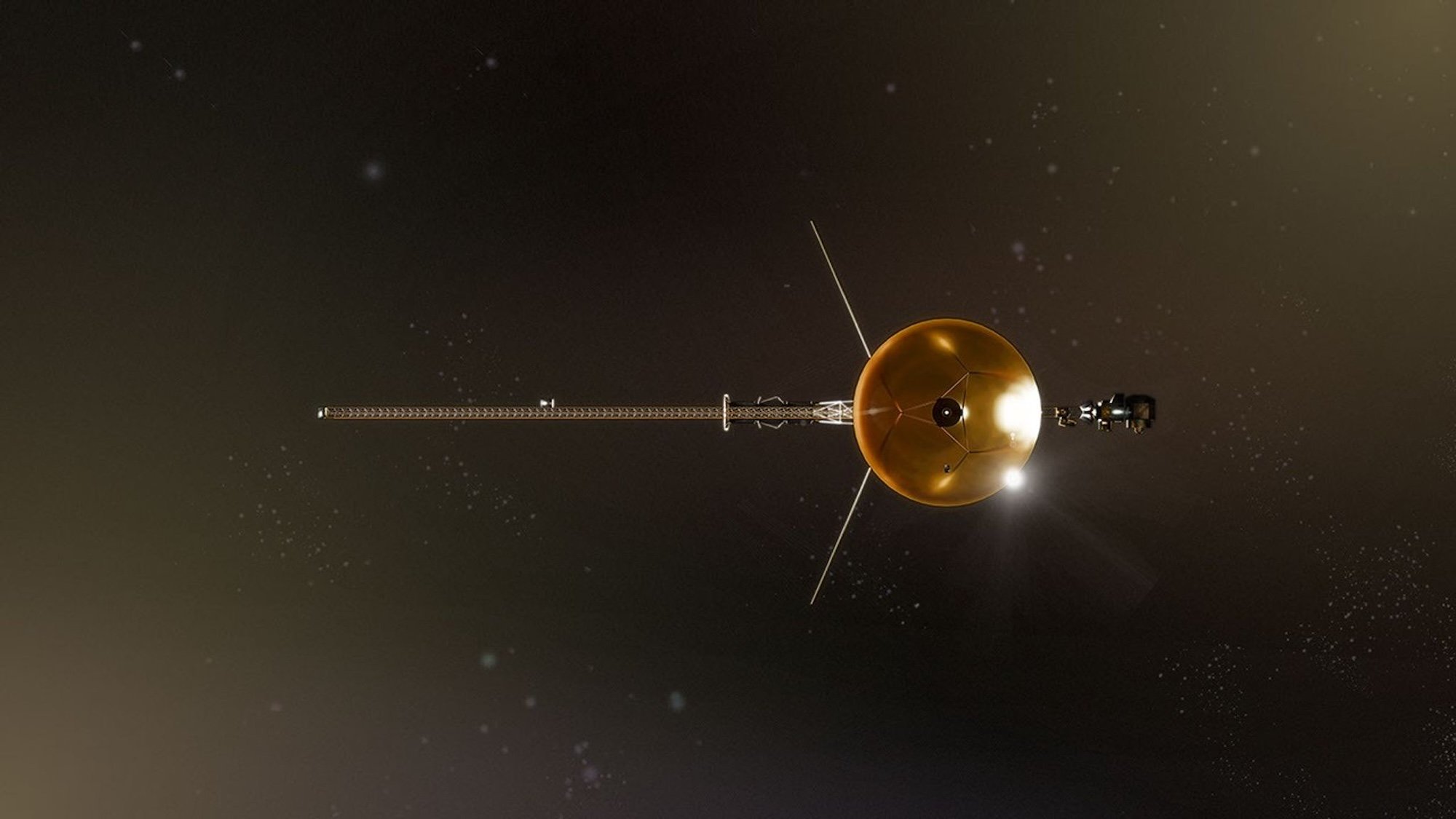
A robot just played Tinkertoys in space, assembling the first satellite structure ever made without a human touching the controls.The DARPA-funded project saw a robotic "truss builder" create a reflective antenna using Kapton film, composite fiber tubes and aluminum joints. The implications are huge for future missions, potentially opening up new possibilities to build — or fix — satellites in the final frontier."This is the first time that a structure has been autonomously constructed in space," Sergio Pellegrino, an aerospace and civil engineering professor at the California Institute of Technology (Caltech), said in a statement on Nov. 5.The need for such spacecraft will likely rise substantially in the future, as companies assemble giant megaconstellations for cell-phone communications, AI compute and other purposes. Indeed, the ball is already rolling on such ambitious projects, generating enough hype for space startups around the globe to raise a record $20.8 billion in the third quarter of 2026 alone. Anything that launches aboard a rocket is limited by the size of that vehicle's fairing — the nose cone that protects payloads during their ride to space. In space, however, the ability to stretch out is practically infinite — after taking into account, of course, engineering and financing constraints.Assembling structures robotically off Earth could therefore be revolutionary, advocates say. And the recent milestone was a step in that direction. "This work could be useful not only for astronomy and astrophysics, but also for communications and other areas, such as building very large solar arrays for space solar power," said Pellegrino, who's team leader of the truss-building project, a Caltech demonstration mission called Autonomous In-Space Tensioned Reflector Assembly (ASTRA). ASTRA built a 1.4-meter-wide (4.5-foot) structure in orbit. That's an impressive achievement, but it just scratches the surface of what DARPA wants to accomplish via a program it calls Novel Orbital and Moon Manufacturing, Materials, and Mass-efficient Design, or NOM4D for short."NOM4D's objective is to enable efficient, scalable construction of very large structures in space," NOM4D Program Manager Andrew Detor said in a Nov. 5 DARPA statement. "By 'very large,' I mean hundreds of meters or kilometers in scale. Nothing approaching that scale can be achieved today," Detor added.Concept art for a space-based antenna autonomously assembled by a device that DARPA seeks to develop and operate via its NOM4D program. (Image credit: DARPA/Colie Wertz)ASTRA was a demonstration, allowing researchers to check boxes and identify obstacles before shooting for a bigger goal. And the team did run into issues — specifically, time limitations, which prevented them from building additional sections of the antenna. Still, the researchers were able to prove out the third phase of a larger DARPA project. Pellegrino's team completed the two previous phases — defining the mission and testing the hardware in a lab — before shipping the ASTRA payload to the spaceflight company Momentus, Inc. for integration into its Vigoride 7 space tug. Vigoride 7 launched on March 30, along with many other payloads, aboard SpaceX's Transporter-16 rideshare mission.ASTRA flew with two prebuilt sections of a truss, a robotic "manipulator" and parts to make the rest of the truss in space. In brief communication windows totaling 15 minutes a day, engineers sent up commands and checked in on the robot's progress as it picked up things, readied them in the right spot, and performed construction on an assembly plate. The team overcame many "little surprises" on the way but were not able to finish the entire truss in time. Still, Pellegrino framed the effort as a success. "Developing a payload of this complexity on such a short timeline was an enormous undertaking for our small team," he said. Looking into the future, he is hopeful that robots will be able to build larger telescope mirrors for observatories to peer deeper into space, as well as more advanced structures for radio telescopes to listen for distant signals.NOM4D is also supporting a project from the University of Illinois Urbana-Champaign, but that one will take place at the International Space Station, focusing on how to harden carbon tubes in orbit.
A robot just built a structure autonomously in space for the 1st time ever
SP
Space.comBy Elizabeth Howell 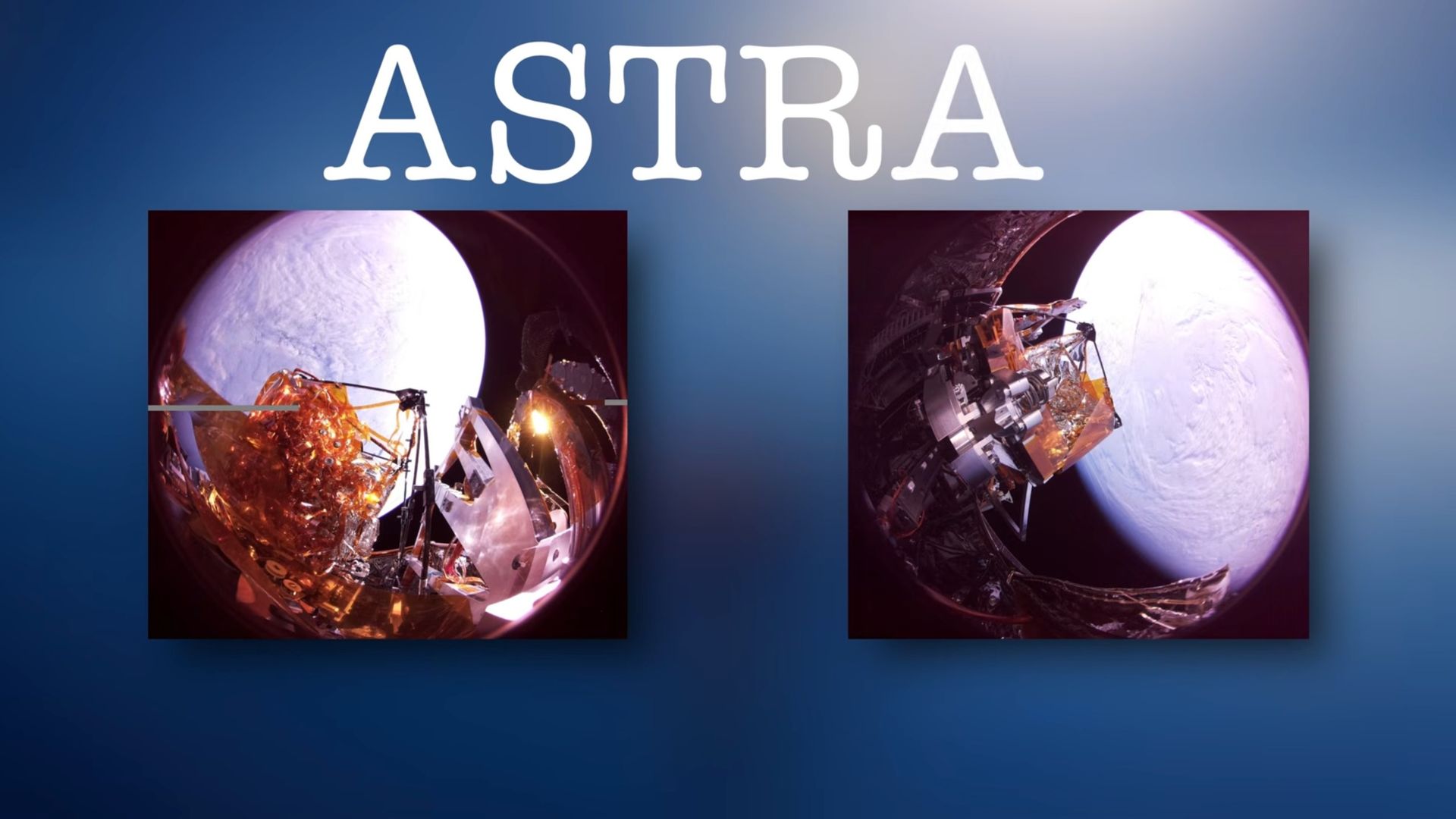
EXECUTIVE SUMMARY
A robot built part of an antenna in orbit recently, showcasing skills that could potentially allow the assembly of space telescopes and other large structures off Earth.
Key Takeaways
- A robot just built a structure autonomously in space for the 1st time ever.
- A robot built part of an antenna in orbit recently, showcasing skills that could potentially allow the assembly of space telescopes and other large structures off Earth.
- 5.The need for such spacecraft will likely rise substantially in the future, as companies assemble giant megaconstellations for cell-phone communications, AI compute and other purposes.
Read Complete Original Article
Published originally on Space.com