SpaceX is just days away from what might be its most ambitious test flight yet of the company's massive Starship megarocket, the largest launch vehicle ever built. On Friday (Nov. 13), SpaceX will launch its next Starship test flight on a mission that, if successful, will return both its Super Heavy first-stage booster and Ship upper stage to Earth for back-to-back landings at their launch pad. It will be the first full recovery of an orbital rocket in history. And if you want to watch it live, you'll need to know what time and where to tune in. In our guide below, we'll explain exactly when and how to watch SpaceX's Starship Flight 15 mission. It is the 15th test flight of the giant stainless-steel reusable rocket, which SpaceX wants to use for everything from Starlink internet satellite launches to landing NASA Artemis astronauts on the moon in 2028, and even for a crewed flight to Mars. But first, SpaceX has to successfully recover and refly both stages, something it's never done before — and that's where Flight 15 comes in. It's the first time the company will try to land an entire Starship rocket. Here's when to tune in.What time is SpaceX's Starship Flight 15 launch (and landing)?SpaceX's Starship Super Heavy booster is held by its launch tower during prep work for the megarocket's 15th test flight. SpaceX posted this photo on X on Nov. 10, 2026. (Image credit: SpaceX)The Starship Flight 15 test mission is currently scheduled to launch no earlier than Friday, Nov. 13, at 5:45 p.m. EST (2245 GMT), from SpaceX's Starbase site in South Texas. But there is a chance of a later liftoff time. SpaceX has said it has a 75-minute window in which to launch Starship Flight 15 to add some flexibility into its preflight countdown. That means the launch could take place anytime between 5:45 p.m. and 7 p.m. EST (2245-0000 Nov. 14). The local time for the launch window will be 4:45 p.m. to 6 p.m. CST. SpaceX has not formally announced if it has backup days for the launch, but if the company does have those options, liftoff would likely occur at the same time, based on past Starship missions that saw delays.One thing that separates Starship Flight 15 from past Starship test flights is its length. The mission, if it runs its full duration, will last just over 22.5 hours until Ship lands back at Starbase. That landing would occur on Saturday, Nov. 14, at 4:17 p.m. EST (2117 GMT). If SpaceX launches at the end of its window on Friday, at 7 p.m. EST, the Ship landing would occur on Saturday at 5:32 p.m. EST (2232 GMT). Meanwhile, the Super Heavy, known as Booster 22, will land about 6.5 minutes after liftoff.Related: Read our SpaceX Starship and Super Heavy guide for a detailed look at the megarocket.Starship Die Cast Rocket Model Was $47.99 Now $39.99 on Amazon. Even if you can't see SpaceX's Starship in person, you can score a model of your own. Standing at 13.77 inches (35 cm), this is a 1:375 ratio of SpaceX's Starship as a desktop model. The materials here are alloy steel and it weighs just 225g.View DealCan I watch SpaceX's Starship Flight 15 launch?Yes, you'll be able to watch SpaceX's Starship Flight 15 launch online, and you have many ways to do so. Space.com will host a livestream simulcast of Starship Flight 15 on this page, as well as on our homepage and our YouTube channel VideoFromSpace. That webcast will begin about 30 minutes before liftoff, at 5:15 p.m. EST (2215 GMT). SpaceX, of course, will offer its own Starship Flight 15 livestream on its Flight 15 mission page, as well as on its X account. That livestream will also begin 30 minutes before launch, at 5:15 p.m. EST (it's the same one as on Space.com). A prelaunch showIf you need your Starship launch preparations fix before the Nov. 13 launch, good news: You can see SpaceX's prep work live online. NASASpaceflight's YouTube channel offers live views of SpaceX's Starship pads at Starbase 24 hours a day, seven days a week. On Wednesday (Nov. 11), the channel will stream live views of the Starship Flight 15 rocket stacking, starting at 3 p.m. EDT (1900 GMT). The NASASpaceflight Flight 15 launch webcast will begin on Nov. 13 at 11:45 a.m. EDT (1645 GMT), about six hours before launch. NASASpaceflight typically offers live commentary and constantly changing views of the Starship launch pad via remote cameras positioned around Starbase. In-person launch optionsIf there was ever a SpaceX Starship test flight to see in person, this just might be it. In addition to watching the world's largest rocket launch into space, Starship Flight 15 offers the chance to see both parts of that megarocket return to Earth and be caught in mid-air, 22 hours apart. If you've read our past Starship launch viewing guides, you'll know that SpaceX doesn't have an official viewing site for Starship launches. But you can see the spectacle from several public beaches (as well as private campgrounds). Cameron County Amphitheater at Isla Blanca Park on South Padre Island is always my first recommendation (I watched the first Starship launch from there in April 2023). The park offers a clear view of the Starship launch site across the bay and includes views of boats on the water. There are also bathrooms close by for your convenience. It's 5 miles (8 kilometers) from the launch site as the crow flies. But plan to head out early as traffic can be heavy, especially if you have to cross the bridge from Port Isabel. Speaking of Port Isabel, there are stretches along Highway 48 between Port Isabel and Brownsville, Texas where you can pull over to the shoulder to watch the launch from 6 to 8 miles (10 to 13 km) away. But it's just the side of a highway, so don't expect bathrooms there. The website SpaceLaunchSchedule.com does report that there are "open pull-offs" to park, from which you can get "wide wetland views." And, of course, it's free. I've driven along Highway 48 during two Starbase visits but have not pulled over to the shoulder to test this site. If you're on the Mexico side of the border, you may be able to watch Starship Flight 15 from Playa Bagdad, a public beach with a "head-on view of the launch tower and a festive vibe," according to SpaceLaunchSchedule.com. Finally, there is the Rocket Ranch campground, where you can get a closer view of Starship launches — but you have to pay $200 a ticket (kids under age 17 are $40). The ranch is 3.8 miles (6.1 km) from the Starbase launch site, and your ticket allows you to camp there for one day and one night. Longer four-day stay packages are available.The Rocket Ranch has two primary viewing locations: The "Outpost" offers the closest view and "unmatched media service," so you can stay connected. The second location is a bit farther away on the campground itself. Please note: Tickets include bus transportation from the ranch campground to a viewing site and back, but it is for one launch attempt only. Be sure to read the full Rocket Ranch FAQ for details on the site. How long is SpaceX's Starship Flight 15?If everything goes to plan, SpaceX's Starship Flight 15 orbital launch and landing test could last up to 22.5 hours and orbit the Earth 14 times. "If successful, this will mark the first full recovery of an orbital launch system and a breakthrough moment in making Starship a reliable, rapidly reusable rocket," SpaceX wrote in a mission overview.But the test flight could end early. That's what happened on SpaceX's first orbital Starship test mission, Flight 14 on Sept. 28, which was expected to last nearly 10 hours and orbit Earth six times. Instead, SpaceX ended the mission after three hours and two orbits of Earth as a safety precaution."Starship’s initial return to launch site mission is expected to orbit the Earth at an altitude of ~275 km and complete approximately 14 orbits around the planet over the course of a more than 22-hour flight," SpaceX wrote in the mission description. "Similar to Starship’s first orbital mission, the flight profile has been designed with the opportunity to insert into a passively safe suborbital trajectory or safely deorbit at multiple pre-determined areas over the ocean after raising to an orbital altitude."SpaceX Starship Flight 15 Launch TimelineTIME (Hr:Min:Sec)EVENTT-0:50:00Flight director polls for fuelingT-0:35:33Super Heavy liquid oxygen loading beginsT-0:35:30Super Heavy liquid methane loading beginsT-0:35:12Ship liquid oxygen loading beginsT-0:35:11Ship liquid methane loading beginsT-00:21:40Raptor engine chilldown begins on Ship and Super HeavyT-00:02:50Super Heavy fueling completeT-00:02:10Ship fueling completeT-00:0:30Flight Director GO for launch pollT-00:00:17Flame deflector activationT-00:00:03Booster ignition sequence startupT-00:00:00Liftoff ("Excitement Guaranteed," SpaceX says)Starship Flight 15 Mission TimelineTIME (Hr:Min:Sec)FLIGHT EVENTT+00:00:00Liftoff! T+00:00:58Ship/Super Heavy reach "Max Q"T+00:02:19Super Heavy main engine cutoffT+00:02:21Hot-staging separation/Ship Raptor engine ignitionT+00:02:26Super Heavy boostback burn startupT+00:03:02Super Heavy boostback burn engine shutdownT+00:06:10Super Heavy landing burn startupT+00:06:35Super Heavy landing burn shutdown (followed by 'chopsticks" catch)T+00:08:09Starship engine cutoffT+00:26:10Starship orbital insertion engine burn beginsT+00:26:30Starship orbital engine burn shutdownT+00:35:01Payload deploy startsT+01:17:40Payload deploy completeT+01:27:46Early Hawaii return checkT+07:15:35Mid-Chile return checkT+20:41:55Final Hawaii return checkT+21:35:57Deorbit burn startT+21:36:07Deorbit burn shutdownT+22:10:46Ship reentryT+22:29:34Ship transonicT+22:30:13Ship subsonicT+22:32:16Landing burn startT+22:32:18Landing flip.T+22:32:26Landing burn three to two enginesT+22:32:33Landing burn two to one enginesT+22:32:34"An exciting landing!" SpaceX saysIf SpaceX has to end the Starship Flight 15 test flight early, it has three primary splashdown zones to land the Ship upper stage in the ocean. The company could drop the Ship vehicle in the Pacific Ocean off the coast of Hawaii in early and late stages of the mission, according to a reentry overview. A mid-mission splashdown window off the coast of Chile is available if needed at that time. A late-mission splashdown zone in the Gulf of Mexico is also available. The Gulf is also a wave-off splashdown zone for SpaceX's Starship Super Heavy Booster 22 in case it is unable to land shortly after liftoff. As with Starship Flight 14, SpaceX is loading Flight 15 with 26 operational Starlink V3 internet satellites. They will be deployed in orbit within the first 90 minutes of the flight. "The Starship upper stage’s primary objectives include the deployment of 26 Starlink V3 satellites and the first return to launch site and catch at Starbase," SpaceX wrote in its overview. "Starship will only execute a return to launch site if the flight control team has ensured that the vehicle systems critical for reentry maneuvers and final landing burn and tower approach are healthy."What if Starship Flight 15 can't launch on Nov. 13?A diagram showing SpaceX's Flight 15 Starship mission profile. The orbital launch and landing test could last 22 hours and orbit Earth 14 times. (Image credit: SpaceX)While SpaceX is hoping to launch Starship Flight 15 on time, there is a chance that a technical issue or bad weather could prevent liftoff on Nov. 13. SpaceX has not announced any official backup days for the Starship Flight 15 launch, but it is likely that the company has at least one if not two additional opportunities to try again, based on past Starship launches. Any backup launch attempts will depend greatly on the nature of a launch delay.A good website to watch is the official Starbase page for Boca Chica Beach and Highway 4 closure alerts here. Those beach closures can be a good indicator of SpaceX's available flight windows. You'll be able to follow SpaceX's Starship Flight 15 mission on Space.com as it happens. Be sure to come back on launch day for complete Starship Flight 15 coverage.
What time will SpaceX launch Starship Flight 15, its 1st double landing test, on Nov. 13? (Full mission timeline)
SP
Space.comBy Tariq Malik 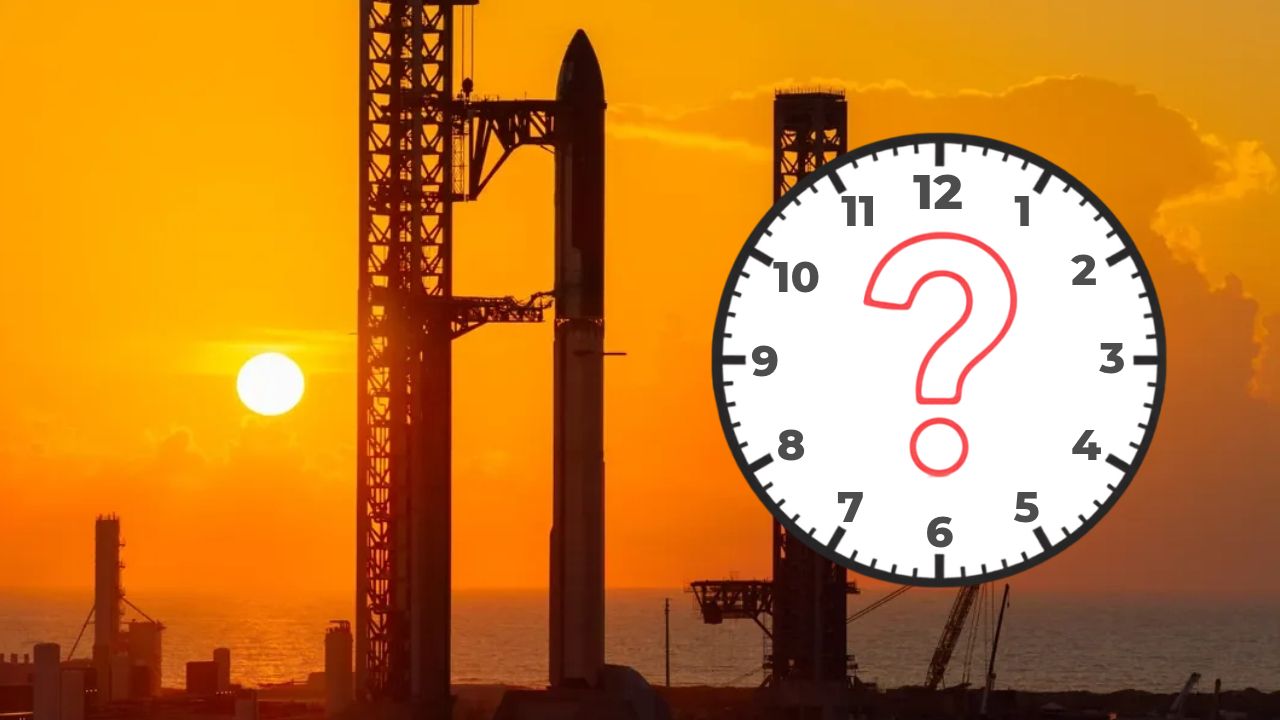
EXECUTIVE SUMMARY
SpaceX will attempt to reach orbit with its Starship megarocket and make its first-ever double catch on Nov. 13. Here's what time Starship Flight 15 will launch.
Key Takeaways
- What time will SpaceX launch Starship Flight 15, its 1st double landing test, on Nov.
- (Full mission timeline).
- SpaceX will attempt to reach orbit with its Starship megarocket and make its first-ever double catch on Nov.
Read Complete Original Article
Published originally on Space.com