Over 1,400 students gathered in Hawaii to learn about astronomy as part of the annual Journey Through the Universe program. (Image credit: NOIRLab/NSF/AURA/J. Pollard)Students gathered under the stars in Hawaii recently to explore the awesome nature of the night sky together. What is it?From Oct. 19 to Oct. 22, more than 1,400 students on the Big Island of Hawaii gathered for the Journey Through the Universe event to explore astronomy together. The Journey Through the Universe program is currently in its 23rd year. It was originally developed by the National Center for Earth and Space Science Education (NCESSE) and later introduced in Hawaii by the international Gemini Observatory, a program within the U.S. National Science Foundation's NOIRLab (National Optical-Infrared Astronomy Research Laboratory) that works with the Department of Education Hilo-Waiākea.The program aims to introduce students in the Hilo-Waiākea public school system to astronomy as well as the incredible science that happens across Hawaii. The students who participate range from preschoolers to seniors in high school, so the program introduces some students to astronomy and helps others explore possible careers in STEM fields. This year, the program brought in 19 volunteer educators from scientific institutions like Maunakea Observatories and supported hands-on activities and lessons that went from the classroom to under the Milky Way. Why is it incredible?This image shows a growing love for astronomy in progress. From the red glow of a skywatching night (red light doesn't interfere with our ability to see at night like white light does) to the scattered telescopes and students standing under the stars, this scene paints a larger picture. This is just one program, but in bringing together volunteers, educators, scientists and students, the program has created an incredible and enduring learning experience. Whether or not students walk away wanting to pursue a career in STEM, this incredible immersion in astronomy can help to foster a lifelong appreciation for science and nature. It's always a great idea to gather under the stars and explore together.
Students gather to explore Hawaii's glorious night sky | Space photo of the day for Nov. 4, 2026
SP
Space.comBy Chelsea Gohd 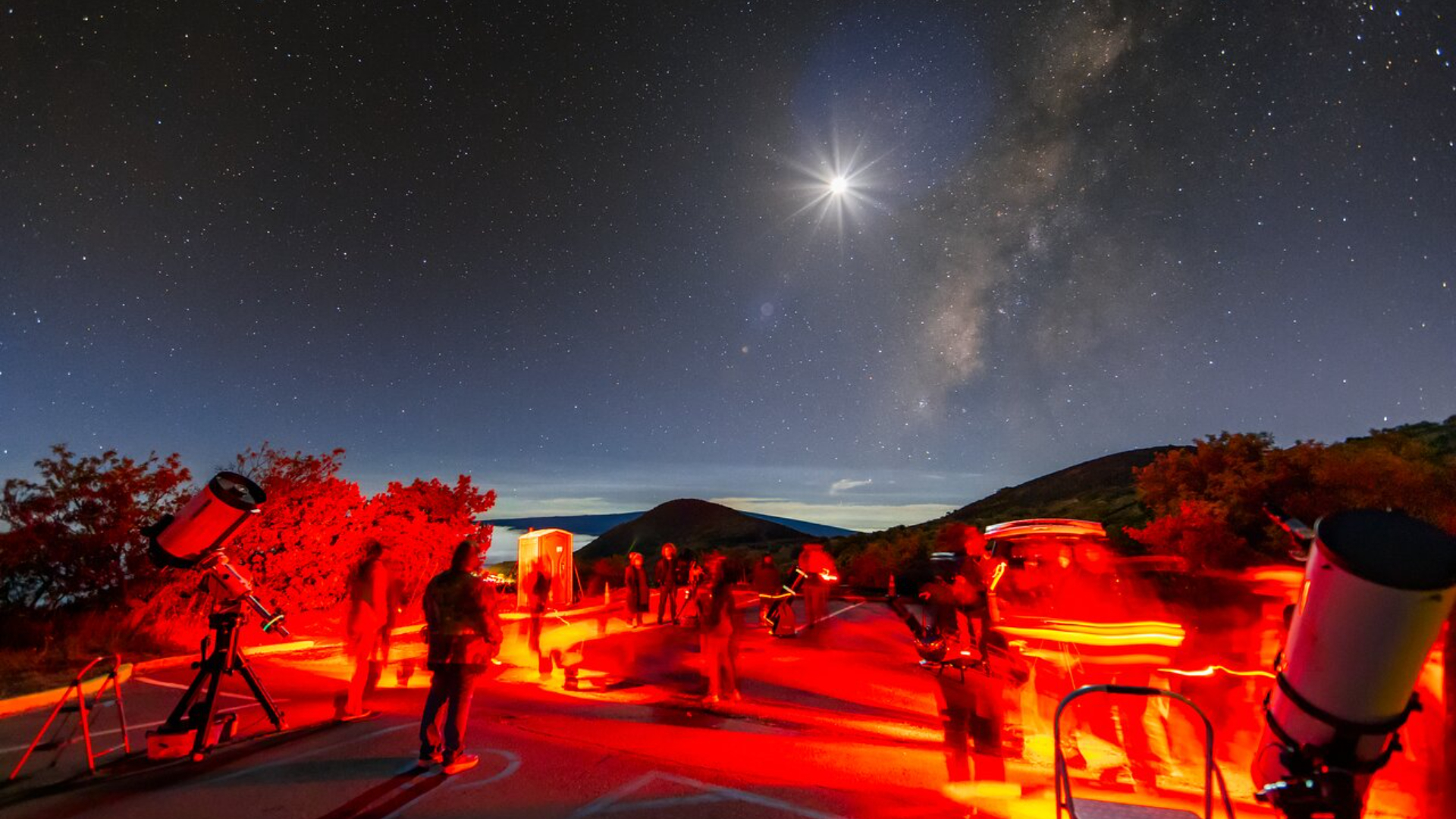
EXECUTIVE SUMMARY
Over 1,400 students gathered in Hawaii recently to learn about astronomy as part of the annual Journey Through the Universe program.
Key Takeaways
- Students gather to explore Hawaii's glorious night sky | Space photo of the day for Nov.
- Over 1,400 students gathered in Hawaii recently to learn about astronomy as part of the annual Journey Through the Universe program.
- Over 1,400 students gathered in Hawaii to learn about astronomy as part of the annual Journey Through the Universe program.
Read Complete Original Article
Published originally on Space.com