Starfish Space's first Otter has died, just a month after it reached the final frontier.The Seattle startup announced on Tuesday (Nov. 3) that its Otter 24C satellite suffered a glitch in low Earth orbit (LEO) and is not recoverable.The anomaly killed an ambitious mission in the cradle, as Otter 24C was still in the commissioning phase.Otter 24C launched Oct. 1 on SpaceX's Transporter-18 mission, a rideshare flight that carried a total of 130 payloads to LEO (including a prototype satellite for Project Suncatcher, Google's planned AI constellation). The Starfish satellite was flying a mission for NASA called Small Spacecraft Propulsion and Inspection Capability, or SSPICY for short. The goal was to "demonstrate technologies necessary for future debris-removal missions as well as for future applications in the servicing and inspection of active spacecraft," according to NASA's SSPICY site."This advances NASA's in-space manufacturing and assembly (ISAM) goals to ensure a sustainable space operating environment and builds towards a future where objects can be assembled, repaired and maintained in space, significantly expanding possibilities for science and human exploration," the agency added.Starfish Space was a natural partner. The Seattle company plans to become a big player in the nascent field of satellite servicing, using its line of Otter craft to repair, refuel or deorbit other satellites for a variety of customers.Illustration of a Starfish Space Otter satellite rendesvousing with another spacecraft in Earth orbit. (Image credit: Starfish Space)SSPICY marked Otter's spaceflight debut. The mission plan called for the 739-pound (335-kilogram) Otter 24C spacecraft to approach and inspect "up to four inoperable space objects of U.S. origin" over the course of a two-year mission, performing detailed visual inspections.But Otter 24C never got the chance to perform any of these orbital rendezvous."While working through commissioning steps, Starfish eventually stopped receiving data from Otter 24C," the company said in a Nov. 3 X post. "An investigation into the loss of communications has determined that fault protection on the satellite bus provided by [California company] Astro Digital had an error that turned off the radio and prevented re-establishing communications," Starfish added. "Starfish, NASA, and Astro Digital have concluded that Otter 24C is not recoverable."The company further said that it's implementing fixes to reduce the chances that the problem will crop up in the future. And it stressed that Otter 24C's death will not be in vain."The work completed through Otter 24C will directly contribute to the success of future Otter missions, as Starfish continues developing the technologies and operations required to make satellite servicing a routine capability in orbit," Starfish said.Otter Pup 2 is now operating as close as 25 meters away from @GilmourSpace's ElaraSat, fully autonomously. This vid contains imagery captured when we were separated by just 33.6 meters.We’ve demonstrated our ability to safely and precisely operate at very close range, executing intricate maneuvers, gathering detailed imagery, and testing the capabilities we’ll need for docking.With this progress, Otter Pup 2 has officially completed Characterize, the penultimate phase of its mission. That leaves just one phase left: attempting docking, and a chance to make history.October 27, 2026The Seattle company has other work to do in LEO at the moment as well: Its Otter Pup 2 prototype craft is currently gearing up to conduct a historic docking of its own in LEO.Otter Pup 2, which launched in June 2025, has been getting closer and closer to another private spacecraft, Gilmour Space's ElaraSat. Last week, the company announced that Otter Pup 2 got within a mere 82 feet (25 meters) of its target."With this progress, Otter Pup 2 has officially completed Characterize, the penultimate phase of its mission. That leaves just one phase left: attempting docking, and a chance to make history," Starfish Space said in an Oct. 27 X post. Two private satellites have docked before, but only much higher above Earth, in geostationary orbit. Such a meetup has not yet happened in LEO.
Starfish Space loses contact with 1st 'Otter' servicing spacecraft, ending NASA tech-demo mission
SP
Space.comBy Mike Wall 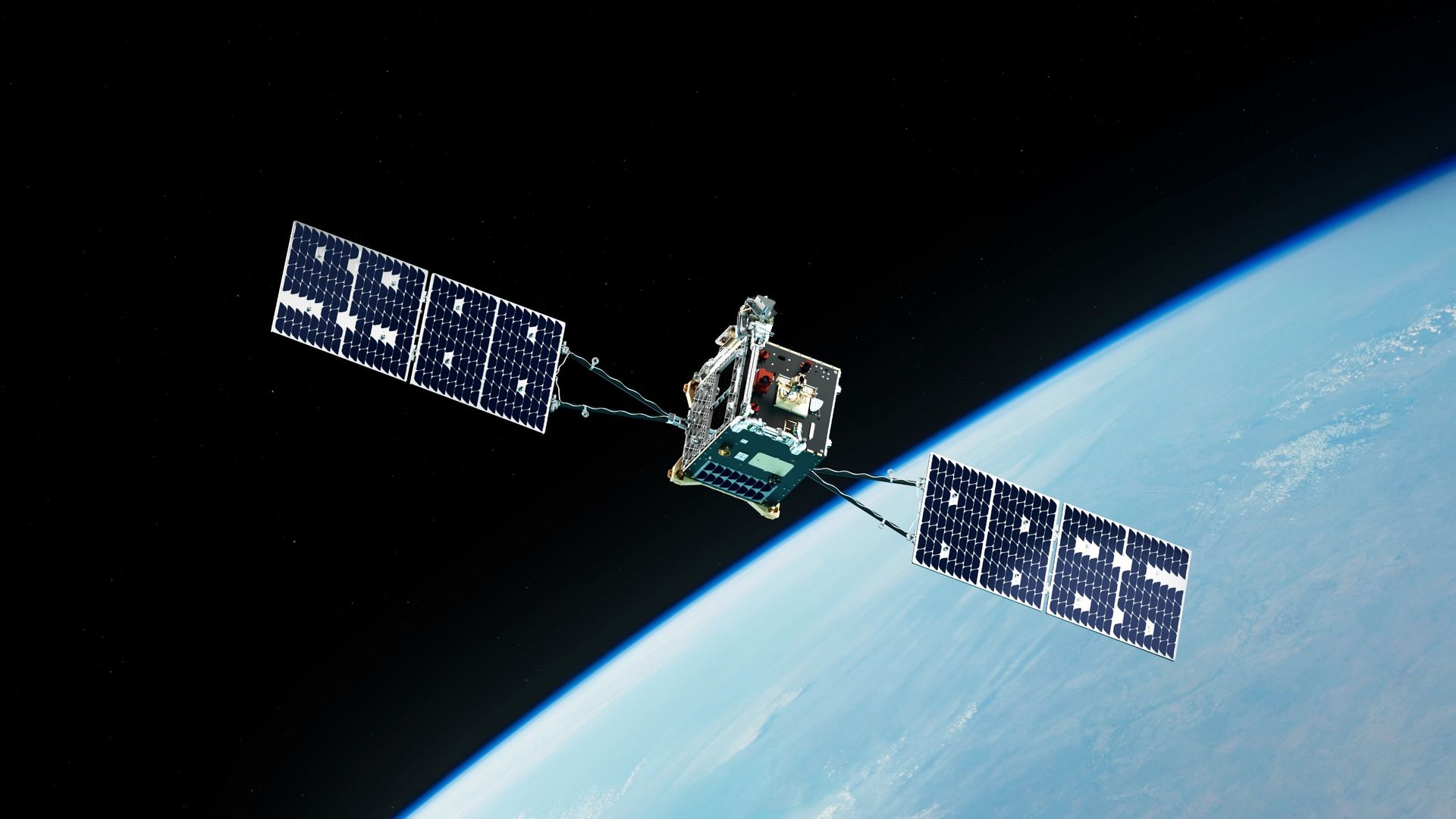
EXECUTIVE SUMMARY
Starfish Space's first Otter servicing spacecraft suffered a glitch in orbit recently, ending its technology-demonstrating mission for NASA.
Key Takeaways
- Starfish Space loses contact with 1st 'Otter' servicing spacecraft, ending NASA tech-demo mission.
- Starfish Space's first Otter servicing spacecraft suffered a glitch in orbit recently, ending its technology-demonstrating mission for NASA.
- Starfish Space's first Otter has died, just a month after it reached the final frontier.The Seattle startup announced on Tuesday (Nov.
Read Complete Original Article
Published originally on Space.com