
On November 28, 1967, astronomers found the first pulsar. A pulsar is a super-dense star that rotates super fast. As the pulsar spins, it emits two beams of light in opposite directions. When astronomers look at a pulsar, it looks like a star that's flickering on and off at a steady, constant pace. The first pulsar was observed by Jocelyn Bell Burnell and Antony Hewish. They were looking at the constellation Vulpecula when they saw a star flickering with regular pulses separated by 1.33 seconds. At first they had no idea what it was, so they jokingly nicknamed the signal Little Green Men 1. After more pulsars were discovered, they were able to rule out aliens.This chart tracked the signal of the first pulsar ever discoverered on Nov. 28, 1967. (Image credit: Cambridge University Library/Wikipedia)Why it matteredPulsars are naturally occurring phenomena, and they can be handy tools for astronomers. For example, some pulsars are extremely accurate clocks. Because pulsars rotate, their emission of beams of radiation is observed at regular intervals. Until Burnell's discovery, astronomers did not know if neutron stars existed, let alone if they could be observed."Suddenly, it turned out that nature has provided an incredibly precise way to observe these objects, something that has led to many later advances," said Edward Witten, chairman of the selection committee for the Fundamental Physics Breakthrough Prize, which in 2018 was awarded to Burnell.Among other applications, the observation of pulsars are one of the best ways astronomers have for testing Albert Einstein's theory of general relativity. The spinning stars have also been used as a navigation tool for spacecraft moving out beyond low Earth orbit.Want more space history? Check out our full On This Day In Space Story archive and watch our On This Day In Space videos on YouTube.
On this day in space! Nov. 28, 1967: Astronomers Jocelyn Bell and Antony Hewish disover the 1st pulsar with Little Green Men 1 signal
SP
Space.comBy Hanneke Weitering 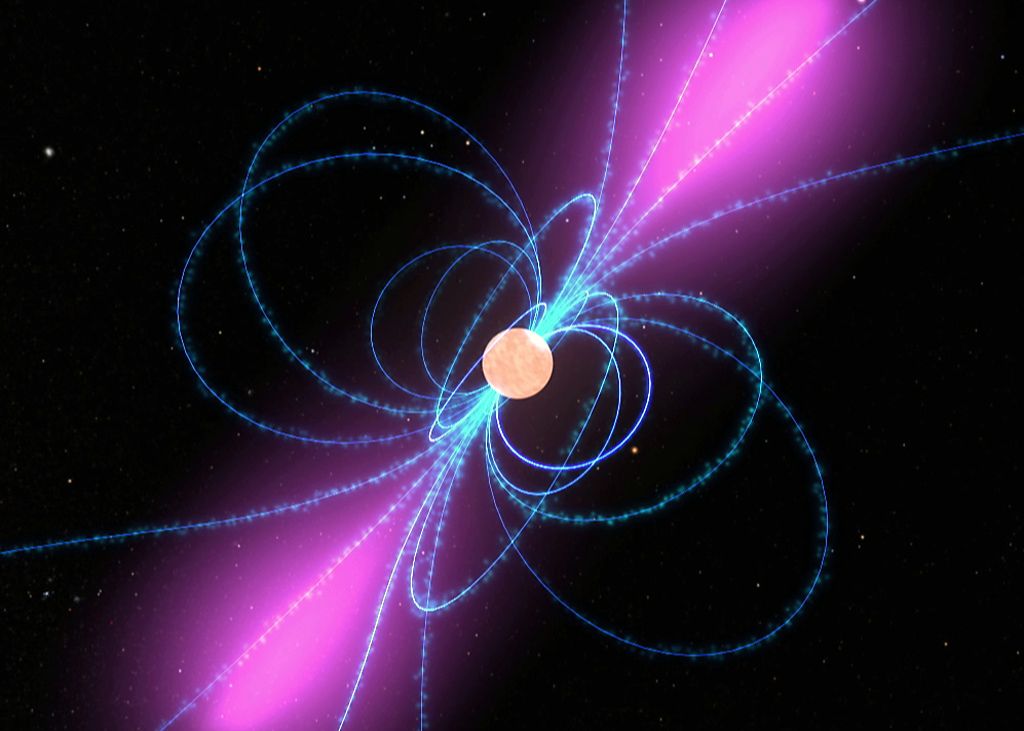
EXECUTIVE SUMMARY
On November 28, 1967, astronomers found the first pulsar and they called the signal Little Green Men 1. Here's why it mattered.
Key Takeaways
- On this day in space!
- 28, 1967: Astronomers Jocelyn Bell and Antony Hewish disover the 1st pulsar with Little Green Men 1 signal.
- On November 28, 1967, astronomers found the first pulsar and they called the signal Little Green Men 1.
Read Complete Original Article
Published originally on Space.com