For years, phone manufacturers have sought to legitimize their imaging chops by partnering with camera brands. Nokia with Zeiss in the aughts. Huawei with Leica in the late teens. Xiaomi with Leica. Sony and Vivo with Zeiss. OnePlus and Oppo with Hasselblad. And now there’s Honor with Arri. While some of these partnerships have merely been branding exercises, others have resulted in significant improvements in camera performance.Honor and Arri’s collaboration is definitely one of the more meaningful ones. I recently spent time with both companies in Los Angeles to learn more about what they are doing together. I was also able to go hands-on with Honor’s global Magic9 Pro Max and compare it to Arri’s Alexa Mini LF cinema camera in Arri’s studios. Finally I created a short movie using the Arri Cinema mode on Honor’s Magic9 Pro Max, which is shaping out to be one of the best camera phones around. Here’s what I learned.Magic9 Pro Max: $1287The Honor Magic 9 Pro Max is a beast of a camera phone featuring Arri-tuned dual 200MP cameras and an 8,800mAh battery to give mobile filmmakers true Hollywood-level video recording in a pocketable form factor that gives creators an unprecedented level of control and performance that makes it rival pricey cinema camera setups.View DealThe collaboration(Image credit: Myriam Joire / Tom's Guide)If you’re not familiar with Arri, here’s what you need to know. Since 1917, this German company has earned a reputation for making intuitive-to-use, individually-calibrated cinema cameras designed to work reliably in the most demanding conditions using industry standard rigging and workflows. Arri started with compact film cameras but beginning in 2010, it became one of the leaders in digital cinema with its Alexa cameras.Besides cameras, the company offers an entire ecosystem of cinema products, including lenses and lights. Today, Alexa cinema cameras are known for the “Arri Look”, which combines industry leading dynamic-range, excellent low-light performance, accurate colors, and beautiful skin tones. If you’ve watched movies like "Sinners," "Oppenheimer," "Dune," "Blade Runner 2049," and "Gravity," you’re familiar with the Arri Look.To achieve this, Alexa cinema cameras capture footage using Arri’s LogC3 gamma curve to preserve dynamic range and color data. 3D Look-Up Tables (LUTs) are then applied during production to convert the LogC3 footage to SD or HD target color spaces, and Arri offers a Look Library with 87 unique LUTs. Custom LUTs are also an option, and this allows filmmakers to achieve the exact look they want for their movies.(Image credit: Myriam Joire / Tom's Guide)We’ve covered Honor here on Tom’s Guide before, but let me give you a quick refresher. Honor started life as one of Huawei’s sub-brands, making a range of more affordable smartphones, from budget to flagship, marketed at a younger demographic. In 2020, Huawei sold Honor to a group of investors (Shenzhen Zhixin New Information Technology Co. Ltd.), and the company’s been thriving on its own ever since.Today, Honor makes some truly impressive smartphones, including the Magic V6, which battles Oppo’s Find N6 for best book-style folding phone on the market. The company is also a leader in silicon-carbon batteries and mobile imaging, as exemplified by the highly innovative and insanely cool Robot Phone. But while Honor’s hardware is always outstanding, its software leaves a lot to be desired.Honor and Arri’s collaboration started with the Robot Phone, which first implemented the Arri Cinema mode, Arri LogC3 capture, and Arri Looks, and is continuing with the Magic9 Pro Max, the company’s flagship. While the Robot Phone is China only, the Magic 9 Pro Max will be launched globally. Unfortunately, I can’t share much information about the global Magic9 Pro Max, but I can discuss its cameras and the Arri Cinema mode.The camerasMyriam Joire / Tom's GuideMyriam Joire / Tom's GuideMyriam Joire / Tom's GuideAs I mentioned above, I recently had the opportunity to go hands-on with Honor’s global Magic9 Pro Max in Los Angeles. This flagship is already available in China, and while Honor didn’t share any specs for the global model beyond the cameras, you can draw your own conclusions by checking out the specs for the Chinese model. I expect most of these will carry over, but there will likely be some changes, based on past experience.The Magic9 Pro Max packs three rear cameras: a 200 MP f/1.6 24mm 1/1.28" main shooter with 3-degree “gimbal-grade” OIS, a 200 MP f/2.6 85mm 1/1.4-inch 3.5x telephoto with OIS, and a 50 MP f/2.0 12mm ultrawide with AF. In front, there’s a 55MP f/2.0 25mm selfie camera (without AF). These shooters are complemented by Honor's in-house H1 imaging chip, co-developed with Arri, which was first introduced on the Robot Phone.Honor optimized this AI-powered ISP (Image Signal Processor) for cinema-grade video capture and computational photography, while also making it power efficient (18.8 TOPS/W). This chip handles real-time RAW-domain parallel image processing and natively supports 10-bit Arri LogC3 capture, Arri Wide Gamut 3 (AWG3), custom LUTs, and Arri Looks. It offers up to 14 stops of dynamic range and improves the signal-to-noise ratio by 8dB.(Image credit: Myriam Joire / Tom's Guide)Another first is that the Magic9 Pro Max’s 200MP main and telephoto cameras get a CIPA 8.0 image stabilization rating, offering gimbal-grade stabilization. The Camera & Imaging Products Association (CIPA) is an international industry group that sets standard testing procedures to measure imaging performance. CIPA 8.0 means that with these shooters, the shutter speed can be set 8 stops slower while keeping handheld shots sharp vs. no stabilization.Arri Cinema mode on the Magic9 Pro Max supports resolutions and frame rates up to 4k 60fps, standard 16:9 or wide 2.39:1 (CinemaScope) aspect ratios, and AVC (H.264), HVEC (H.265), or APV 10-bit 4:2:2 codecs. The phone offers 14 different preinstalled Arri Looks, but more LUTs can be imported from within the camera app, and Honor offers Arri’s full Look Library with 87 unique LUTs for download on its website.(Image credit: Myriam Joire / Tom's Guide)The Magic9 Pro Max also features a four-microphone array (one directional and three omni) that, combined with Honor’s proprietary AI-based DSP (Digital Signal Processing), replicates the phase-cancellation properties of a professional interference-tube shotgun microphone and enables cinema-grade audio capture. Five audio presets are available: standard, long-range, close-up, voice isolation, and voice boost.Finally, the Magic9 Pro Max is the first Android handset to feature a selfie camera with a 1:1 (square) aspect ratio, making it possible to capture landscape or portrait photos and videos without sacrificing resolution regardless of the orientation of the phone, just like the Center Stage front shooter found on Apple’s recent iPhones. I’m honestly surprised it took over a year for this feature to come to Android.And if all of this isn’t enough, the Magic9 Pro Max offers two teleconverter kits (200mm / 2.3x and 500mm / 5.8x) and a SmallRig Pro Expansion Kit (which includes a cage, two quick-release handles, a Bluetooth wireless shutter, teleconverter and filter mounts, plus a cooling fan). Measuring 81mm and weighing just 88g, Honor’s 200mm teleconverter is the lightest and smallest of its kind on the market today.The resultsMyriam Joire / Tom's GuideMyriam Joire / Tom's GuideMyriam Joire / Tom's GuideMyriam Joire / Tom's GuideMyriam Joire / Tom's GuideMyriam Joire / Tom's GuideMyriam Joire / Tom's GuideMyriam Joire / Tom's GuideMyriam Joire / Tom's GuideMyriam Joire / Tom's GuideMyriam Joire / Tom's GuideMyriam Joire / Tom's GuideMyriam Joire / Tom's GuideMyriam Joire / Tom's GuideI was able to compare Honor’s Magic9 Pro Max with Arri’s Alexa Mini LF in Arri’s studios. The company built two stages with different lighting, hired two actors, and set up rigs in front of each stage. Each rig consisted of a Magic9 Pro Max mounted on top of an Alexa Mini LF, with the phone and cinema cameras both capturing LogC3 footage of the same scene, and the 4k output of each displayed on identical monitors using the same Arri look.Other than the cinema camera having a shallower depth-of-field than the phone, it was difficult telling the footage apart. Dynamic range was similar, and so was low-light performance; colors were virtually identical between the phone and cinema camera. In other words, the Magic9 Pro Max’s output closely matched the Alexa Mini LF’s in the same conditions, which is impressive, especially since one of the stages was dimly lit.One of the rigs was mounted on a dolly, and we had the chance to take turns operating the cinema camera (panning and tilting the camera while someone else was moving the dolly), and remotely pulling focus, which was a lot of fun. Above is a video containing identical side-by-side 4k footage captured in Arri’s studios with the Magic9 Pro Max (left) and Alexa Mini LF (right), so you can see the results for yourself.Next, I went hands-on with the Magic9 Pro Max at Griffith Observatory, taking pictures and capturing LogC3 footage using the Arri Cinema mode. Below is a short film I made using a series of short 16:9 LogC3 clips shot with the Magic9 Pro Max. I imported these clips into DaVinci Resolve and applied one of the 87 LUTs from Arri’s Look Library to each clip. The results speak for themselves.Not only does my short film exude the Arri look, the way the Magic9 Pro Max’s camera system handles stabilization, focus, exposure, and white balance throughout these clips is outstanding. The clip of the hummingbird in the video above is particularly impressive considering I captured it hand-held with the telephoto. I haven’t captured footage of this quality on any Android phone before, which is why I always use iPhones to record video.Samsung and Oppo’s flagships do a very good job, and I hear great things about the Vivo X300 Ultra, but in my experience, iPhones are the ones to beat when it comes to video quality — especially the Pro models that support ProRes and Log. So, it looks like Honor and Arri’s collaboration is changing the game. And if you’re wondering what regular video capture looks like with the Magic9 Pro Max, check my Instagram reel below.A post shared by Myriam Joire (@tnkgrl)A photo posted by When it comes to photography, the Magic9 Pro Max does a wonderful job. Then again, Honor’s flagships have been delivering top notch image quality for a while now. As you can see below, the Magic9 Pro Max’s telephoto stands out as the star of the show. Is it Oppo Find X10 Pro Max good? Not quite, but it’s close. Honor’s 50MP ultrawide falls short of Oppo’s 200MP setup. In fact, the Arri Cinema mode doesn’t support the ultrawide.Bottom Line(Image credit: Myriam Joire / Tom's Guide)After going hands-on with Honor’s global Magic9 Pro Max, a few things are abundantly clear. Honor and Arri’s collaboration goes far beyond a mere branding exercise, and definitely raises the bar for mobile videography. Arri Cinema mode, Arri LogC3 capture, and Arri Looks, together with the Magic9 Pro Max’s camera system and Honor’s in-house H1 imaging chip, deliver meaningful improvements in video quality, and I’m here for it.More from Tom's Guide5 seriously useful iPhone Duo hacks you need to knowForget iPhone 18 Pro Max — I tested this wild Android/Hasselblad combo for a month and it's my favorite new camera phoneSamsung Galaxy S27 Ultra rumors — release, display upgrades and everything we know so far
I recorded a short film with the Honor Magic9 Pro Max — and it legit rivals Hollywood cinema cameras
TO
Tom's GuideBy Myriam Joire 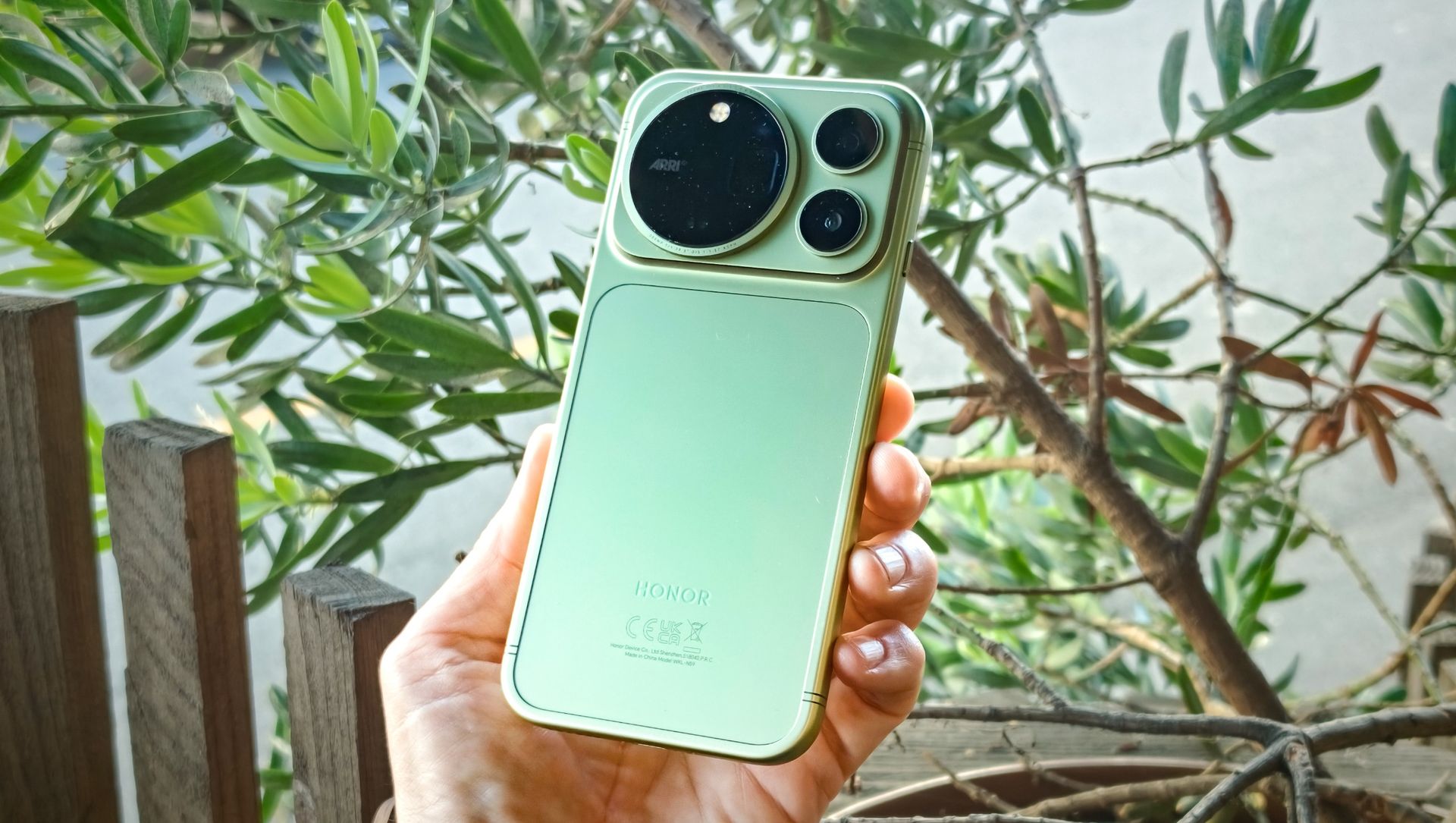
EXECUTIVE SUMMARY
Honor teamed up with cinema legend Arri to bring native 10-bit LogC3 capture and calibrated Looks to the Magic9 Pro Max. Here's the result.
Key Takeaways
- I recorded a short film with the Honor Magic9 Pro Max — and it legit rivals Hollywood cinema cameras.
- Honor teamed up with cinema legend Arri to bring native 10-bit LogC3 capture and calibrated Looks to the Magic9 Pro Max.
- For years, phone manufacturers have sought to legitimize their imaging chops by partnering with camera brands.
Read Complete Original Article
Published originally on Tom's Guide