4 Min Read I Am Artemis Katie Spicer For Katie Spicer, embracing opportunity and challenge has led to giant leaps during her time at NASA. Now as the NASA lander integration lead for Blue Origin’s Blue Moon Mark 2 lander, one of the commercially provided human landing systems for NASA’s Artemis program, Spicer will have her handprint on history. NASA’s Katie Spicer stands in front of the crew cabin prototype for Blue Origin’s Blue Moon Mark 2 lunar lander. The lander is one of two commercial human landing systems that will help safely ferry astronauts from lunar orbit to the Moon’s surface and back for the agency’s crewed Artemis missions in 2028. NASA/Bill Strafford Spicer works in the Flight Operations Directorate at NASA’s Johnson Space Center in Houston, where she evaluates and monitors design and development of Blue Origin’s lander. The design of the Blue Moon lander is rapidly evolving as Blue Origin continues to develop a streamlined lander test article for the agency’s Artemis III rendezvous and docking mission in low Earth orbit as well as a fully functional lander for a crewed lunar landing in 2028. Spicer works closely with her NASA and Blue Origin counterparts to ensure the design of the Blue Moon lander can support the overall Artemis mission objectives. “I look at the design of everything Artemis crews will touch, work with, or interface with to ensure systems will function the way crews will need them to,” Spicer said. “In some cases, the design might meet requirements, but I delve deeper into details. How easy will it be for crew to grab handles or handrails? Can they operate push-button displays in microgravity? Are the hygiene systems as user-friendly as possible in the limited space that’s available in the spacecraft? And, are there proper procedures and training to ensure the crew can safely and effectively use the systems? Evaluating all these operational details with crew perspective is part of my job.” Spicer has spent her career looking at the small details in the big picture. After earning a bachelor’s degree in microbiology from the Pennsylvania State University in State College, Spicer spent several years working as a full-time homemaker and raising three children. She got her start at NASA working part-time in the historic Life Sciences Laboratory, performing duties such as washing dishes, cleaning lab equipment, and running tests for scientists. “I went from tidying up and keeping my home running to maintaining the historic lab where the Apollo crews were quarantined when they came back from the Moon and the Moon rock samples were stored,” Spicer said. From there, Spicer began working with science payloads on the space station. She helped operate the Human Research Facility racks in the International Space Station National Laboratory and worked with scientists and crew to ensure in-flight processes and protocols were completed. It was there that Spicer found a love for the fast-paced dynamic of real-time space operations. Spicer became a flight controller at NASA Johnson’s Mission Control Center in 2018. The learning curve to become a flight controller was steep, but it did not deter her. Spicer studied and trained for five years to earn the ultimate instructor and flight controller certifications. “Unlike most people I work with, I don’t have an engineering degree,” Spicer said. “On my own, I studied engineering principles. I passed boards and certification tests. I learned to speak ‘engineer!’” Spicer spent five years as an Operations and Support Officer in the space station’s flight control room in Mission Control, also known as the “front room” to spaceflight. Now, when she looks at the Moon in the night sky, Spicer says she’s humbled and honored to be part of the team that’s sending astronauts back to the lunar surface. “I’m reminded of the great responsibility that NASA has in this endeavor, of the legacy of the courageous Apollo crews who went before, and inspiring the next generation of space explorers to keep going and reaching for the stars!” she said. As part of a Golden Age of innovation and exploration, NASA will send Artemis astronauts on increasingly difficult missions near the lunar South Pole to explore more of the Moon than ever before. In addition to providing economic benefits and advancing scientific discovery through its Moon missions, NASA will establish an enduring human presence on the lunar surface and build on the agency’s foundation for the first crewed mission to Mars. To learn more about the Artemis program, visit: https://www.nasa.gov/artemis About the AuthorBeverly PerryCommunications Strategist Share Details Last Updated Nov 12, 2026 EditorLee MohonContactCorinne Beckingercorinne.m.beckinger@nasa.govLocationMarshall Space Flight Center Related TermsArtemisGeneralHuman Landing System ProgramI Am ArtemisJohnson Space CenterMarshall Space Flight Center Explore More 4 min read NASA Shares Plans to Accelerate Artemis, Return to Moon Article 1 week ago 4 min read NASA Selects Geology Team for the First Crewed Artemis Lunar Landing NASA has selected the geology team that will develop the surface science plan for the… Article 3 years ago 7 min read NASA, Partners Accelerate Lander Development for 2028 Moon Missions Article 3 weeks ago Keep Exploring Discover More Topics From NASA Missions Humans in Space Climate Change Solar System
I Am Artemis Katie Spicer
NA
NASA NewsBy Lee Mohon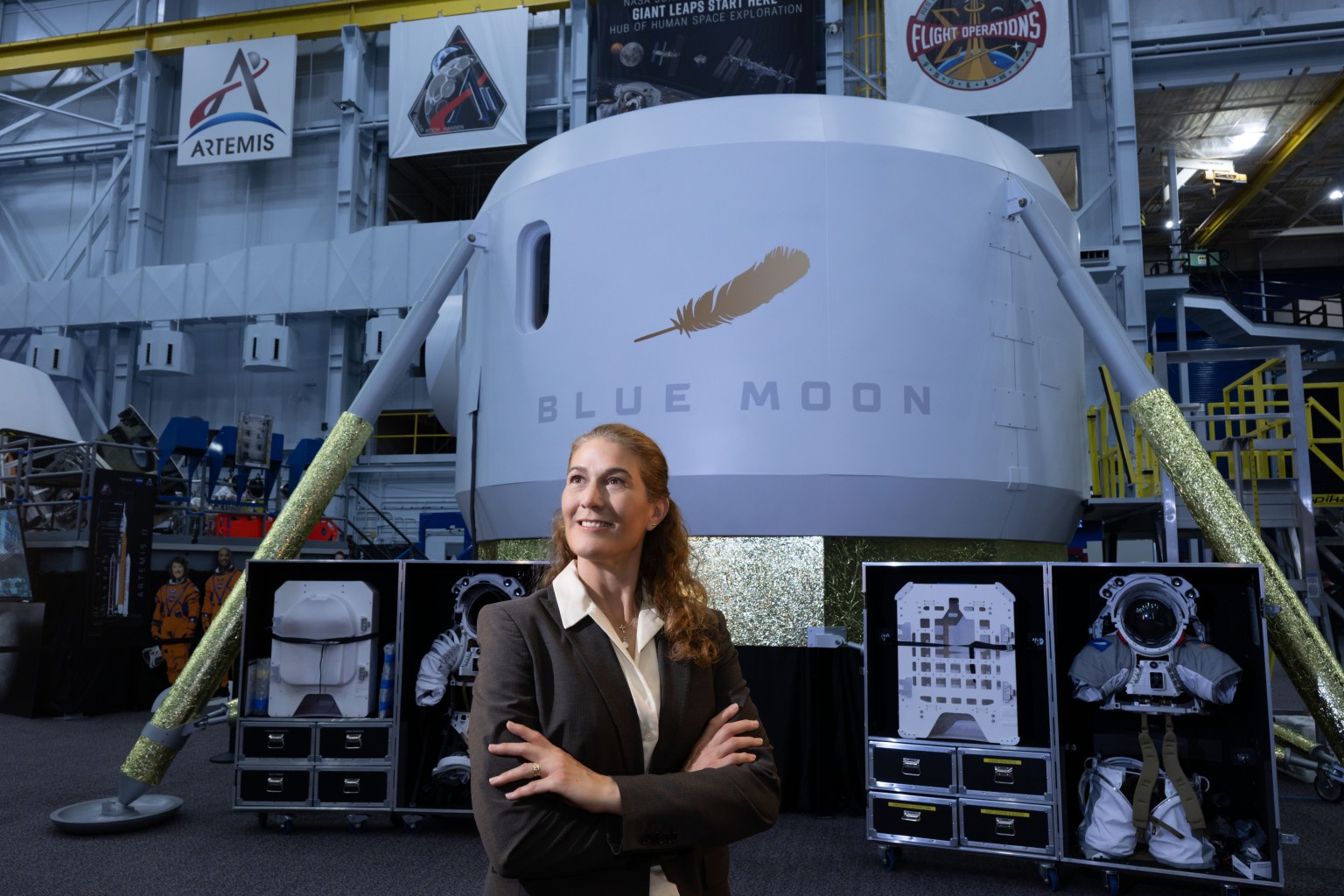
EXECUTIVE SUMMARY
For Katie Spicer, embracing opportunity and challenge has led to giant leaps during her time at NASA. Now as the NASA lander integration lead for Blue Origin’s Blue Moon Mark 2 lander, one of the commercially provided human landing systems for NASA’s Artemis program, Spicer will have her handprint on history. Spicer works in the […]
Key Takeaways
- I Am Artemis Katie Spicer.
- For Katie Spicer, embracing opportunity and challenge has led to giant leaps during her time at NASA.
- Spicer works in the […] 4 Min Read I Am Artemis Katie Spicer For Katie Spicer, embracing opportunity and challenge has led to giant leaps during her time at NASA.
Read Complete Original Article
Published originally on NASA News