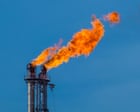
The blockade of the Strait of Hormuz led to a spike in oil pricesAnna Ivanova/Alamy Carbon dioxide emissions from fossil fuels are expected to drop this year for the first time in five years. The slowdown has been partly attributed to the energy shock triggered by the US and Israel’s war on Iran. The conflict, which began in February, led to a jump in oil prices after the Strait of Hormuz, the main trade route for about 20 per cent of the world’s oil and liquefied natural gas, was blockaded by Iran in response. This is still affecting petrol prices and household gas bills, and has seen countries around the world turn to alternative fuel types to boost energy security. Advertisement if( window?.adverts?.addToArray ) { window.adverts.addToArray( { "pos": "mid-article-slot" } ); } Read more Solar energy is going to power the world much sooner than you think Around 38.2 gigatonnes of CO2 are expected to be emitted in 2026 globally, according to the latest annual Global Carbon Budget – put together by more than 140 researchers. This is a 0.4 per cent decrease on the previous year, largely due to a projected 1.9 per cent fall in emissions from oil. The drop in oil use was partly offset by a 0.6 per cent increase in emissions from coal. Robbie Andrew at climate research group CICERO in Oslo, Norway, one of the report authors, says financial pressures due to the energy shock are likely to have caused the drop in emissions this year, which may turn out to be a “blip”. “On the assumption that there are no further crises, then you’d expect that emissions would bounce back,” says Andrew. The two biggest dips in emissions in the 21st century have been attributed to the covid-19 pandemic, which saw emissions drop by around 6 per cent in 2020, and the global financial crisis, which saw emissions drop around 2 per cent in 2009. The future outlook depends on how long the energy shock lasts, says Andrew, with governments forced to look at the economic case for continuing to subsidise fossil fuels. The rollout of renewable energy also played a part in bringing down carbon emissions. Electric vehicles and solar and wind power are predicted to offset 64 to 79 per cent of increasing emissions from demand growth through to 2028. Free newsletter Sign up to The Earth Edition Sign up to newsletter In China, the world’s biggest emitter of CO2, emissions are projected to decrease by 0.9 per cent in 2026 as the country continues to make strides with expanding renewable energy and electric vehicles. “What’s keeping emissions down is the renewable energy, and the price of oil actually suppresses this even more,” says Corinne Le Quéré at the University of East Anglia, UK, who also worked on the report. “So, that’s encouraging in a way, but it does mean that if the price of oil rebounds to pre-Iran [conflict] levels, most likely the emissions will rebound as well until we have enough further acceleration in renewable energy to really bring the emissions down durably.” Journal Reference: Nature Climate Change DOI: 10.1038/s41558-026-02821-8
Global carbon emissions set to fall in 2026 due to Iran energy shock
NE
New ScientistBy Shosha Adie
EXECUTIVE SUMMARY
Carbon dioxide emissions are projected to fall 0.4 per cent this year, driven in part by higher oil prices resulting from disruption to shipping in the Strait of Hormuz
Key Takeaways
- Global carbon emissions set to fall in 2026 due to Iran energy shock.
- The slowdown has been partly attributed to the energy shock triggered by the US and Israel’s war on Iran.
- This is still affecting petrol prices and household gas bills, and has seen countries around the world turn to alternative fuel types to boost energy security.
Read Complete Original Article
Published originally on New Scientist