Peeling paint, bubbling wallpaper, mold behind wardrobes, and water-stained ceilings — I’ve seen all the classic signs of excess moisture in my own home.But while window condensation is an obvious telltale sign of too much moisture inside my house, the root cause of the other issues isn’t so clear.But before calling in a specialist, there’s a simple test you can try to determine whether the moisture is coming from inside or out. The aluminum foil hack(Image credit: Shutterstock)Beyond covering your Thanksgiving turkey, aluminum foil can help with a stack of hacks around your home, including identifying which sides of your walls are holding excess moisture. How does this aluminum foil moisture hack work?All you need to do is take a piece of aluminum foil and tape it to your wall. Within 48 hours, it should give you an indication of where the moisture is coming from. But how does this aluminum foil hack work, and is it reliable? Michael Rubino, mold and air quality expert at HomeCleanse, explains: “Aluminum foil doesn’t allow water vapor to pass through it easily, because it’s a non-porous surface. When you tape it against a wall, you’re essentially blocking moisture from moving between that section of the wall and the air in the room.”And he adds, “If the air inside your home is humid and the foil gets cool enough, that moisture in the air can condense into water droplets on the side facing the room.”The same process happens when you spot condensation on the inside of your windows. However, what if the moisture is coming from the wall? Rubino explains, “If there is already moisture in the wall, that moisture would normally have some opportunity to evaporate into the room as the material dries. Covering it with foil, prevents that from happening in that particular spot. In this case, moisture collects behind the foil instead.”Where is the water coming from?Rubino explains that checking which side of the aluminum foil is wet can tell you something about how moisture is behaving in that exact area. But it can’t tell you exactly where that water came from.If you remove the foil and find moisture against the wall, you might assume rainwater is getting in from outside, but he says that’s only one possibility. “A pipe could be leaking inside the wall, or water could be entering through the foundation.”He explains that other possibilities include water entering through the foundation or condensation forming inside the wall cavity due to high humidity or poor insulation.It's also possible you have more than one moisture issue at once. Rubino explains, “If you find water droplets on the side facing the room, that doesn’t mean you’ve ruled out a leak behind the wall, either.”Look for visual clues(Image credit: Shutterstock)Dr. Alex Le Beau, a toxicologist and environmental scientist at Exposure Consulting, says a visual assessment is a good way to start checking whether moisture has entered your home, and professionals will do this too. He explains that wet building material, such as a drywall, within the built environment is not normal, and that the location of the moisture should be the first thing to note — is it on an exterior or interior wall or the ceiling? He also advises looking at the pattern it is making. Depending on the material, he says, "It will take a good amount of water to soak through the back of something. Soaking like this may make the material brittle to the touch or could cause surface deformations."Dr. Le Beau says to look out for paint bubbling or staining coming through from the back of the material.Internal condensation may also look different. He says, “There may be a pattern to the moisture from internal humidity, or it may form at the same spot and then evaporate when internal conditioning (HVAC) begins to cycle."What if the aluminum foil is dry?While a dry sheet of aluminum foil on your wall may seem like a good sign, Rubino warns against using a single piece of information to judge your home’s condition. "There’s too much it can’t account for, and a dry result doesn’t mean you’re in the clear,” he says. It won't detect mold(Image credit: Shutterstock)Another of Rubino’s concerns about this hack is that it can’t be used to detect mold. "You could find moisture behind the foil and have no idea whether mold has started growing inside the wall,” he says.It also won’t determine how much of the surrounding area is affected or whether contamination has spread beyond that area. He’s also found that the opposite can be true. "I’ve seen plenty of situations where the original water problem happened months or even years earlier,” he says, “The material may have dried out since then, but that doesn't mean any mold growth that developed during that time has disappeared as well."50 Pint Dehumidifier: $299This GoveeLife dehumidifier is easy to use, super powerful, and can be controlled via an intuitive app. Our tester thought it was one of the best among dehumidifiers of this size, although it is noisy. It also has a dedicated 'Dry Mode' which can be used on clothing. Read the reviewView DealUnderstanding what's really going onWhile the aluminum foil hack can give you an idea of what’s happening on your walls, it doesn’t give you a definitive answer. And that’s why Rubino says it’s important to understand the entire situation and to ask questions: where has the moisture come from, how long has it been there, what materials have been affected, and has microbial growth developed? “A piece of foil isn't going to answer all those questions, and those are the answer you really need if you’re concerned about the health of your home," he explains.And he adds, “If you notice discoloration around a window, a musty smell that keeps coming back, or an area that never seems to dry completely, don’t just paint over it or assume it’s nothing. Find out what’s causing it.”The sooner you understand what’s going on, the better your chances of addressing the problem before the damage becomes more extensive.More from Tom's GuideWhy are the inside of my window panes fogging up? Glazing experts reveal all5 houseplants that will help prevent mold in your homeIs your bathroom harboring black mold? An expert shares 3 telltale signs and how to fix them
Why are people sticking aluminum foil on their walls in winter? I asked the experts to explain exactly why this clever moisture trick works
TO
Tom's GuideBy Camilla Sharman 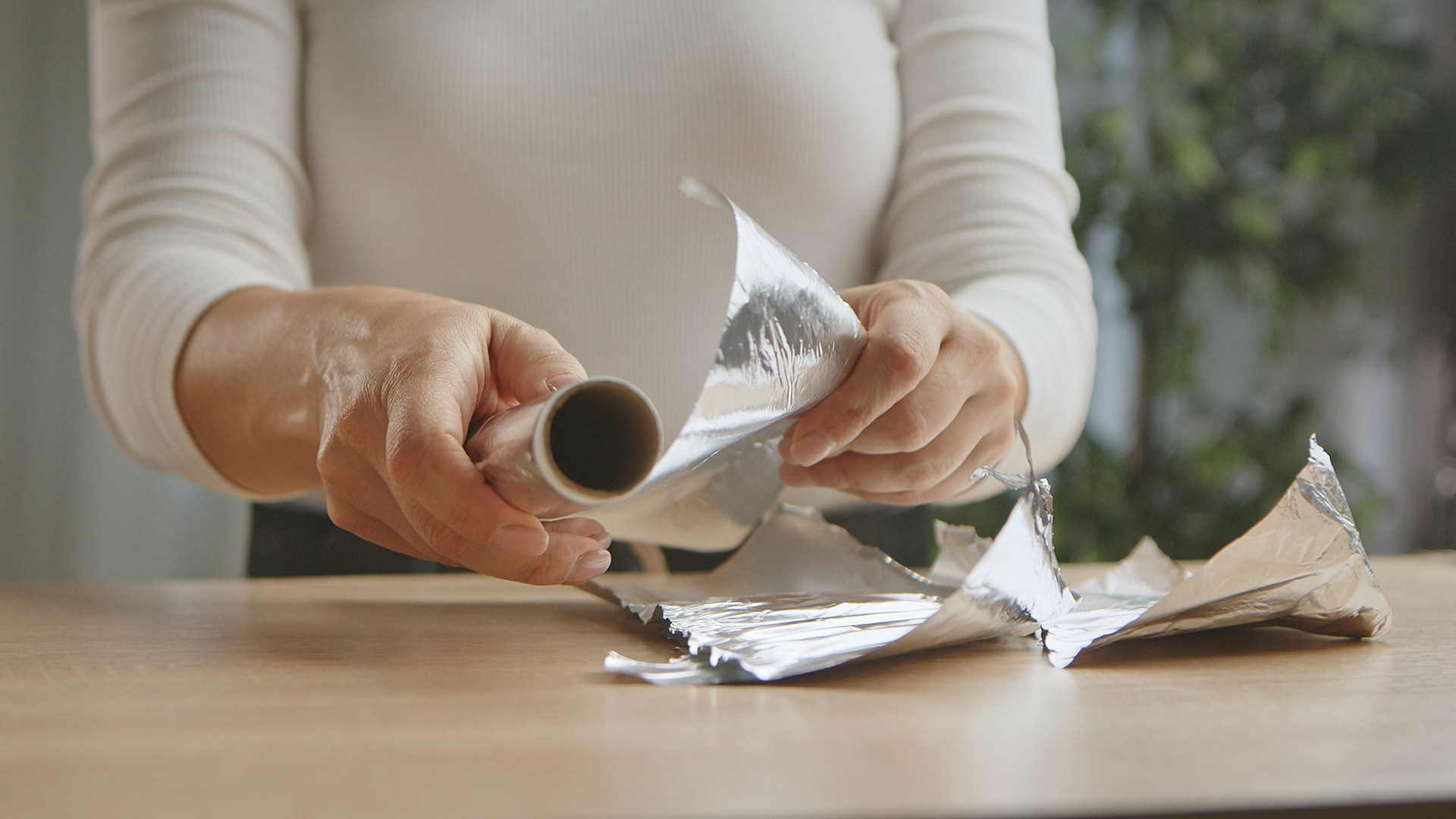
EXECUTIVE SUMMARY
Spotted moisture on your walls? The aluminum foil trick could get to the heart of the problem.
Key Takeaways
- Why are people sticking aluminum foil on their walls in winter?
- I asked the experts to explain exactly why this clever moisture trick works.
- Spotted moisture on your walls?
Read Complete Original Article
Published originally on Tom's Guide