
Ah, the Bulgarian split squat. Feared by many, loathed by most, but loved by personal trainers all over the world. What if I told you that you'd enjoy this lower-body exercise infinitely more if you followed three simple steps to fix up your form?It's surprisingly easy to make mistakes with this leg-day exercise, and really, it can be adjusted to be more quad-dominant or glute-dominant — but there are clear signs of bad form, and many more people than you'd think end up on the physical therapy couch because of poor lifting mechanics.To maximize the benefits of this weightlifting exercise, I recommend learning how to do the Bulgarian split squat before bad habits set in. As a trainer, I have a few tips to help you. Scroll on to see if you're making these common mistakes below and my top tips to fix your form fast.How to do a Bulgarian split squatA post shared by Tom's Guide Fitness | Workout Tips & Gear (@tomsguidefitness)A photo posted by Stand with your back leg on a chair, box, or bench, top of the foot pressed down.Square your hips so that you balance on your front leg, with a soft bend in both knees.Hold a weight in one or both hands or bring your hands to your hips and engage your core.Hinge forward at your hips and lean your weight forward.Bend your knees to lower toward the ground. As you do, arc your back knee toward the bench behind you rather than moving vertically. Vertical will better load the quads. whereas the arc will emphasize the glutes.Keep your spine long. This will also help activate your gluteal muscles and load the front leg.Pause, then drive upward to stand.Complete 6-8 heavy reps, then switch sides.It's a compound exercise and a part of functional training workouts and strength programs everywhere, helping you build strength and muscle in your glutes, hips, quads, hamstrings and core.The move requires balance and coordination, while your upper body, core and hips help stabilize you as you move. But people tend to think of this move as more quads than glutes, which isn't exactly the case.Here's what I see go wrong, and three quick fixes:Vertical descent: People try to move vertically during this exercise, which feels more quad-dominant, but can also aggravate your knees. Fix: Hinge slightly forward at your hips, then arc the back knee toward the bench using a hinge, rather than trying to lunge.Improper loading: People are often unsure how to load the BSS. Fix: Hold the dumbbell in the hand opposite to your front (working) leg for contralateral loading, which will improve balance, work on anti-rotation and recruit the hip stabilizers. Use the same hand (ipsilateral) for better stability and heavy loading. You could hold a weight in both hands for the heaviest load, but I prefer single-loading to better challenge balance and stability.Stance: Often, people set the bench too high, which strains your joints and back. You might also adopt a narrow stance, which makes you feel like you're walking a tightrope. Fix: The bench should be roughly knee height. Also set your feet about hip-width apart. Avoid pushing your hips back and keep most of the weight in the front leg with the majority of gravity over the midfoot, rather than leaning back excessively. Finally, focus on pressing your knees out in line with your toes.Why does it matter?In short, you're wasting your time if your form is badly off. And we're busy humans who don't like our time being wasted, right?Leaning back too far removes tension from the working muscles and overloads your lower back. Keep your torso static and stable — don't hunch or allow your knees to cave inward. That means engaging your core and using the power of your core, glutes and legs to drive movement. Next, think about your gravity; as I mentioned, keep your back straight and slightly hinge forward to help engage the glutes on your standing leg. If you work with a weight in your opposite hand, this will engage more of the outer glutes, or gluteus medius. Taking time during the eccentric contraction means slowing down the lowering phase; you can then press upward with power while maximizing tension. It's now thought, due to advances in research, that eccentric contraction is important for muscle growth and braking force.If you have an injury, pre-existing health conditions, or you experience pain, speak with a qualified personal trainer or physician first.Follow Tom's Guide fitness on Instagram for more workouts, routines, tips, and tricks.More from Tom's GuideAustralian pull-ups for beginners: How to do themYou just need 14 minutes to strengthen your back and improve your posture with this equipment-free workoutI'm a personal trainer, the candlestick roll is the best bodyweight exercise for your barbell squats
'Stop doing Bulgarian split squats until you fix these 3 huge mistakes,' says a personal trainer
TO
Tom's GuideBy Sam Hopes 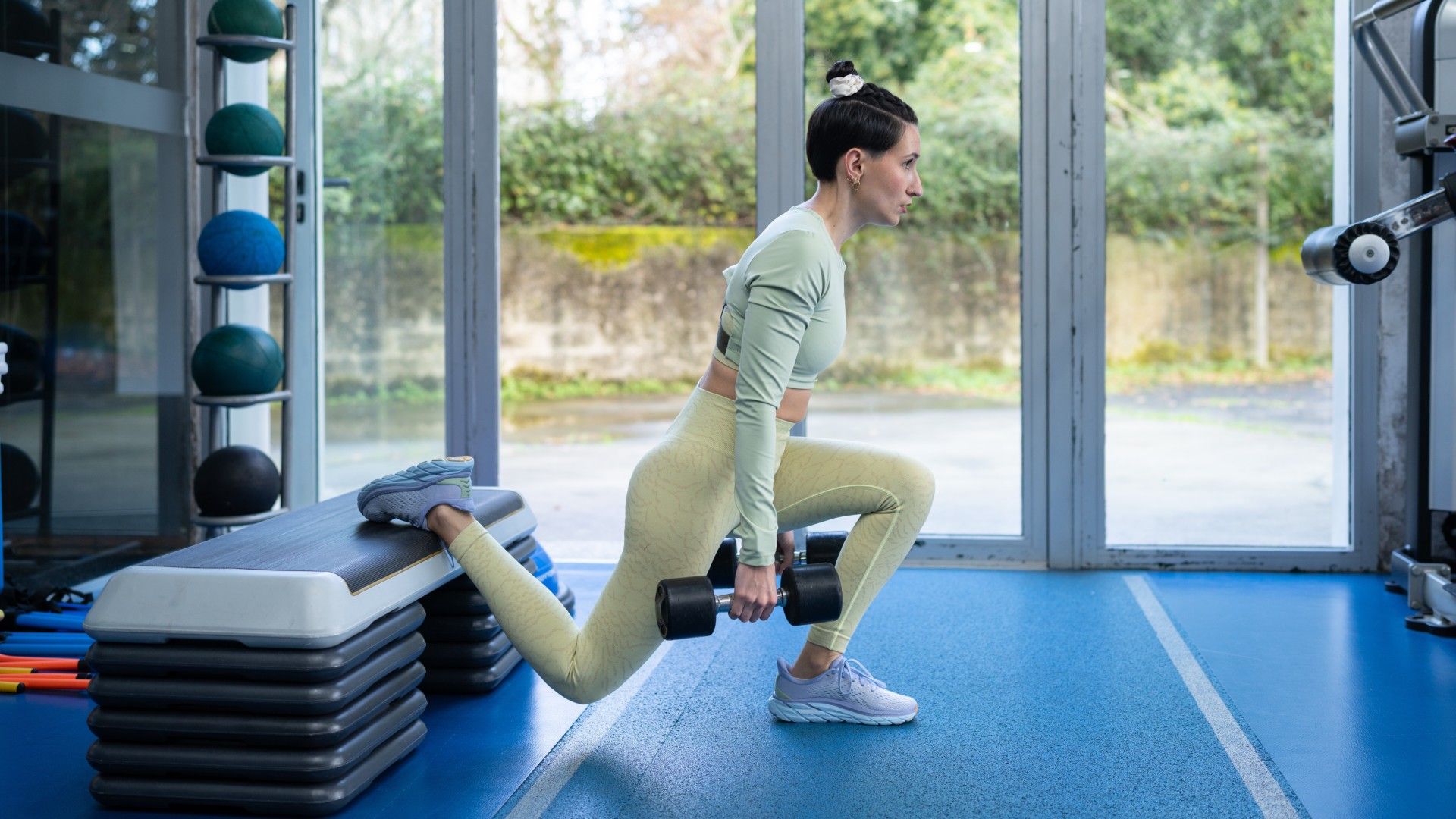
EXECUTIVE SUMMARY
A personal trainer explains how to fix your Bulgarian split squat form in three simple steps.
Key Takeaways
- 'Stop doing Bulgarian split squats until you fix these 3 huge mistakes,' says a personal trainer.
- A personal trainer explains how to fix your Bulgarian split squat form in three simple steps.
- Ah, the Bulgarian split squat.
Read Complete Original Article
Published originally on Tom's Guide