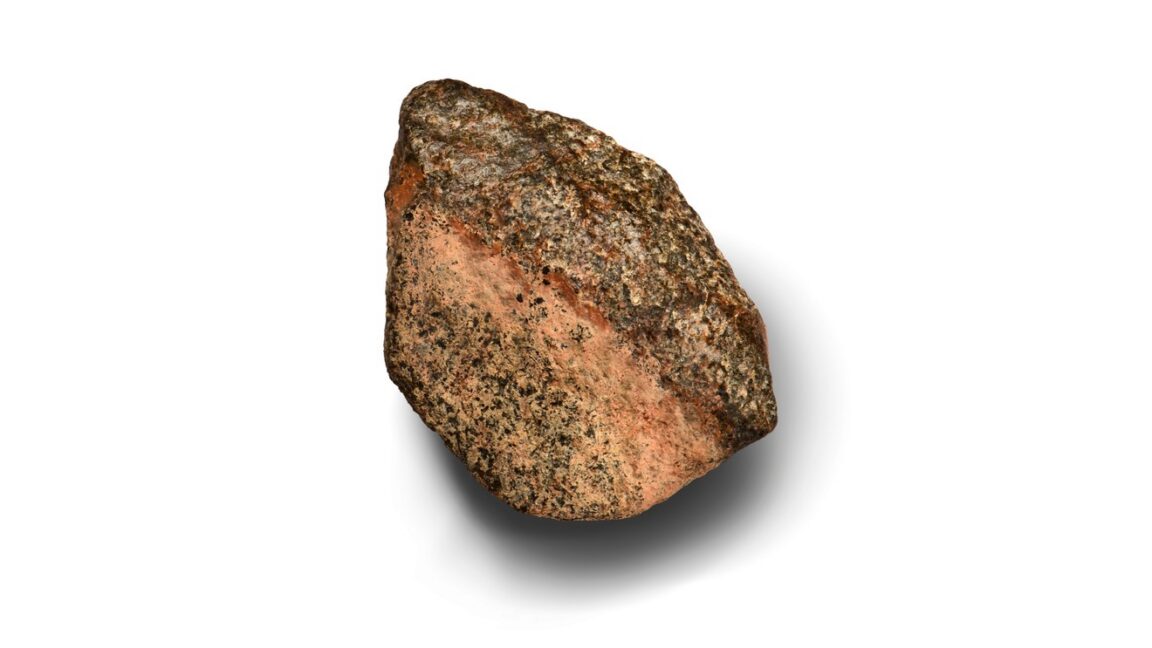
Crater counts tell us that most of the Martian surface is more than 3 billion years old, but pieces of Mars we have on Earth tell a different story. The three main classes of Martian meteorites—shergottites, nakhlites, and chassignites—are all 2.4 billion years old or younger. Until now, only two genuinely ancient Martian meteorites were known: Allan Hills 84001, found in Antarctica, and a jumbled rock from northwest Africa nicknamed Black Beauty. Now we have a third one. A team led by Yang Liu, a planetary scientist at NASA's Jet Propulsion Laboratory, has shown that a Martian meteorite called Teghaza 001, found in the Sahara Desert in Mali in 2022, formed at least 4.1 billion years ago. “It's very old and similar to some of the oldest rocks on Earth,” Liu says. A filtered collection “We don't fully understand why old Martian rocks are so rare on Earth," Liu said. Part of the answer may lie in how a piece of Mars gets here. It takes a large impact to launch a rock off the planet, and not every rock can survive that. “If the impact hits into loose powder, it may not get cemented to become a rock and fly off Mars' gravity,” Liu said. “So the natural impact already acts as a filter. Weak rocks do not make it off Mars.”Read full article Comments
Rare meteorite from Mars gives us a view into its ancient crust
AR
Ars TechnicaBy
Jacek Krywko
EXECUTIVE SUMMARY
A meteorite found in the Sahara is a rare piece of Mars' ancient crust.
Key Takeaways
- Rare meteorite from Mars gives us a view into its ancient crust.
- A meteorite found in the Sahara is a rare piece of Mars' ancient crust.
- Crater counts tell us that most of the Martian surface is more than 3 billion years old, but pieces of Mars we have on Earth tell a different story.
Read Complete Original Article
Published originally on Ars Technica