Horned lizards are spiky cuties. Three to six inches long, these lizards are coated with sharp spines all across their hard, sand-colored backs. But in the dry deserts and prairies they call home, they are still vulnerable. As they scuttle through the protective brush in arid landscapes from Mexico to southern Canada, they have to reckon with hungry coyotes, snakes that will gobble them whole, and even peckish roadrunners. That’s why multiple species of horned lizards have developed a weird but effective deterrent: blood. And not just any blood: These lizards shoot foul-smelling blood out of their eyes, sending many would-be predators scattering. But experts say the lizards are now facing other threats to their survival that even a fountain of eye blood can’t deter. The unusual diet that gives horned lizards foul blood Dean Williams, a professor of biology at Texas Christian University, studies horned lizard populations in central Texas. He says that blood squirting is really a backup defense for the lizards. “Their first line of defense is going to be crypsis,” aka blending in with their background, says Williams. Williams and his colleagues tag the lizards they study with radio trackers that pinpoint their location to an area roughly the size of an office desk. Even then, he says, it can take “15 minutes of rummaging” to find the lizard in their scrubland habitat. The lizards don’t move much, he added, blending in with nearby rocks. Horned lizards are master hiders and can easily blend into their arid desert homes. Image: Dean Williams But when hiding doesn’t work, the lizards deploy their unusual, foul-smelling blood, which Williams says is a product of an equally foul delicacy. “Their diet consists mainly of these large Pogonomyrmex or harvester ants,” says Williams. Harvester ants defend themselves using neurotoxic venom that causes intense, long-lasting, stinging pain in mammals. Unfortunately for the harvester ants, this toxin doesn’t even slightly deter horned lizards, who eat the ants in large numbers. A 2024 study identified that a compound in the lizards’ blood spiked after scientists fed them harvester ants. The researchers think this compound, possibly adapted from ant venom, makes the lizards’ blood taste foul. How horned lizards turn their blood into a weapon However, that gross metabolized ant blood coursing through the lizards’ veins wouldn’t be much help if it only annoyed a predator after it had already bitten off the lizard’s head. That’s where the lizards’ unusual squirting mechanism comes in handy. Williams explains that the lizards can build up pressure in blood vessels around their sinuses. Eventually, the vessels burst, shooting the toxic blood out in jets. Mammals exposed to the stream of blood react with notable disgust. There seems to be little consequence for the lizards, even though in one experiment, a lizard lost 6.8 percent of its body mass after squirting blood when exposed to a dog. The foul-smelling blood doesn’t protect the lizards from every predator, though. Roadrunners and other birds of prey still chow down on them, says Williams. To guard against birds, the lizards use the sharp horns on the back of their heads to stab at predators that try to seize them in their beaks. Horned lizards only shoot gross blood from their eyes when hiding doesn’t work. Video: Blood Squirting Lizard, National Geographic The lizards’ foul blood also does little to deter snakes. Instead, the lizards have evolved specialized strategies to evade these predators. Rattlesnakes are lazy hunters that wait in the shadows for prey to approach. Horned lizards have learned to run away from these snakes. But Williams says they use a different strategy if hunted by a coachwhip or racer snake. These fearsome snakes can easily chase down the lizards, who instead quickly flatten their bodies against the dirt, showing the snake their spiked backs, which makes them harder to swallow. Why horned lizards are in trouble in Texas But despite these bespoke, often ingenious defense mechanisms, horned lizards in the Lone Star State are under serious threat. They’ve disappeared from their habitat across eastern Texas. Williams says that industrialization is devastating lizard populations. “They seem to be very sensitive to those habitat changes,” he says. In small towns, the lizards can live alongside humans when their natural brush habitat is preserved. But in towns where humans cleared the brush, “the lizards just disappeared,” Williams says. Horned lizards are ectotherms, meaning they must change their behavior to keep their body temperature under control. In the blistering heat of a Texas summer, the lizards simply can’t keep their bodies within safe limits once the cool shade of vegetation has disappeared. Baby horned lizards can fit in the palm of your hand. Image: Dean Williams Harvester ants provide horned lizards with one of their strongest defenses. But another ant species has become the second major challenge to the lizards’ survival. Fire ants are an invasive species in the United States. They swarm the nests of ground-dwelling lizards, eating vulnerable eggs, or even attacking and killing young lizards. That’s where conservation efforts, like the one Williams works on with zoos across Texas, play an important role. The program releases nearly a thousand young lizards each year. These hatchlings, which can easily fit in the palm of a hand, are packaged in individual Tupperware containers and then released in the desert scrub. Williams says that his graduate student, Kira Gangbin, has been working on a targeted poison to cut down fire ant numbers and help keep these hatchlings alive. These efforts will hopefully keep horned lizard populations thriving for many more years. Just remember: If you come across a horned lizard on a hike through the Texas desert, give it a wide berth, or risk a foul, bloody surprise. In Ask Us Anything, Popular Science answers your most outlandish, mind-burning questions, from the everyday things you’ve always wondered to the bizarre things you never thought to ask. Have something you’ve always wanted to know? Ask us. Related 'Ask Us Anything' Stories Real-life vampire birds hunt and drink blood in remote Ecuador Why are some animals so colorful? Blame this pigment. Can carnivorous plants eat people? Why some animals eat their babies Could a whale really swallow a human? We asked a biologist. Do animals really mate for life? Animals have personalities. Here’s what shapes them. Could Sheepstealer and other ‘House of the Dragon’ dragons actually fly? The post Putrid blood shoots from these lizards’ eyes appeared first on Popular Science.
Putrid blood shoots from these lizards’ eyes
PO
Popular ScienceBy RJ Mackenzie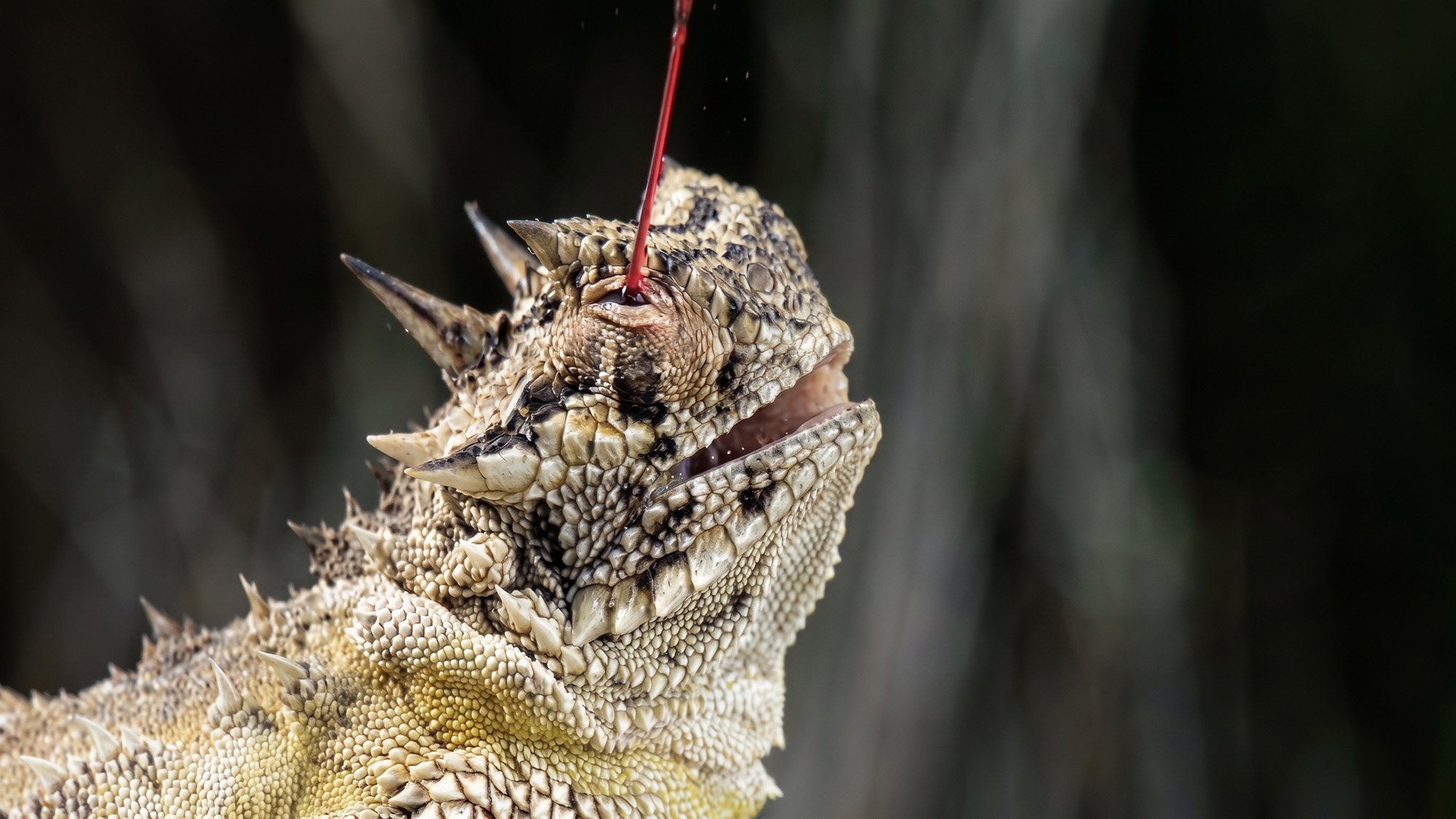
EXECUTIVE SUMMARY
But only when they're super scared. The post Putrid blood shoots from these lizards’ eyes appeared first on Popular Science.
Key Takeaways
- Putrid blood shoots from these lizards’ eyes.
- But only when they're super scared.
- The post Putrid blood shoots from these lizards’ eyes appeared first on Popular Science.
Read Complete Original Article
Published originally on Popular Science