

I recently called out Apple’s new “why not” era under CEO John Ternus — a chaotic, experimental chapter bringing us the $2,000 iPhone Duo and $3,000 touchscreen MacBook Pros. Well, the iPad mini 8 just arrived, and it perfectly encapsulates the dark side of this new philosophy.I just finished reading Tony Polanco’s review of the new mini, and I completely agree with his assessment: it is a stunning piece of hardware. That new OLED panel is a visual marvel, the IP67 water resistance is a massive structural win, and it is undeniably one of the most capable tablets Apple has ever made.And then, I looked at the pricing ladder, and realized it revealed something grave. The iPad mini 8 is proof that Apple’s “budget” tier is officially dead, replaced by sneaky paywalls, binned silicon and a display refresh rate that would have been considered “old” back in 2018.By stuffing flagship features into a smaller chassis, compromising weirdly in some areas and passing the skyrocketing component costs directly to you, the message is clear: buying into the Apple ecosystem today comes with a pro tax.The hidden cost of the A20 Pro(Image credit: Apple/Tom's Guide)If the $699 starting price wasn’t concerningly high enough, Apple has incorporated tantalizing silicon upgrades into its price ladder.In all the marketing, the Cupertino crew boasts that the new mini is powered by the 2nm A20 Pro chip from the iPhone 18 Pro/Pro Max and Duo. But what you don’t see until you actually head to the shop is that if you buy the base model, you aren’t actually getting the full chip. You are getting a slightly nerfed version.(Image credit: Tom's Guide)In fact, if you take a closer look at the specs (5-core CPU, 7-core GPU and 16-core Neural Engine vs the 6-core CPU and dual 16-core Neural Engine), something struck me. This sounds like the difference between the A18 and A18 Pro of last year — knocking a core off.The entry-level and mid-tier models are locked to this binned option. If you want the actual A20 Pro, you’re forced to drop $1,000 on the 512GB version.Now, is this something most people are going to feel? No. But it’s something worth noting. Apple is holding the true A20 Pro performance behind a massive storage paywall. You’re paying MacBook Air to get the real thing.Does RAMageddon fly anymore?(Image credit: Tom's Guide)Many folks at this point will immediately point to the supply chain, and that’s fair enough. We are in the middle of a brutal global memory shortage driven by the AI data center bubble — Ternus himself said it’s “unprecedented” in Apple’s most recent earnings call, and the A20 Pro requires RAM overhead to run Apple Intelligence.But the solution to this component inflation is rather telling. It’s something I’ve talked about with the MacBook PROLED and Asus ROG Xbox Ally X20. I’m gonna call it the OLED facade.(Image credit: Tom's Guide)Rather than eating a margin hit to protect entry-level consumers, or finding a way to build a highly capable device with slightly older silicon, Apple’s gone the luxury route — packing an OLED screen into a re-engineered body and jacking up the price. As David Naranjo, Associate Director at Counterpoint Research, told me when we predicted the price of the new MacBook Pros, OLED is “becoming a way for PC makers to justify higher prices as memory and component costs go up.” Companies are “using these premium displays to protect their profits and balance the rising costs."They aren’t just adjusting for inflation; the idea of an accessible budget-friendly tablet is slowly but surely being abandoned.The pro-tier squeeze(Image credit: Tom's Guide)But what I find most frustrating reading Tony’s review is what Apple’s left out here.If you’re going to lure people in with the $699 tablet, and FOMO upsell them to the fully unbinned processor and enough storage, the device needs to be a flawless flagship experience. Yet, despite the price hike, Apple still locked the display to a 60Hz refresh rate.And despite moving the front-facing camera to the landscape edge (giving more room around the side of the camera for extra tech), there’s no Face ID.Why? Well, I can only theorize, and that’s where I take you back to the product ladder of the iPads. If we got an iPad mini 8 with 120Hz ProMotion and Face ID, that would nerf the larger, more expensive iPad Pro. It feels hamstrung to protect that pathway to one of its $1,300+ flagships.Is the Apple tax mandatory?(Image credit: Tom's Guide)The iPad mini 8 is a brilliant, powerful and gorgeous device, which is why I felt so conflicted writing this. For most folks buying this, you’re going to have a great time. But it does represent an Apple that is moving away from affordability (along with the wider tech industry).Consumers didn’t necessarily need a mini tablet capable of running a dual neural engine with an OLED panel. But in the same vein, they feel necessary in Apple’s “why not” era of building premium, experimental hardware.John Ternus’s vision for the future is coming into focus fast, and you better start saving up because the entry-level Apple experience is quickly vanishing in the rearview mirror.More from Tom's GuideCancel your iPhone Duo pre-order: Here's why I think the iPad mini 8 and iPhone 18 Pro combo is cheaper and betterSam Altman says your laptop RAM is a 'terrible’ allocation of scarce resources: Why I think the AI bubble is about to prove him wrongI tested AMD FSR 4 on the ROG Xbox Ally X20 and Strix Halo — and the performance 'boost' is a total optical illusion
I waited years for the iPad mini 8, so why do I feel like Apple is ripping me off?
TO
Tom's GuideBy Jason England 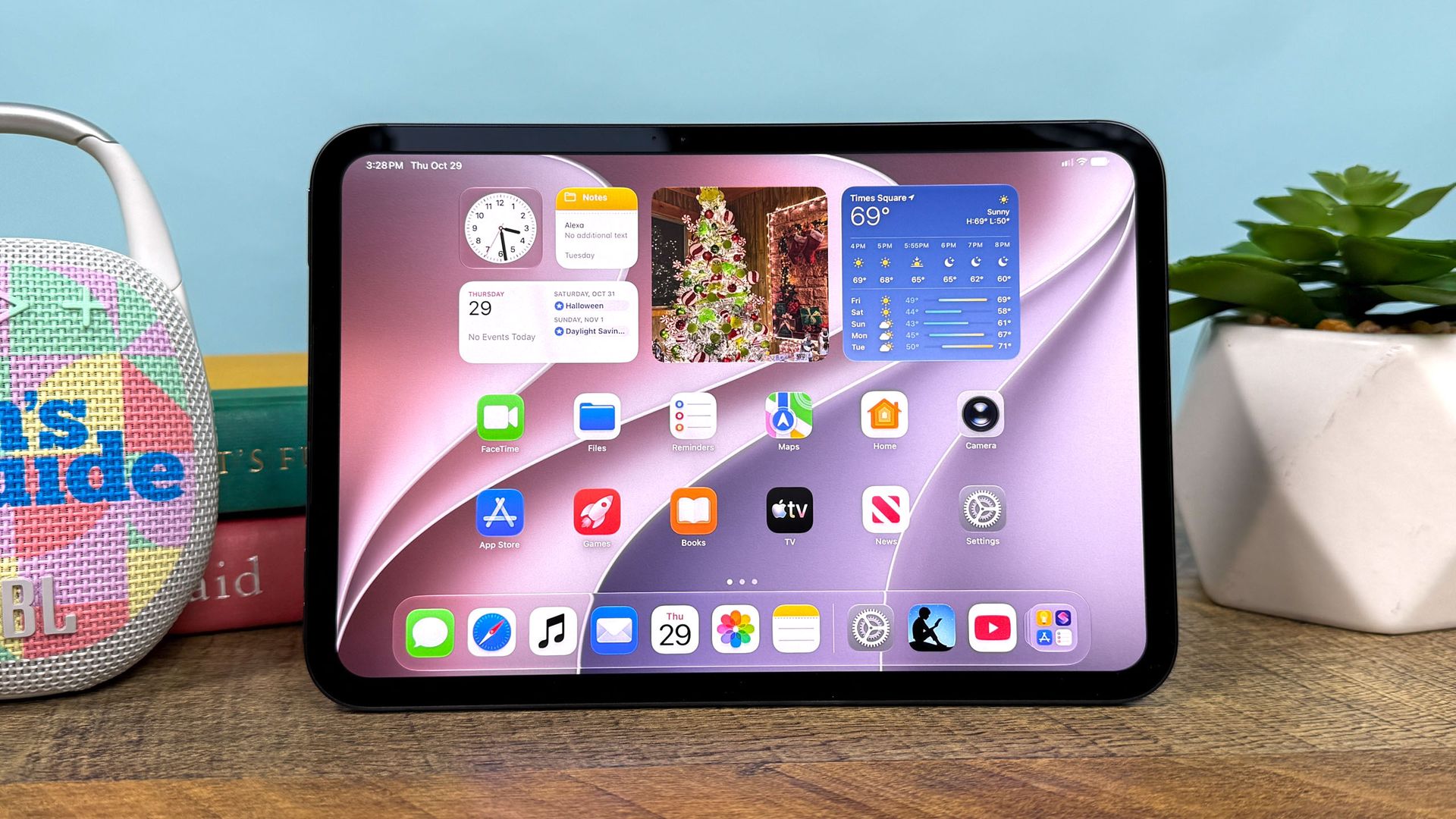
EXECUTIVE SUMMARY
The iPad mini 8 is an engineering triumph wrapped in an aggressive upsell. Apple uses sleek OLED glass to mask binned chips, an outdated 60Hz screen, and no Face ID, passing RAMaggedon costs onto consumers.
Key Takeaways
- I waited years for the iPad mini 8, so why do I feel like Apple is ripping me off?.
- The iPad mini 8 is an engineering triumph wrapped in an aggressive upsell.
- Apple uses sleek OLED glass to mask binned chips, an outdated 60Hz screen, and no Face ID, passing RAMaggedon costs onto consumers.
Read Complete Original Article
Published originally on Tom's Guide

