I’ve been testing the iPhone 18 Pro Max ever since it launched in September, putting it through some marquee matchups against rivals like the Galaxy S26 Ultra and Pixel 11 Pro XL. Honestly, it’s the best camera phone around, thanks largely to its strong main camera performance, low-light capabilities, mechanical variable aperture, and new Pro Controls. I didn’t think another phone could come close to matching it, but I was wrong.It’s been years since I last tested an Oppo device, mostly because stateside availability has always kept them just out of reach for the average consumer. But after putting the Oppo Find X10 Pro Max through its paces for the past month, it’s become my favorite camera phone.You’d think its triple 200MP camera suite would be what truly puts it ahead of the pack, but it turns out to be the game-changing attachable Hasselblad lens that really seals the deal for me. Far from a gimmicky clip-on accessory, this optic unlocks the optical reach, depth, and fidelity that genuinely make it close to replacing my mirrorless camera. Here’s why.The Oppo Find X10 Pro Max is an impressive camera phones, packing a versatile 200MP triple camera setup, massive 8,000 mAh silicon-carbon battery, 6.78-inch AMOLED display, MediaTek Dimensity 9600 Pro processor, 80W SuperVOOC wired charging, and 50W wireless charging.View DealDon’t fooled by megapixels(Image credit: John Velasco / Tom's Guide)One of my colleagues already drilled down into an Oppo Find X10 Pro Max vs. iPhone 18 Pro Max photo face-off, so I’m not going to rehash why the Oppo came out on top. Instead, I’m going to show and tell you what makes the Find X10 Pro Max stand out from the many other camera phones I’ve tested this year.First and foremost, it starts with the hardware — a triple 200MP camera system. I’ll be the first to tell you that you should never judge a camera simply by the number of megapixels it claims. You have to evaluate the rest of the equation, especially sensor sizes and apertures.The 200MP main shooter features a large 1/1.3-inch sensor, a wide f/1.5 aperture, and OIS. Equally notable is the 200MP periscope telephoto with 3x optical zoom, boasting a sizable 1/1.56-inch sensor and f/2.1 aperture.That telephoto sensor is critical: through sensor cropping and Oppo’s processing algorithms, it pulls off a staggering 120x digital zoom. That easily eclipses the iPhone 18 Pro Max’s 40x ceiling, giving me triple the zoom reach of Apple's flagship. In fact, the only other phone I’ve tested this year that matches that level of reach is the Pixel 11 Pro XL.It’s a low-light champ, great for astrophotographyJohn Velasco / Tom's GuideJohn Velasco / Tom's GuideJohn Velasco / Tom's GuideJohn Velasco / Tom's GuideJohn Velasco / Tom's GuideJohn Velasco / Tom's GuideJohn Velasco / Tom's GuideJohn Velasco / Tom's GuideJohn Velasco / Tom's GuideJohn Velasco / Tom's GuideFor me, the true test is how well a phone behaves under low light — and the Oppo Find X10 Pro Max is an absolute beast. Take a look at that first shot above I captured at sunset by the beach, which handles the stark contrast in lighting exceptionally well.With the sun dipping over the horizon, the golden glow never overpowers the scene, maintaining a rich contrast across the foreground elements. But what’s even more impressive is the sheer number of stars it resolves in the process, cleanly rendering the Pleiades star cluster right alongside the twilight sky.The Find X10 Pro Max pulls in astonishing amounts of light without relying on overly aggressive computational brightening that turns dark night skies into a noisy mess. You can see it across the rest of the sample shots above. For the best results, I recommend switching over to its "Master" mode, which lets you fine-tune the manual exposure settings to your exact liking.Unmatched native zoomJohn Velasco / Tom's GuideJohn Velasco / Tom's GuideJohn Velasco / Tom's GuideJohn Velasco / Tom's GuideJohn Velasco / Tom's GuideJohn Velasco / Tom's GuideJohn Velasco / Tom's GuideJohn Velasco / Tom's GuideJohn Velasco / Tom's GuideJohn Velasco / Tom's GuideJohn Velasco / Tom's GuideJohn Velasco / Tom's GuideJohn Velasco / Tom's GuideJohn Velasco / Tom's GuideJohn Velasco / Tom's GuideJohn Velasco / Tom's GuideFlagships aren’t just defined by their main cameras; they also live or die by versatile telephoto systems that pull you closer to distant subjects while preserving fine detail. On its own, the Oppo Find X10 Pro Max’s native periscope camera is an absolute powerhouse. Whether I’m trying to read small text on a distant street sign or resolve faint details across a landscape, it doesn't disappoint.I can clearly tell that computational processing kicks in at longer focal lengths, but virtually all modern flagships leverage AI upscaling to draw out fine textures. Just look at the first set of shots I captured by the waterfront, where I start with the ultrawide camera and step through all the primary focal lengths all the way to 120x.The distant building across the inlet is practically indistinguishable in the ultrawide frame, but it sharpens into view with each successive crop — culminating in a 120x capture that brings into focus the individual bricks along the exterior wall, blades of grass in the foreground, and distinct roof shingles.You can see its resolving power in some of the other sets of images, like pulling out intricate architectural carvings across the facade of the New York Public Library and keeping street signs fully legible from across the road.(Image credit: John Velasco / Tom's Guide)My personal favorite is the shot of the bearded dragon I captured through its glass enclosure. What’s impressive is the staggering amount of detail, which makes it look like I had the lens parked right in front of its face based on the tight framing and definition — but in reality, I was standing about a foot away.Mind-boggling reach with the Hasselblad telephoto converter kit(Image credit: John Velasco / Tom's Guide)Lastly, I want to talk about what truly sets the Find X10 Pro Max apart: the Hasselblad telephoto converter kit. I’ve tested plenty of add-on lenses for both iPhones and Android devices over the years, and while some perform better than others, they almost always compromise on raw optical quality. What changes the game here is that this converter kit was engineered specifically to match the optics of the Find X10 Pro Max’s telephoto sensor — and the difference in output is immediately noticeable.It's quickly become my go-to tool for nature and wildlife photography, letting me pull tight frames on distant subjects without disturbing them. The best part isn’t just the staggering amount of detail it captures — like in the first bird photo below, where you can easily make out individual feathers — it’s the authentic subject-background separation that only real optical glass can provide.John Velasco / Tom's GuideJohn Velasco / Tom's GuideJohn Velasco / Tom's GuideJohn Velasco / Tom's GuideJohn Velasco / Tom's GuideJohn Velasco / Tom's GuideJohn Velasco / Tom's GuideYou can clearly see that depth across the sample gallery above, from the defined texture in the squirrel's bushy tail along the wooden railing to the details of nesting birds. The creamy background blur produced by this telephoto setup is remarkable, giving every frame a professional look without computational makeover. In fact, there are times when I genuinely struggle to tell the difference between these shots and those from a dedicated mirrorless camera.(Image credit: John Velasco / Tom's Guide)After spending a full month with the Oppo Find X10 Pro Max, it’s clear that groundbreaking mobile camera innovation is thriving outside the usual suspects like Apple, Samsung, and Google. Between its versatile triple 200MP sensor array, superb low-light and astrophotography performance, and a native periscope zoom capable of reaching out to a killer 120x, it delivers every bit of the flagship-tier performance I look for.But it’s the modular Hasselblad telephoto converter kit that truly elevates this device from a fantastic camera phone into an unmatched creative tool — delivering authentic 10x optical reach, crisp framing, and stabilized long-range shots that genuinely bridge the gap to a dedicated mirrorless setup. More from Tom's GuideWe've tested the iPhone Duo and iPhone 18 Pro Max — here's the phone you should actually buyiPhone Duo 2 is inevitable — and these are the 7 things we want to seeiPhone Duo has been hard to get because Apple did almost everything wrong — here's what we know
Forget iPhone 18 Pro Max — I tested this wild Android/Hasselblad combo for a month and it's my favorite new camera phone
TO
Tom's GuideBy John Velasco 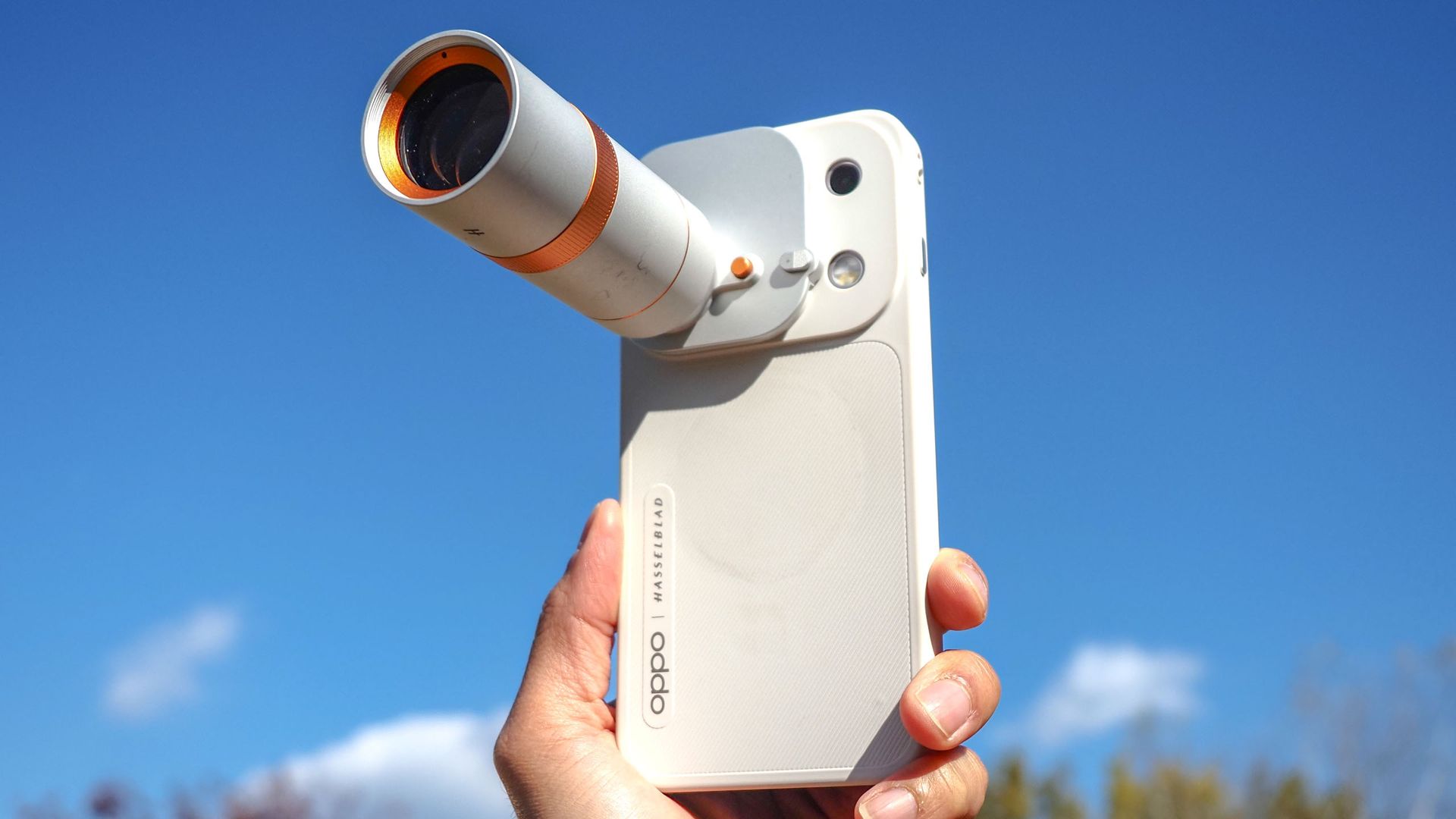
EXECUTIVE SUMMARY
I've been testing the Oppo Find X10 Pro Max for a month and its attachable Hasselblad lens delivers phenomenal results.
Key Takeaways
- Forget iPhone 18 Pro Max — I tested this wild Android/Hasselblad combo for a month and it's my favorite new camera phone.
- I've been testing the Oppo Find X10 Pro Max for a month and its attachable Hasselblad lens delivers phenomenal results.
- I’ve been testing the iPhone 18 Pro Max ever since it launched in September, putting it through some marquee matchups against rivals like the Galaxy S26 Ultra and Pixel 11 Pro XL.
Read Complete Original Article
Published originally on Tom's Guide