The European Commission is moving to shield its industrial machinery and chemical sectors from Chinese imports, and is weighing a “kill switch” mechanism. Together with Washington, Brussels has settled into a familiar narrative: a record trade deficit with China is framed as proof of its “overcapacity” and attributed to state subsidies that allegedly tilt the global playing field. For European Union audiences frustrated by stagnant domestic manufacturing, this argument sounds intuitive. Held up...
EU’s fixation on Chinese subsidies masks its own structural stagnation
SC
SCMP - Feed 91By Zhou Xiaoming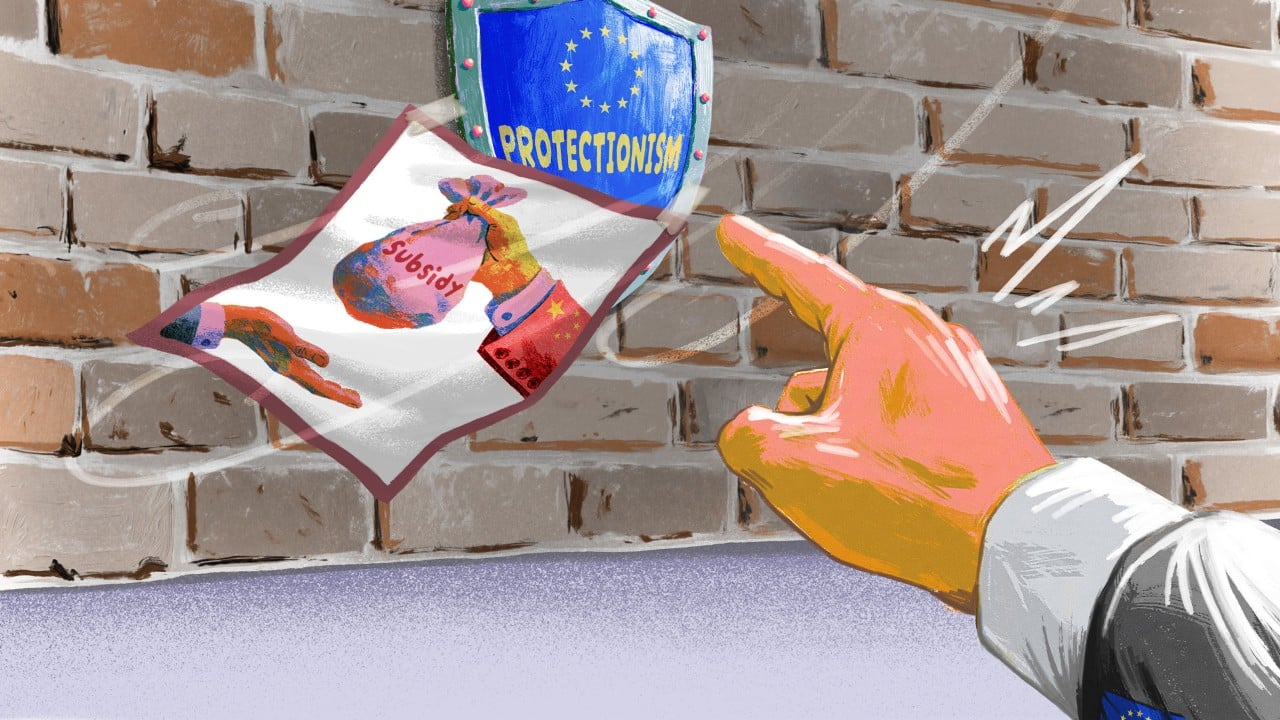
EXECUTIVE SUMMARY
The European Commission is moving to shield its industrial machinery and chemical sectors from Chinese imports, and is weighing a “kill switch” mechanism. Together with Washington, Brussels has settled into a familiar narrative: a record trade deficit with China is framed as proof of its “overcapacity” and attributed to state subsidies that allegedly tilt the global playing field. For European Union audiences frustrated by stagnant domestic manufacturing, this argument sounds intuitive. Held up.
Key Takeaways
- EU’s fixation on Chinese subsidies masks its own structural stagnation.
- The European Commission is moving to shield its industrial machinery and chemical sectors from Chinese imports, and is weighing a “kill switch” mechanism.
- For European Union audiences frustrated by stagnant domestic manufacturing, this argument sounds intuitive.
Read Complete Original Article
Published originally on SCMP - Feed 91