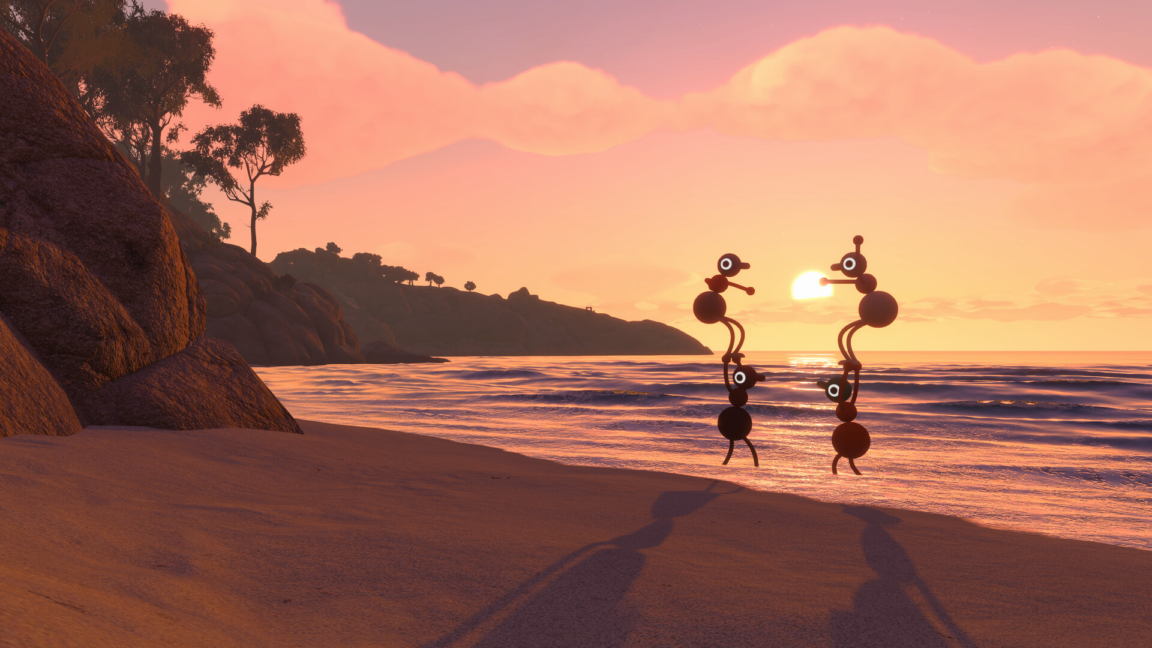
The last few years have seen significant debate over the widespread use of AI-powered tools in game development and the responsible disclosure of that usage to players. That debate has exploded into a full-blown controversy in the indie game development space this week, as Big Walk developer House House has publicly and belatedly disclosed minimal AI use in its popular co-operative puzzle exploration game. This particular controversy has been brewing behind the scenes for months, as judges and jury members for the prestigious Independent Games Festival Awards discussed the issue in private discussion groups. But the debate started to break into public view on Monday when 19 members of the 50-plus-member jury released a signed statement outlining a stance "declining to vote for any game that uses generative AI in any capacity." Noting "a significant increase in the number of submitted games developer with generative AI tools," the group of jurors called out AI's ecological, economic, psychological, and labor harms in rejecting tools whose use, they said, is still "not a foregone conclusion in our industry."Read full article Comments
Big Walk used AI to fix a bug. Now the indie gaming world is having a reckoning.
AR
Ars TechnicaBy
Kyle Orland
EXECUTIVE SUMMARY
Any amount of AI coding is too much for many Indie Game Festival judges.
Key Takeaways
- Big Walk used AI to fix a bug.
- Now the indie gaming world is having a reckoning..
- Any amount of AI coding is too much for many Indie Game Festival judges.
Read Complete Original Article
Published originally on Ars Technica