The old adage “monkey see, monkey do,” appears to have a bit of truth to it. Chimpanzees (Pan troglodytes) likely watch adults making different vocalization to learn how and when to use those sounds themselves, particularly when they purse their lips to blow “raspberries.” The findings detailed in a study published today in the journal Proceedings of the National Academy of Sciences (PNAS) show that the primates’ sounds are not instinctual and set in stone, as previously believed. Humans learn what words mean from the world around us, and different communities will use different sounds for the same thing. For example, English speakers mimic dogs with “woof,” while French speakers say “ouaf.” When it comes to our primate relatives, biologists generally used to believe that they didn’t learn sounds from one another, and that instead biology dictated their sounds. However, that’s changing with some new research into two groups of Chimpanzees in a couple of west African countries. To probe how chimpanzees learn to use sounds, the study’s team focused on the raspberry. Chimpanzees make this unvoiced sound that’s similar to how humans push their lips together to blow raspberries. The team looked at how 91 chimpanzees, from birth to 55 years old, used the raspberry call. They studied a group of wild chimpanzees from four communities in Taï National Park, Ivory Coast, and a group of young, orphaned, and peer-raised chimpanzees at Tacugama Chimpanzee Sanctuary in Sierra Leone. The team found that the wild Ivory Coast chimpanzees almost exclusively used the raspberry while grooming others. However, the juveniles at the Tacugama Chimpanzee Sanctuary used it across a much wider range of social situations. If blowing a raspberry is only an instinctive call, the groups should be using it in similar ways no matter where they were raised. According to the team, these differences suggest that chimpanzees learn from adults how to make a call, as well as when and why to use it. “In everyday communication, we use the words that we do only because our peers do too. It’s communal practice that fixes their meaning, rather than features of the words themselves,” Richard Moore, a study co-author and mind, language, and psychology philosopher at the University of Warwick, said in a statement. “The discovery that this is true not just for natural languages but also some chimpanzee calls means there’s more continuity between chimpanzees’ vocal learning and our own than we previously suspected.” The team also say that when an adult chimpanzee was introduced to one of the groups living in the Tacugama sanctuary, the young chimps gradually began to use the raspberry more consistently and began to resemble the adult’s noises. This suggests that adults serve as role models, helping a community settle in on shared communication patterns. The researchers say this is the first time that this kind of learned and agreed-upon sound use has been shown in chimpanzee calls. The link between the raspberry sound and its use appears to be shared from one chimpanzee to another, and is not built in at birth. While chimpanzees struggle to learn entirely new call sounds, the study suggests that they can learn the meaning behind sounds that they already know how to make but didn’t use in the same way as other chimps. “Even aspects of chimpanzee vocal communication that seemed fixed and unlearned may be shaped by learning, suggesting that there is still much to discover about their vocal repertoire,” added Antoine Valet, a study co-author and cognitive scientist at the Institute of Cognitive Sciences (CNRS) in France. Additionally, the team has some theories on why different chimpanzee populations use the raspberry in similar ways if it is a learned sound. “One possibility is that, whilst grooming, as chimpanzees use their lips to extract parasites from another’s fur, it may be easier to generate a vocalisation that uses similar lip movements, a call that is known to prolong grooming bouts,” explained study co-author and CNRS behavioral ecologist Catherine Crockford. “Communities may have found this useful independently, but that wouldn’t change the fact that the call is a convention. We need more research to test it.” The post Baby chimpanzees blow ‘raspberries’ because adults do it first appeared first on Popular Science.
Baby chimpanzees blow ‘raspberries’ because adults do it first
PO
Popular ScienceBy Laura Baisas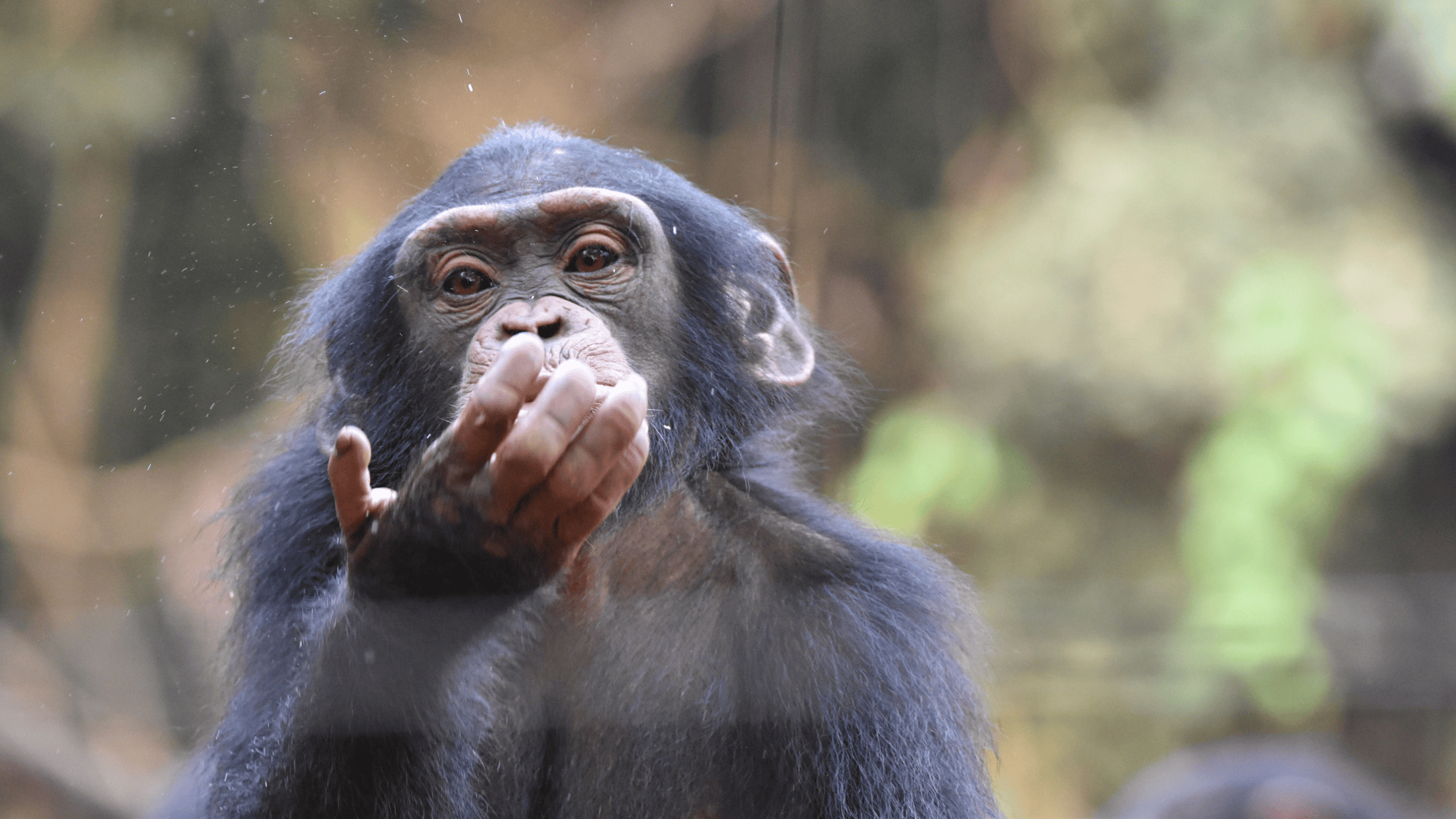
EXECUTIVE SUMMARY
In a surprising first, scientists observed the primates learning new sounds. The post Baby chimpanzees blow ‘raspberries’ because adults do it first appeared first on Popular Science.
Key Takeaways
- Baby chimpanzees blow ‘raspberries’ because adults do it first.
- In a surprising first, scientists observed the primates learning new sounds.
- The post Baby chimpanzees blow ‘raspberries’ because adults do it first appeared first on Popular Science.
Read Complete Original Article
Published originally on Popular Science