Sex between two animals of the same sex is widespread. Over 1,000 animal species from nematode worms to penguins to cattle all dabble in same-sex interactions. But a relationship between a bull named Achille and a male donkey named Patrocolo is raising eyebrows. The pair lives on a plateau in Ethiopia, and both could have chosen partners of the opposite sex and same species on numerous occasions. However, they continued to choose each other, despite belonging to different owners and only seeing one another when spending time in a pasture. A study published today in the journal Current Biology chronicles this surprising union. “The sexual interactions between Achille, the bull, and Patroclo, the male donkey, were not isolated events,” Elisabetta Palagi, a study co-author and evolutionary biologist at the Università di Pisa (UNIPI) in Italy, said in a statement. “What really caught our attention was that these interactions were embedded in a very selective and consistent social relationship between the two individuals.” Achille and Patrocolo in their field. Image: André B. da Cruz, UNIPI The team first spotted these interactions while conducting another study earlier this year. They saw Achille mounting Patroclo, and were surprised to see that Patroclo did not try to avoid the bull, kick him, or show any defensive reactions. “They repeatedly chose to stay close to each other and engaged in many different affiliative behaviors, such as licking, rubbing, and nuzzling, alongside the repeated mounting behavior,” added co-author André da Cruz, a PhD student at UNIPI. “Importantly, this was happening in a social environment where both animals had access to other potential partners, including individuals of both sexes and of their own species.” The team recorded all of the interactions they witnessed involving either Achille or Patroclo. In total, the observed 51 mountings between the male bull and donkey from March 6 to March 19. In these interactions, Patroclo often presented his hindquarters to Achille and then nipped at the bull. They repeatedly directed most of their sexual and social interactions toward each other, and the team reported no indication from the bull or donkey that either wished to discourage those advances. Achille mounted another male donkey only twice, and that other male showed avoidance behaviors and threatening expressions, like flattened ears. “We believe the key finding is not simply that a bull mounted a male donkey,” said study co-author Martina Francesconi, also a PhD student at UNIPI. “It is that this unusual sexual behavior was part of a broader, selective social relationship. Our observations suggest that it cannot be easily explained simply by a lack of alternative mating opportunities, although we cannot say from this study exactly what function these sexual interactions may have had.” According to the team, these observations have wider implications for our understanding of how sexual behavior is a complex social trait that goes beyond its role in reproduction. It also raises important questions for future studies, including if these interactions are primarily related to social bonding, what the benefits are, and if they play a role in reducing tension or maintaining relationships. In previous studies, same-sex mounting in nonhuman primates appears to be a form of conflict resolution and way to strengthen bonds, and may help male macaques reproduce more successfully. “More broadly, we would like to better understand how social relationships shape sexual behavior and how behavioral flexibility allows animals to navigate complex social environments,” said Palagi. “We see this study as a starting point for asking these broader questions.” The post A bull and a male donkey’s sexual relationship turns heads appeared first on Popular Science.
A bull and a male donkey’s sexual relationship turns heads
PO
Popular ScienceBy Laura Baisas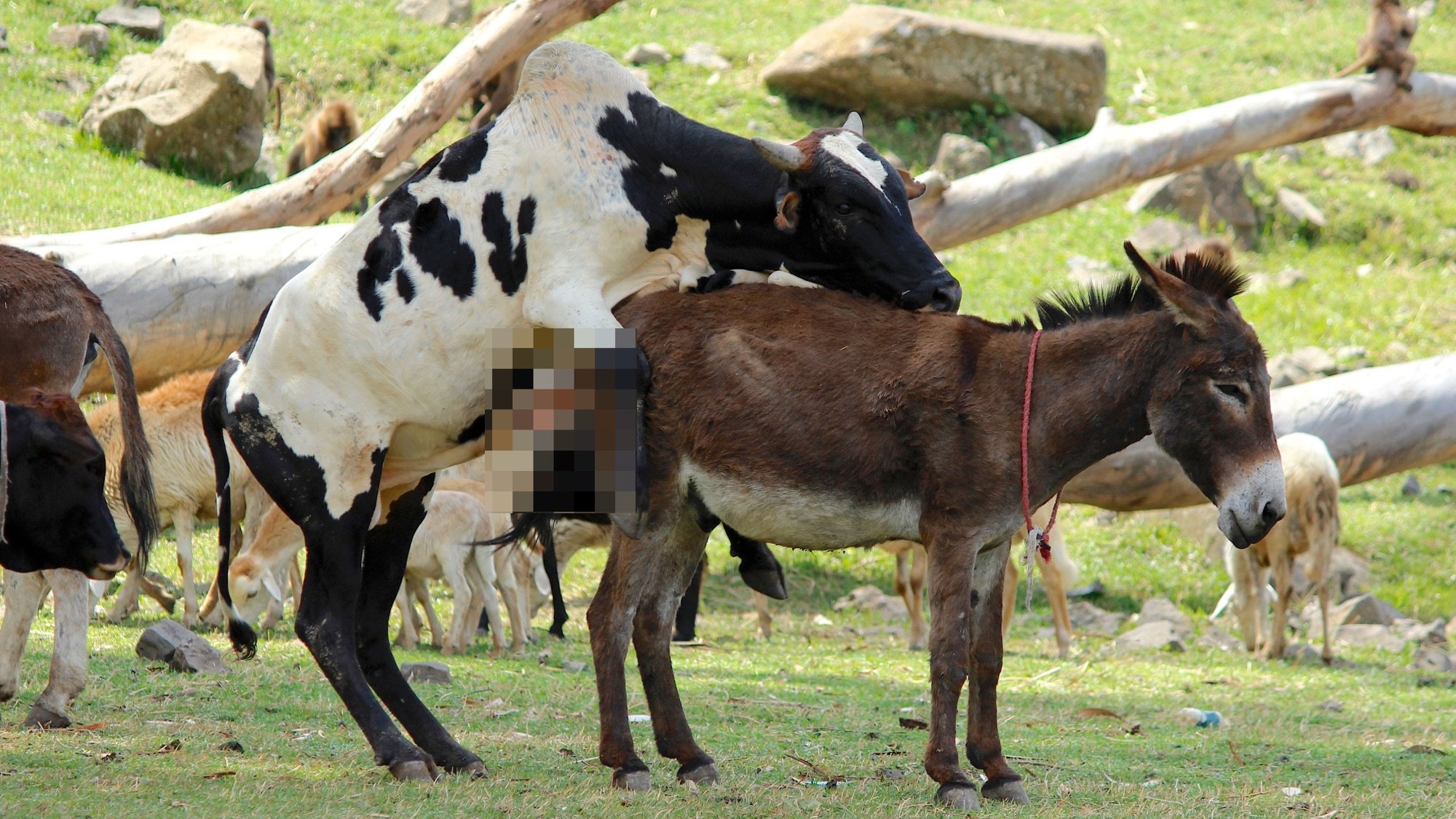
EXECUTIVE SUMMARY
The pair also display affectionate behaviors including licking, rubbing, and nuzzling. The post A bull and a male donkey’s sexual relationship turns heads appeared first on Popular Science.
Key Takeaways
- A bull and a male donkey’s sexual relationship turns heads.
- The pair also display affectionate behaviors including licking, rubbing, and nuzzling.
- The post A bull and a male donkey’s sexual relationship turns heads appeared first on Popular Science.
Read Complete Original Article
Published originally on Popular Science